NEWS
Science, Jobs, and Shared Waters: Menhaden Industry Outlines Balanced Buffer Plan
BATON ROUGE, LA / December 4, 2025
Ocean Harvesters' Ben Landry joined host Brian Haldane yesterday morning, December 3, 2025, on Talk 107.3 WBRP-FM to discuss Louisiana's long-standing menhaden (pogie) fishery and proposed changes to nearshore buffer zones that govern how close industry vessels can operate to the coast.
Louisiana native Ben Landry of Ocean Harvesters tells listeners buffer plan can protect jobs, reduce conflict, and keep Louisiana a Sportsman's Paradise
BATON ROUGE, LA / December 4, 2025 / Ocean Harvesters' Ben Landry joined host Brian Haldane yesterday morning, December 3, 2025, on Talk 107.3 WBRP-FM to discuss Louisiana's long-standing menhaden (pogie) fishery and proposed changes to nearshore buffer zones that govern how close industry vessels can operate to the coast.
The Louisiana Wildlife and Fisheries Commission recently advanced a Notice of Intent (NOI) that would reduce the standard buffer zone from one-half mile to one-quarter mile. At the same time, additional protections around sensitive areas of the Chandeleur Sound and nearby islands would increase the overall number of square miles off-limits to the menhaden fleet by roughly four percent.
"This fishery has operated in Louisiana for 70-plus years," Landry told listeners. "And from the 1950s through 2021, there was no buffer in place. So, when you hear the term Sportsman's Paradise, that state moniker was given during an era where there were no menhaden regulations of any real substance."
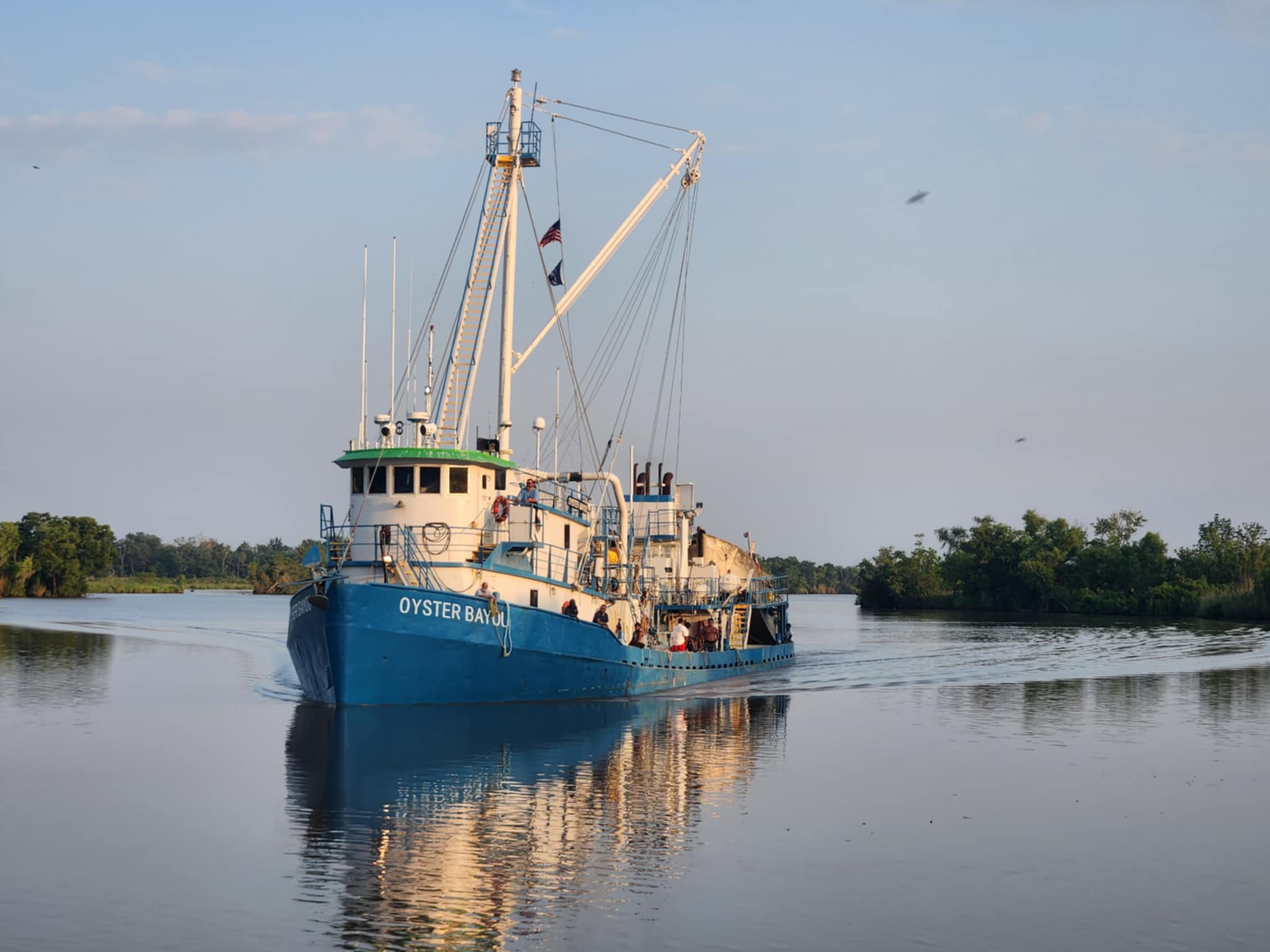
Menhaden are a nearshore schooling species and pushing fishing vessels farther offshore has had real economic consequences. Since the half-mile buffer was implemented, the industry has seen catch reductions in the range of 10 to 15 percent in Louisiana. Landry said allowing a quarter-mile buffer in designated areas is critical to offset those losses while maintaining protections in sensitive or heavily used recreational zones.
"I hear it from my captains all the time that they see these schools of menhaden and they're not crossing that half-mile line," Landry said. "They're inside of that."
The Gulf menhaden population is strong, with tens of billions of fish in the water and harvest levels well within sustainable limits. Landry also addressed concerns about bycatch of prized sportfish such as red drum in menhaden nets. Citing recent scientific work, he noted that the menhaden fishery accounts for just 3.4 percent of all red drum mortality and about 2.7 percent of speckled trout mortality in Louisiana, with the overwhelming majority of both species' mortality coming from rod-and-reel fishing.
Landry also discussed recent research from the University of Southern Mississippi showing that no single predator in the Gulf depends exclusively on menhaden. The Gulf's prey base is highly dynamic, and predators such as red drum, mackerel, and speckled trout have access to a wide variety of forage, from shrimp to other small fish and larvae. "We're not seeing species that are food deprived in the Gulf," he said.
Beyond science, Landry reminded listeners and policymakers that the menhaden fishery is a major employer and economic engine in coastal communities that often have few alternatives. Across the Gulf, the fishery directly supports 800 plus jobs, including fishermen and plant workers, and indirectly supports about 2,000 jobs when suppliers, transportation, and related services are included. The total economic impact is estimated at $419 million, with much of that activity concentrated in working waterfronts and economically stressed parishes.
Menhaden harvested by Ocean Harvesters are processed into high-protein meal and fish oil used in pet food, aquaculture feeds-particularly for salmon, some livestock feeds, and human nutrition products such as omega-3 supplements. Landry noted that this makes Louisiana's menhaden fishery part of a global food system that reaches far beyond the Gulf.
At the same time, he said, the industry recognizes the importance of Louisiana's charter businesses and the state's 407,000 licensed recreational anglers.
"Recreational anglers are an important industry in this state, nobody's debating that," Landry said. "What we're trying to do is share those nearshore waters where both their targeted fish and our targeted fish are."
Landry also expressed the importance of cooperation: "All fishermen out there, including our captains, should understand what a little bit of grace might lead to. We're not battling out there. If they're a charter fisherman, they're trying to make sure the folks that chartered their vessel have a good time. And our captains are trying to catch some fish that keep their livelihood going. So, I think everybody, if they took a beat, would realize that we can all exist in the same fishing ground."

About the Menhaden Fisheries Coalition
The Menhaden Fisheries Coalition (MFC) is a collective of menhaden fishermen, related businesses, and supporting industries. Comprised of businesses along the Atlantic and Gulf coasts, the Menhaden Fisheries Coalition conducts media and public outreach on behalf of the menhaden industry to ensure that members of the public, media, and government are informed of important issues, events, and facts about the fishery.
Scientists Did Not Recommend a 54% Cut to the Atlantic Menhaden Fishery
WASHINGTON, DC / December 2, 2025
They provided risk projections for managers to choose, the chosen 20% TAC reduction yields 0% probability of overfishing
They provided risk projections for managers to choose, the chosen 20% TAC reduction yields 0% probability of overfishing
Under the 2020 ERP definitions, Atlantic menhaden are not overfished and overfishing is not occurring. For 2023, fecundity is on the order of 1.2 quadrillion eggs (above the ERP fecundity threshold but below the target) and fishing mortality is about 0.26 (above the ERP F-target but still below the ERP F-threshold). The overview also makes clear there is no single "right" ERP; selecting ERP targets and thresholds is a management choice that balances objectives for menhaden and their predators.
The 2025 single-species update applied a lower estimate of natural mortality (M). That change lowers the back-calculated biomass, fecundity, and recruitment across the time series and raises the corresponding fishing mortality (F) estimates, even though the underlying population did not suddenly decline. Because of the revised M, the 2025 assessment's long-term average biomass is about a third lower than the 2022 update's average; this reflects an improved understanding of the stock rather than a real-time drop in the stock itself.
The 2025 update shows that the biomass of age-1+ menhaden is just below its 20-year average but has been trending up since 2021.
Adult abundance in 2023 was 14.8 billion age-1+ fish, above the average of the past 20 years.
Recruitment in 2023 was 44.5 billion age-0 fish, above the average of the past 20 years.
WASHINGTON, DC / December 2, 2025 / In the weeks since the 2025 ASMFC Annual Meeting, there's been a widespread misconception circulated by environmental and recreational fishing groups that the ASMFC Menhaden Board's technical and scientific advisors "recommended" a 50% or 54% cut" (to 108,450 mt) to the Atlantic menhaden total allowable catch (TAC), and that the Commission ignored those recommendations. That is not the case. Rather, scientists ran a set of "if-then" scenarios for managers. There were no recommendations of preferred TAC made. The Technical Committee and the ERP Working Group supply projections and risk information; the commissioners decide policy.
The American Sportfishing Association (ASA), in an article by Rob Shane titled "Mixed Results from 2025 ASMFC Annual Meeting," states that "recent peer-reviewed science recommended a 54% quota cut" for Atlantic menhaden.
The National Marine Manufacturers Association (NMMA) press release "Atlantic States Marine Fisheries Commission's Annual Meeting Ends with Mixed Results for Recreational Anglers" similarly says the Board implemented only a 20 percent reduction "despite peer-reviewed research recommending a 54% cut to the commercial quota".
The Theodore Roosevelt Conservation Partnership has repeatedly asserted that "slashing the coastwide catch limit by more than half" or "more than 50 percent" is needed to follow the science in "Menhaden Stock Assessment Indicates Catch Must Be Reduced to Benefit Striped Bass" and again in "Marine Fisheries Board Declines to Make Science-Based Reduction to Atlantic Menhaden Catch Limit" .
The American Saltwater Guides Association went further, urging "massive reductions" and telling readers that "the bottom line is we need a 55% reduction in the TAC for Atlantic menhaden" in "Take The Cut: Massive Reductions for Menhaden Industry Necessary").
The Chesapeake Bay Foundation, in a press release by Vanessa Remmers titled "Menhaden Management Meeting Results in Lackluster Coastwide Catch Reductions" , told supporters that "The ASMFC menhaden stock assessments resulted in forecasts indicating the need for a 54 percent cut to the menhaden harvest to meet the needs of predators like striped bass, osprey, and marine mammals."
Jim McDuffie, President and CEO of Bonefish and Tarpon Trust, in a press statement said: "While today's vote resulted in a 20% reduction, it was far short of the reduction recommended by the Commission's own scientists.
The International Game Fish Association inaccurately stated in a press release that "scientists said that a quota of 108,000 MT was necessary to have a 50% chance of success of rebuilding the striped bass fishery."
Sport Fishing magazine amplified the same narrative, reporting that ASMFC "implemented a 20 percent cut to the Atlantic commercial menhaden harvest, when peer-reviewed science recommended a 54 percent quota cut, according to an ASA press release" in Nick Carter's "Anglers Frustrated with Menhaden Management".
A Washington Post guest essay "It's the ‘most important fish in the sea.' And it's disappearing." by Mark Robichaux, framed the controversy around the idea that managers failed to adopt the deep cuts "scientists recommend" to protect striped bass and other predators (Washington Post Opinions: Guest Opinions, Nov. 20, 2025 - a full-text mirror is here.
A thorough review of all the meeting materials and reports, and of the entire recording of the meeting available online, shows there is nowhere where the Technical Committee (TC) or the ERP Working Group "recommends" a 54% cut, or any specific TAC. Staff consistently present options and risks at the Board's request, not a recommendation. The only time a 54% cut is presented as a recommendation is when Commissioner Matt Gates of Connecticut incorrectly described the option provided at the Board's request as a recommendation. His motion reads: "I would like to make the motion for the TAC recommended in the TC and working groups memo that achieves a 50% probability of achieving the ecological reference point F target… move to set the TAC… at 108,450 metric tons…."
The TC and Working Group staff members produced exactly what the Board asked for. At the Spring 2025 meeting of the Menhaden management board, "The Board requested the projections include the TACs associated with a 40-60% probability of exceeding the ERP F target for 2026-2028 combined and as separate years, and the percent risk of exceeding the ERP F target and threshold for nine different TACs ranging from -20% to +20% of the current TAC in 5% increments when it considers specifications for the next one to three years at the Annual Meeting." (2025 Spring Meeting Summary p.15).
This request resulted in tables showing TAC options tied to specified probabilities of exceeding the ERP F-target (and the chance of exceeding the overfishing threshold) across TACs. Those summary tables were explicitly referenced during debate as "tables four and five… PDF pages 68, 69 of the board material." Those tables included all the projections requestedincluding the TACs associated with a 40-60% probability of exceeding the ERP F target for 2026-2028 one of which was the projection for a TAC of 108,450. None of those projections were "recommended"
Responding to what they referred to as "a lot of stakeholder discussion," including the false claim that the biomass decreased, the ASMFC issued a fact-check "FAQ" shortly after the meeting noting that what changed was the understanding of natural mortality - how many fish die in a year - not the size of the stock.
"The difference in the population estimates from the 2022 and 2025 assessments is primarily due to a change in the estimate of natural mortality, which affects our estimates of the overall size of the stock. .... The average menhaden biomass over the whole time-series [since 1955] from the 2025 assessment update is 37% lower than the average biomass from the 2022 update. However, the 2025 update indicates total biomass has slightly increased since 2021. The lower estimate of biomass from the current assessment compared to the previous assessment is a result of a change in our understanding of the stock rather than a change in the stock itself." (ASMFC, November 2025, Menhaden FAQ)
Several recreational and environmental groups criticized the consideration of economic factors and potential job loss in the decision made by the Menhaden Management Board. This ignores the fact that Section 6(a) of the Atlantic States Marine Fisheries Commission Interstate Fisheries Management Program Charter requires that social and economic factors be considered.
"The Commission recognizes that an effective fishery management program must be carefully designed in order to fully reflect the varying values and other considerations that are important to the various interest groups involved in coastal fisheries. Social and economic impacts and benefits must be taken into account (ASMFC, 2019, ISMFP Charter)
This analysis examines what actually happened in the meeting, and reviews what the Technical Committee and ERP Working Group actually did and said. These are the documents and recordings used in the preparation of this analysis, and we invite any journalist, scientist or member of the public to review the documents and our analysis for factual accuracy.
Atlantic States Marine Fisheries Commission. (2025, May). 2025 spring meeting summary. https://asmfc.org/wp-content/uploads/2025/05/2025SpringMeetingSummary.pdf
ASMFCvideos. (2025, October 31). Atlantic Menhaden Board Proceedings October 2025 [Video]. YouTube. https://www.youtube.com/watch?v=wNB2rnpoqJc
Atlantic States Marine Fisheries Commission. (2025, November). 2025 Atlantic menhaden single-species assessment update (October 2025). https://asmfc.org/wp-content/uploads/2025/11/2025AtlMenhadenSingleSpeciesAssmtUpdate_October2025.pdf
Atlantic States Marine Fisheries Commission. (2025, November). Menhaden FAQ (October 2025). https://asmfc.org/wp-content/uploads/2025/11/Menhaden-FAQ-Oct2025.pdf
Atlantic States Marine Fisheries Commission. (2025, November). Atlantic menhaden assessments overview (October 2025) [Word document]. https://asmfc.org/resources/stock-assessment/overview-of-atlantic-menhaden-assessment-update-erp-benchmark-stock-assessment-2025/
Atlantic States Marine Fisheries Commission. (2020, February). Atlantic Menhaden Board proceedings (February 2020). https://asmfc.org/wp-content/uploads/2025/02/AtlMenhadenBoardProceedingsFeb2020.pdf
Atlantic States Marine Fisheries Commission. (2019, August). Interstate Fisheries Management Program (ISFMP) charter. https://asmfc.org/wp-content/uploads/2025/01/ISFMPCharter_Aug2019-2.pdf
We express our appreciation to the ASMFC for issuing the above-referenced Menhaden FAQ and Atlantic Menhaden Assessments Overview to address misunderstandings of the findings of the single-species assessment update and Ecological Reference Point Benchmark Stock Assessment, as well as the Board's response to the assessments' findings.
What happened in the meeting
During the meeting neither the Technical Committee (TC) nor the ERP Working Group members or staff recommend a specific TAC. In the meeting, the representatives repeatedly framed their role as providing the projections the Board asked for so commissioners could choose their acceptable risk. Ms. Caitlin Craig, Chair, Menhaden Technical Committee, explained this work was performed at the Board's direction: "At the spring meeting, the board requested that the projections include the TACs associated with a 40 to 60% probability of exceeding the ERP target… and then the percent risk of exceeding the ERP target and threshold for nine different TACs ranging from negative 20% to positive 20% of the current TAC…." She reminded commissioners "In setting TAC, the board should consider what level of risk they are willing to accept."
Technical Committee (TC) members and staff also explained exactly how to read the tables, again, as options the Board could pick from, not recommendations. Ms. Craig told the Board, "You would pick the TAC that would result in no more than X percent probability of exceeding the F target in any year… and the 50 percent probability… is bolded for reference." In the same presentation, she reiterated these were the "scenario runs that were requested by the board," after which "we'll present the table of results of all the scenarios." Commissioners themselves pointed to the packet tables as reference material, "tables four and five in the projections memo… PDF pages 68, 69 of the board material", further underscoring that staff were furnishing information, not prescribing an action.
The only place staff used "recommend" in this meeting was about which model to use for developing advice, not about any TAC. Dr. Matt Cieri, Marine Scientist, Stock Assessment Subcommittee, reviewed model choices and said the NWACS-MICE "is the model that we're recommending for developing management advice," and described other models as not recommended or only for support.
Against that backdrop, when Commissioner Gates of Connecticut, made his motion and referred to the "TAC recommended in the TC", he misspoke. The meeting recording shows the TC did not recommend a TAC; they provided risk-based choices including the 50% option.
Put simply: the TC and Working Group supplied a menu of TAC options and the associated probabilities the Board requested; they did not tell the Board which TAC to choose. Commissioner Gates' phrasing ("TAC recommended…") does not match what staff said or did in the meeting record.
The ERP toolkit, NWACS-MICE alongside the single-species BAM model, lets managers and stakeholders weigh trade-offs between menhaden harvest, predator harvest, and resulting predator biomass to set final ERP targets/thresholds and, from there, the TAC. The familiar "rainbow" surface plot is simply a visualization of those trade-offs: if striped-bass F rises, menhaden F typically must fall to deliver the same striped-bass biomass outcome, and vice versa.
Ms. Caitlin Craig, Chair, Menhaden Technical Committee, framed choices and risk tolerance
Ms. Craig opened the projections item by reiterating how TACs are set and where the Board's judgment comes in: "the board has used the best available science… In setting TAC, the board should consider what level of risk they are willing to accept." She immediately linked the analysis to prior Board direction: "At the spring meeting, the board requested that the projections include the TACs associated with a 40 to 60% probability of exceeding the ERP target… and then the percent risk of exceeding the ERP target and threshold for nine different TACs ranging from negative 20% to positive 20% of the current TAC…."
To help commissioners use the packet, Ms. Craig explained, "you would pick the TAC that would result in no more than X percent probability of exceeding the F target in any year… and the 50 percent probability… is bolded for reference," and reminded them these were "scenario runs that were requested by the board," followed by a table "of all the scenarios." During debate, packet locations were cited, "tables four and five in the projections memo… PDF pages 68, 69 of the board material", underscoring these were reference materials, not prescriptions.
Why it matters: Staff plainly presented options with associated probabilities and told the Board to choose its acceptable risk; that is not a staff TAC "recommendation."
Dr. Katie Drew, Stock Assessment Scientist, Stock Assessment Subcommittee, ASMFC staff, explained ERPs are long-term reference points; striped bass are being fished below F-target while rebuilding
Dr. Drew clarified that ERP tools are "at equilibrium" and not designed for short-term status triggers: "This isn't short-term sort of decision-making. And that's why the ERPs are designed to be your reference points, not your stock status determination criteria." She detailed why striped bass must be fished more conservatively while rebuilding: "we actually have to fish them… below their F target… we have a deadline of 2029… your F rebuild can be different than your F target."
On current conditions, Dr. Drew added: "Right now we are, for menhaden, we're a little bit above that fecundity threshold. So that suggests that there is currently enough menhaden to sustain striped bass where they are right now… The fishing mortality on striped bass is lower in 2024 and probably 2025 below that F target."
Why it matters: If ERPs are long-term tools and striped bass are being fished below their F-target during rebuild, a one-year 54% menhaden cut aimed at the ERP F-target would have been a policy choice, not a scientific requirement to prevent overfishing.
Dr. Matt Cieri, Marine Scientist, Stock Assessment Subcommittee, showed multiple pathways to the striped-bass goal; model recommendation was about methods, not TACs
Dr. Cieri walked commissioners through the "rainbow plot," emphasizing there are many menhaden/striped-bass F combinations that reach the striped-bass objective: "there's many different combinations of striped bass F and menhaden F… that can get you to your goal of striped bass… at its target or above. Higher menhaden Fs require, therefore, lower striped bass Fs and vice versa." He noted striped-bass F was already reduced in 2024 and that holding both species at those equilibrium Fs would place "striped bass… at its target or above."
He also reiterated control-rule definitions: an ERP "target… allows striped bass to stay at their biomass target when striped bass are fished at their F target… You can also define an ERP threshold… that keeps striped bass at its threshold when fished at its target." Regarding methods, he said the NWACSMICE model "is the model that we're recommending for developing management advice," while other models were not recommended or only for support.
In implementation, NWACS-MICE is used together with BAM to translate ERP risk choices into an annual TAC and to check status relative to ERP targets and thresholds. The "rainbow" surface plot visualizes those trade-offs; if striped-bass F goes up, menhaden F generally must come down to reach the same striped-bass biomass outcome (and the reverse is also true).
Why it matters: The "recommendation" language was about modeling tools, not a TAC. And the trade-off plot shows a spectrum of viable TAC choices depending on striped-bass fishing policy, again, options, not a mandate for a 54% cut.
Ms. Craig read the headline probabilities into the record; staff later "filled the gap" with 30% and 40% cuts, still 0% overfishing risk
On status-quo TAC, Ms. Craig reported "100% probability of being above the F target and a 4% chance of exceeding the F threshold by 2028," plus "50% probability of being below the fecundity target and an 8% chance of being below the fecundity threshold." She described the "50%-probability" band as "108,450… to 124,800 metric tons… 50% probability of exceeding the ERP F target and a 0% probability of exceeding the F threshold." She then walked the Board through how to use the table: "you would pick the TAC that would result in no more than X percent probability of exceeding the F target… the 50 percent probability… is bolded for reference."
At commissioners' request to "fill the gap" between tables, staff presented additional slides: for a 30% reduction, "0% probability of exceeding the F threshold across all three years," and for a 40% reduction, "again, a 0% probability of exceeding the F threshold… [with] the probability of falling below the ERP fecundity threshold… about 1 or 2%." Ms. Craig also noted: "in some scenarios, striped bass can rebuild above their SSB target even under higher levels of menhaden F."
Why it matters: Even 30-40% cuts have 0% overfishing risk; the issue is how much extra risk reduction the Board wants relative to the target. The threshold (overfishing line) wasn't being crossed in these scenarios, underscoring that a 54% cut was not biologically necessary to avoid overfishing.
What the adopted 20% reduction does (and how it compares), Mr. Joe Grist, Commissioner, Virginia
When Mr. Joe Grist made the motion for a 20% reduction, he framed it as a balanced policy choice. He underscored the stock's assessment pedigree and status: "Overfishing is not occurring. The stock is not overfished. Both the single species assessment and ecosystem assessment have passed the peer review for this."
He then read the projection results into the record to show why a 20% reduction was sufficient on biological risk: "the proposed TAC is associated with a 0% probability of exceeding the ERP fishing mortality threshold in 2026 through 2028, and a low 2% to 4% probability of falling below the ERP fecundity threshold during the same period." For packet navigation he added, "For reference, you can see tables four and five in the projections memo or the PDF pages 68, 69 of the board material."
Mr. Grist also described the federal risk-policy context and contrasted the 20% motion with the ~54% ("50%-to-target") option: even at ~54%, the fecundity-threshold probabilities would be "2% in 2026… and 1% in 2027 and 2028, which is only a 3% change from the 20% [reduction]."
Finally, he described the socioeconomic stakes and his intent to balance them with ecological risk: "To reduce any further than 20%… [would] put at risk directly or indirectly, hundreds if not thousands of American jobs across several states. It will also result in the decrease of supply and increase in… prices… This motion is made to balance the ecological concerns as well as the socioeconomic issues…."
Why it matters: The adopted TAC (−20%) yields 0% probability of overfishing (ERP F-threshold) and nearly identical fecundity-threshold risk to a ~54% cut, while avoiding disproportionate socioeconomic harm. That is consistent with Dr. Drew and Dr. Cieri's explanation that ERPs are long-term tools and multiple policy paths exist to achieve striped-bass objectives. The consideration of socioeconomic stakes takes into account the requirement under Section 6(a) of the ASMFC ISFMP Charter to consider "social and economic factors".
Understanding the Reports of the Technical Committee and the ERP Working Group
Targets vs. Thresholds: What Really Tells You If You're Managing "Right"?
Much of the confusion comes from mixing up four different reference points used in modern fisheries management:
The ERP F and FEC target, and
The ERP F and FEC threshold.
They are not the same thing, and they don't play the same role.
ERP Target: The "Ideal World" Goal
The Ecosystem Reference Point (ERP) target for menhaden is:
Precautionary and aspirational by design.
It assumes that predators, especially striped bass, are at or near their own biomass targets, even though striped bass are currently overfished.
It's essentially a benchmark for a fully rebuilt, future ecosystem where everything is in good shape.
In other words, the target answers the question: "If predators were fully recovered and we wanted to be very conservative, where would we like menhaden to be?" Many well-managed fisheries around the world have similar "targets", they are something to aim toward over time, and a signal that things are going well. But you don't shut down a fishery every time the stock sits somewhere below the ideal target but still safely above the danger zone.
ERP F Threshold: The "Danger Line" That Actually Governs Risk
The ERP F Threshold, by contrast, is the critical line:
It is the minimum level needed to make sure there are enough menhaden in the water to feed the predators that exist today, not a hypothetical future predator population.
It's the point above which managers say, "We are not comfortable going."
So, if you want to know whether the fishery is being managed responsibly, in terms of both the menhaden stock and the predators that depend on it, the threshold is what matters most.
Staying below the ERP F threshold means the stock is being managed correctly for predators and for the fishery (overfishing is not occurring).
Crossing below the ERP FEC threshold is when you are in the danger zone the stock is overfished).
This targets-and-thresholds framework is not unique to menhaden. Other successfully managed fisheries, like major U.S. groundfish and scallop fisheries, use a very similar system:
A target where they'd like to operate under good conditions, and
A threshold or limit reference point they must not cross.
No one claims that every time the stock isn't right on the target, managers have "failed." The focus is on staying safely below the ERP F threshold and above the ERP FEC threshold.
So, What Did Managers Actually Do with Menhaden?
The Commission has been managing menhaden for years under an ecosystem approach that explicitly considers striped bass as the key predator and a stand-in for the wider predator community. Within that framework, managers recently adjusted their policy about how close to the ERP target they want to manage, based on new scientific information and updated estimates of natural mortality. That policy change has been mischaracterized as "ignoring a 50% cut recommendation," but that's not what happened.
Here's the important part:
They did not abandon conservative management.
They chose a TAC that keeps menhaden safely below the ERP F threshold, the line that tells you whether you're providing enough forage for predators and maintaining a healthy stock.
Put bluntly:
The current TAC is not scraping the bottom. It is set so the fishery operates with a 0% modeled probability of crossing the ERP F threshold. That's a very strong standard of protection for predators and the stock.On top of this, the TAC also passes other biological tests, including fecundity (egg production). The probability of falling below the fecundity threshold is very low, which means the stock remains capable of replacing itself and sustaining harvest into the future through sufficient egg production.
Still Enough Menhaden to Feed Striped Bass
A key question for reporters, policymakers, and the public is: "Are we leaving enough menhaden in the water to feed striped bass and other predators?" Under the current TAC, the answer, according to the same ecosystem model everyone cites, is yes:
The fishery is managed so that menhaden biomass remains above the ERP FEC threshold, which is expressly designed to ensure adequate forage for current predator populations.
That threshold is what tells you whether you are managing correctly for predators.
The ERP target assumes a world where striped bass themselves have been rebuilt and are being managed conservatively. Right now, that is not the world we live in. Striped bass are overfished. In that context, the menhaden fishery is being managed more conservatively than the predator fishery. Under that precaution, the science says we are:
Protecting predators by staying above the ERP FEC threshold, or below the ERP F threshold and
Allowing a responsible, working menhaden fishery to continue supporting coastal jobs and communities.
What the "Rainbow Plot" Actually Shows
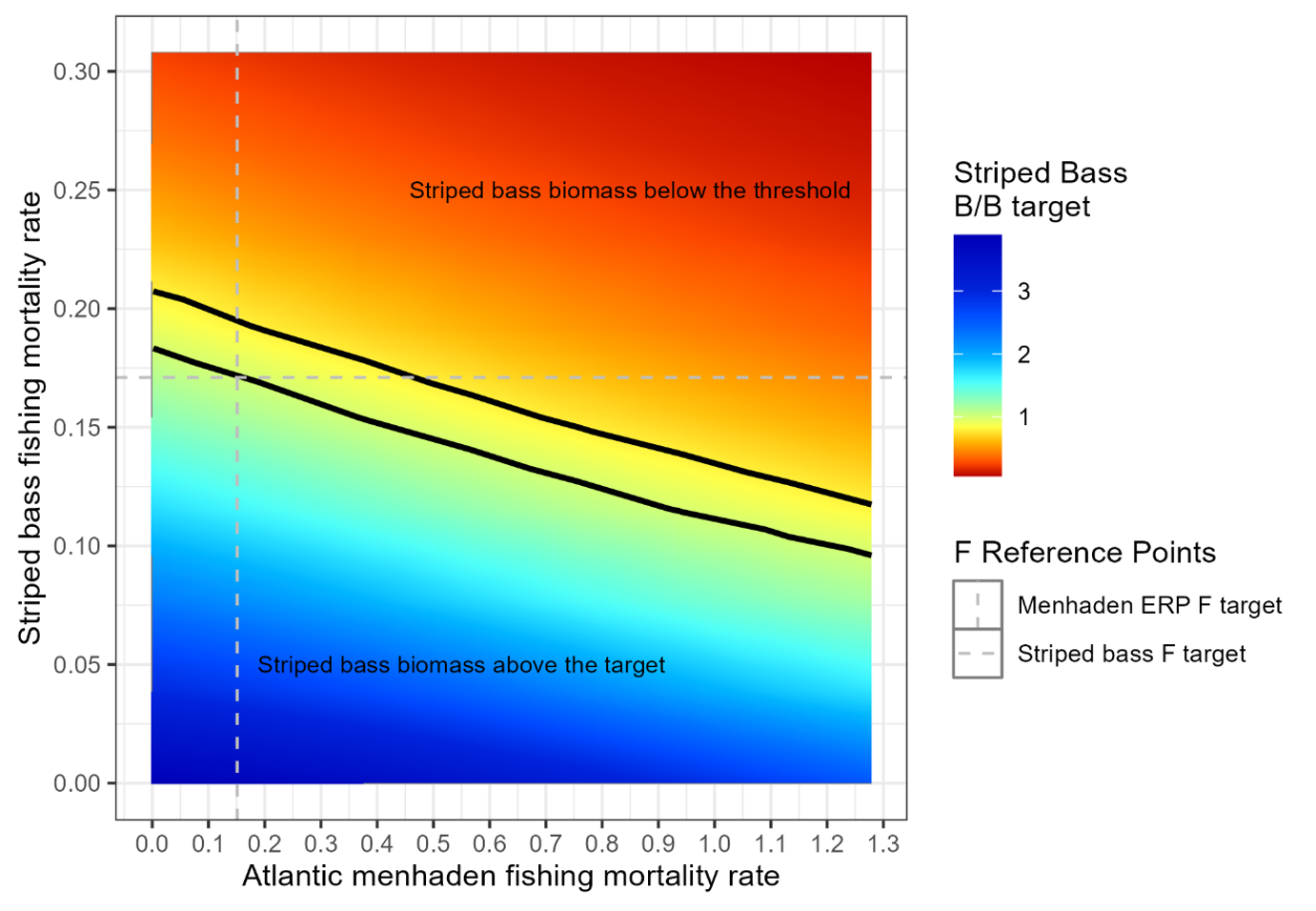
A lot of confusion has also centered on the so-called "rainbow plot" from the ERP assessment. That plot has been waved around as if it proves menhaden fishing is too high. The Technical Committee's own explanation makes clear that it shows something much more basic: for striped bass to reach their own biomass goals, striped bass fishing mortality must come down, no matter what you do with menhaden.
In simple terms, the rainbow plot is a three-dimensional picture flattened into two dimensions:
The x-axis is fishing mortality on menhaden.
The y-axis is fishing mortality on striped bass.
The colors (and the two heavy black curves) represent the third dimension: the long-term striped bass spawning stock biomass (SSB).
The Technical Committee explained that the two heavy black lines trace the combinations of striped bass F and menhaden F that would, over the long term, produce:
Striped bass at their SSB target (the lower heavy line), or
Striped bass at their SSB threshold (the upper heavy line).
A few examples from their explanation make the point very clearly:
If you set menhaden F = 0 (no menhaden fishing at all), striped bass F still must be around 0.18-0.21 to reach their SSB target or threshold.
If you allow higher menhaden F (for example, around 1.3, toward the right side of the plot), striped bass F must be even lower, around 0.10-0.13, to reach the same striped bass SSB target or threshold.
In other words, the plot is not saying, "Menhaden fishing is too high." It is saying: "For striped bass to get back to their biomass target or threshold, you must reduce striped bass fishing mortality. Cutting menhaden alone, even to zero, does not magically fix striped bass." That is perfectly consistent with what Dr. Katie Drew told the Board in 2020: you have to adjust all of them at once, and "if you don't adjust the striped bass fishing mortality nothing you do to menhaden will bring that population back." The rainbow plot is a visual representation of that same point. So, when you put the ERP framework and the rainbow plot together, the message is straightforward:
Menhaden is already being kept safely below its ERP F threshold, ensuring there is enough forage in the water and overfishing is not occurring.
The rainbow plot confirms that striped bass rebuilding hinges on striped bass management, not on ever-deeper cuts to a well-managed menhaden fishery.
Striped Bass: A Different Level of Risk-Averse Management
One piece that often gets left out of the public discussion is striped-bass and menhaden are managed with different levels of risk-averse management. At the time ASMFC adopted the ecosystem reference point (ERP) framework, striped bass was both overfished and experiencing overfishing, while Atlantic menhaden was not overfished and not experiencing overfishing. That is not a menhaden-industry talking point; it is what the Commission's own scientists told the Menhaden Board.
During the February 2020 ERP presentation, Dr. Katie Drew, the ASMFC scientist leading much of the ERP work, explained to the Board that you cannot fix striped bass simply by cutting menhaden harvest while leaving striped bass fishing mortality untouched. As she put it, the key is that "you have to adjust all of them at once. Right now, part of the reason striped bass is experiencing overfishing, and as the heat map showed, that rainbow plot showed, if you don't adjust the striped bass fishing mortality nothing you do to menhaden will bring that population back. I think we need to adjust both of them together." That is the opposite of the narrative being pushed in many press releases and op-eds. The science says:
Striped bass is overfished and has been overfished because of striped bass fishing mortality and weak recruitment.
Menhaden is not driving striped bass problems, and no amount of menhaden cuts can rebuild striped bass unless managers elect to bring striped bass fishing mortality down.
In plain language: The problem in the striped bass fishery is striped bass fishing, not a shortage of menhaden, coupled with poor recruitment, which is due to environmental factors. Yet in practice, ASMFC has applied maximum precaution to menhaden, keeping the menhaden stock safely below its ERP F threshold and maintaining very low odds of breaching biological limits, while allowing much higher risk in striped bass management, even as their own scientists have made critical suggestions for management with a 50% probability of the species being restored by 2029.
This creates a basic inconsistency:
Menhaden is being held well below its ERP F threshold (no overfishing) and above its ERP FEC threshold (not overfished), the line that tells you whether predators will have enough to eat.
Striped bass, the predator that is supposedly "protected" by cutting menhaden, has not been managed to the same conservative standard and has repeatedly exceeded its own fishing mortality benchmarks.
If you are going to claim an ecosystem-based approach, you cannot use menhaden as the only safety valve. The whole logic of the ERP model is that menhaden and striped bass are linked. That means:
You cannot run a "hyper-precautionary" policy for menhaden while tolerating high risk for striped bass and then blame menhaden for striped bass problems.
To be scientifically consistent, both species need to be managed in line with their thresholds and rebuilding plans, not just menhaden.
The bottom line is simple:
The menhaden fishery is already being managed with strong precaution below the ERP F threshold, ensuring enough forage for predators.
Striped bass management is not as risk-averse, and ASMFC's own scientists have said that without reducing striped bass fishing mortality, changes to menhaden alone cannot rebuild striped bass.
Any claim that "saving striped bass" requires massive new cuts to a well-managed menhaden fishery, while leaving striped bass management largely unchanged, is not ecosystem science, its politics dressed up as science.
How Uncertainty Is Accounted For, and Why That's Good News for Menhaden and Predators
Fisheries science is never 100% certain. That's why the menhaden framework builds layers of precaution into the system:
Conservative reference points
The ERP threshold itself is designed conservatively to protect predators under uncertainty.
The target is even more conservative, essentially an "ideal case" for a future, fully rebuilt predator community.
Probability-based decision tools
Instead of pretending they know everything exactly, scientists provide ranges of TAC options tied to different probabilities.
Managers can then choose how cautious they want to be, for example, ensuring 0% modeled probability of crossing the threshold.
Multiple biological safeguards
Managers don't rely on just one signal. They cross-check TAC decisions against fecundity, stock status, and other reference points.
The current TAC keeps menhaden well within safe biological limits across these measures.
The takeaway is this:
The menhaden fishery is not being pushed to the edge.
The TAC is set inside a clearly defined safety zone, with explicit buffers to account for uncertainty.
The system is constructed so that if we ever do start approaching the ERP F threshold, there are clear signals to adjust course.
Bottom Line: For anyone trying to make sense of the noise around menhaden:
No ASMFC scientist or staff member ever recommended a 50% or 54% cut to the TAC. They provided Board-requested projections with risk bands so commissioners could choose their acceptable risk; the ~54% figure came from one hypothetical scenario, not a recommendation.
That ~54% figure was a policy motion to target a 50% chance of meeting the ERP F-target, not a scientific requirement to avoid overfishing.
Management is via ERPs that protect predators (especially striped bass), and the key line is the threshold.Operating between target and threshold is normal in well-managed fisheries; the current TAC stays safely below the ERP F-threshold (avoiding overfishing) and safely above the ERP FEC threshold (not overfished).
The adopted 20% TAC (186,840 mt) is biologically conservative: 0% probability of exceeding the ERP F-threshold (no overfishing) in 2026-2028, and only 2-4% risk of dipping below the fecundity threshold, nearly indistinguishable from a ~54% cut on that metric.
ERPs are long-term, equilibrium tools. Striped bass are rebuilding with F below target, and staff noted there is "currently enough menhaden to sustain striped bass where they are right now," with rebuild possible "even under higher levels of menhaden F" in some scenarios.
Managers retain flexibility: the Board can revisit ERP targets/thresholds using the 2025 benchmark tools if objectives or conditions change.
Glossary
Models
NWACS MICE model , A model-of-intermediate-complexity ecosystem tool used to develop menhaden management advice while capturing key predator-prey dynamics.
NWACS full model , A more complex, comprehensive ecosystem model used mainly for support and sensitivity checks because of its size and data demands.
VADER , An alternative multispecies model that wasn't adopted for advice because it struggled to represent productivity ("bottom-up") effects reliably.
BAM , The single-species Atlantic menhaden stock assessment model used for status determinations and short-term projections.
Technical terms
TAC (Total Allowable Catch) , The coastwide catch cap (in metric tons) that managers set for a given period.
ERP (Ecological Reference Points) , Ecosystem-aware benchmarks (targets and thresholds) that account for predators and the broader food web to guide TAC decisions.
ERP F-target , The ecosystem fishing-mortality level on menhaden intended to keep striped bass at their biomass target (assuming bass are fished at their own F-target).
ERP F-threshold , The ecosystem fishing-mortality level on menhaden associated with striped bass staying above their biomass threshold (again assuming bass at their F-target).
F (fishing mortality) , The share of fish lost to fishing; a measure of fishing pressure.
Striped bass F-target , The long-term fishing-mortality level managers aim to apply to striped bass under normal (non-rebuilding) conditions.
Fecundity target / fecundity threshold , Benchmarks for expected egg production (long-term average) corresponding to the ERP F-target and F-threshold, respectively.
SSB target (spawning stock biomass target) , The biomass goal for mature striped bass that management aims to achieve or exceed.
Control rules / ABC framework , Risk-based guidelines that translate stock status and uncertainty into allowable catches to control the probability of overfishing.
Equilibrium (ERP context) , A long-run steady state where fishing mortality and stock size are held constant to evaluate outcomes.
"Rainbow plot" , A visual showing many combinations of striped-bass F and menhaden F that achieve different targets/thresholds, highlighting trade-offs.
Bottom-up processes , Changes in lower-trophic-level productivity (e.g., plankton/forage availability) that ripple upward to affect predator populations.
Predator-prey sensitivity (spiny dogfish-striped bass) , The model's responsiveness to assumptions about how predators (e.g., dogfish, striped bass) consume menhaden.
F rebuild , A temporarily lower fishing-mortality level applied to a stock so it can recover to its biomass target by a set deadline.
SEDAR (Southeast Data, Assessment, and Review) , The cooperative process used to develop and peer-review stock assessments.
Biomass , The total weight of fish in the water.
M (natural mortality) , The share of fish lost to non-fishing causes (predation, disease, etc.).
Recruitment , The number of young fish that survive to join the fishable population.
About the Menhaden Fisheries Coalition
The Menhaden Fisheries Coalition (MFC) is a collective of menhaden fishermen, related businesses, and supporting industries. Comprised of businesses along the Atlantic and Gulf coasts, the Menhaden Fisheries Coalition conducts media and public outreach on behalf of the menhaden industry to ensure that members of the public, media, and government are informed of important issues, events, and facts about the fishery.
Menhaden Fisheries Coalition Applauds Louisiana Wildlife & Fisheries Commission for Balanced, Science-Based Buffer Zone Recommendations
BATON ROUGE, LA / November 6, 2025
The Menhaden Fisheries Coalition applauds the Louisiana Wildlife and Fisheries Commission for voting today in favor of a balanced proposal to modify menhaden buffer zones along portions of the Louisiana coast. The vote reflects a careful, science-first approach: state officials studied the issue, listened to stakeholders, and brought forward a proposal that adds new protections and enlarges the total protected footprint, even as it makes targeted, common-sense adjustments where warranted. Paired with the fleet's standardized hose-end cage gear and ongoing collaboration with stakeholders, this is the right path to keep Louisiana's fisheries healthy and its coastal communities working.
BATON ROUGE, LA / November 6, 2025 / The Menhaden Fisheries Coalition applauds the Louisiana Wildlife and Fisheries Commission for voting today in favor of a balanced proposal to modify menhaden buffer zones along portions of the Louisiana coast. The vote reflects a careful, science-first approach: state officials studied the issue, listened to stakeholders, and brought forward a proposal that adds new protections and enlarges the total protected footprint, even as it makes targeted, common-sense adjustments where warranted. Paired with the fleet's standardized hose-end cage gear and ongoing collaboration with stakeholders, this is the right path to keep Louisiana's fisheries healthy and its coastal communities working.
Louisiana Department of Wildlife and Fisheries biologist Jason Adriance explained that staff evaluated potential adjustments, met with stakeholders (including the recreational sector), incorporated extensive public comment, and then brought forward a Notice of Intent. The package makes targeted changes from a ½-mile to a ¼-mile buffer in several stretches, adds new protections in sensitive areas, and increases the overall protected footprint by roughly 4.5%-from about 264 to 276 square miles. In short, while opponents focus on places where buffers shrink, additional protections are added elsewhere and the net result is more protected area overall, with improved clarity via coordinates for earlier enhanced buffers.
Ben Landry of Ocean Harvesters emphasized that the adjustments are limited in scope and consistent with the science: "this proposal … is not going to damage Louisiana sportsman's paradise." Pointing to recent predator-diet research (SCEMFIS/University of Southern Mississippi work led by Dr. Robert Leaf), Landry noted: "There wasn't one predator in the Gulf that relied upon menhaden solely," and elaborated on the prey diversity: "they eat crab, they eat shrimp, they eat anchovy, they eat other larvae." On day-to-day operations, he added: "weather is by far the biggest factor of whether we catch fish or not." Together with the state's bycatch findings, he said, the data show that the targeted ½-mile to ¼-mile adjustments in limited areas do not translate to higher bycatch.
Francois Kuttel of Westbank Fishing stressed that Louisiana's comprehensive bycatch study found the menhaden fleet accounts for just 3.4% of statewide red drum removals, with 84% survival for red drum released and the industry's fleetwide standardization of hose-end cage gear estimated to save more than 6,300 red drum annually. He added that relying on large spatial closures to chase incremental bycatch reductions would require expansions so extreme they would "eliminate 80% of the industry," whereas the adopted rule reflects a practical compromise that still increases total buffer area by about 4%.
Dr. Scott Raborn of LGL Ecological Research Associates, which conducted the recent bycatch study, told commissioners that on a per-set basis the proposed relaxation from ½-mile to ¼-mile would not increase bycatch. He corroborated Mr. Kuttel's assertion, explaining that meaningfully reducing red drum bycatch via distance alone would require fishing in waters around 22 feet deep, at which point the menhaden fishery would forfeit roughly 80% of its catch-an impractical approach that is unworkable for management.
About the Menhaden Fisheries Coalition
The Menhaden Fisheries Coalition (MFC) is a collective of menhaden fishermen, related businesses, and supporting industries. Comprised of businesses along the Atlantic and Gulf coasts, the Menhaden Fisheries Coalition conducts media and public outreach on behalf of the menhaden industry to ensure that members of the public, media, and government are informed of important issues, events, and facts about the fishery.
Gulf Menhaden Industry Replies: Backwoods University Hosts Ben Landry of Ocean Harvesters
ABBEVILLE, LA / November 5, 2025
Last week, Backwoods University, a podcast series from the MeatEater network, explored the menhaden fishing industry, known locally as "pogie" fishing, along the Louisiana coast. At that time, host Lake Pickle was unable to reach a representative from the commercial sector. Since then, he connected with Ben Landry, Vice President of Public Affairs for Ocean Harvesters, who joined him for a bonus episode to provide the industry's perspective. "My job is not to tell anyone how to think," Pickle said. "My job is to try my best to present both sides and let people make up their own mind."
ABBEVILLE, LA / November 5, 2025 / Last week, Backwoods University, a podcast series from the MeatEater network, explored the menhaden fishing industry, known locally as "pogie" fishing, along the Louisiana coast. At that time, host Lake Pickle was unable to reach a representative from the commercial sector. Since then, he connected with Ben Landry, Vice President of Public Affairs for Ocean Harvesters, who joined him for a bonus episode to provide the industry's perspective. "My job is not to tell anyone how to think," Pickle said. "My job is to try my best to present both sides and let people make up their own mind."
The conversation comes as the Louisiana Department of Wildlife and Fisheries prepares to vote on changes to buffer zone laws, which determine how close to shore menhaden boats may operate.
Listen to the full episode here
The episode provides an in-depth look at how the Gulf's commercial menhaden fleet views issues of sustainability, regulation, and coexistence with recreational fishing communities.
Gulf menhaden
The conversation begins by clarifying a common misconception about ownership. Both Ocean Harvesters and Westbank Fishing are American-owned and operated, using U.S.-flagged vessels. While processing companies such as Omega Protein and Daybrook Fisheries have foreign parent ownership, this structure does not affect or direct fishing operations or change the domestic nature of the fleets.
A major focus of the discussion is the ongoing debate over Louisiana's buffer zones, the designated distance commercial menhaden vessels must maintain from shore. The industry supports retaining the current half-mile buffer across most of the coast while allowing quarter-mile zones only in select, low-use areas without development, where recreational fishing is minimal. Larger, established buffer zones around Grand Isle and Holly Beach would remain intact. The goal, as outlined, is to balance access to nearshore menhaden schools, where the fish naturally congregate, while minimizing user conflicts on the water.
The episode also explores recent scientific work on bycatch, particularly a report indicating that about 85% of non-target fish survive when they remain in the net during pumping. However, survival drops sharply if fish enter the pump. To address this, menhaden fleets are working to redesign and standardized hose-cage systems to prevent large fish, such as red drum, from being pulled through the hose. The conversation describes how different configurations were tested across vessels this season to further improve survival rates. It is believed that this effort could dramatically reduce the bycatch mortality of the fishery.
Beyond bycatch mitigation, the industry has invested more than $3 million combined in stronger, more durable nets, significantly reducing accidental spills and tears, from about 15-20 per year just a few years ago to two this past season. These measures form part of a broader effort to demonstrate that the fishery can operate responsibly while maintaining jobs for Gulf Coast crews.
Pickle and Landry also discuss a recent incident involving menhaden boats and tarpon anglers. Tracking data showed vessels operating roughly three-quarters of a mile away from recreational boats during a legal set. The crews reported that any tarpon or sharks caught were released alive. The conversation emphasizes the importance of lowering tensions, maintaining open communication, and avoiding situations that could escalate conflict on the water.
Throughout the interview, Landry reflects on the long history of the menhaden fishery, which has operated for over 80 years in the Gulf and more than 145 years on the Atlantic coast, and on its continued role as a working-waterfront industry that supports local jobs. Both Pickle and Landry agree that improving understanding and dialogue between sectors is essential to maintaining sustainable fisheries and safe operations.
The episode closes with an invitation to Backwoods University from Ocean Harvesters to tour its facilities in Moss Point, Mississippi, and Abbeville, Louisiana, to see firsthand how the fishery operates.
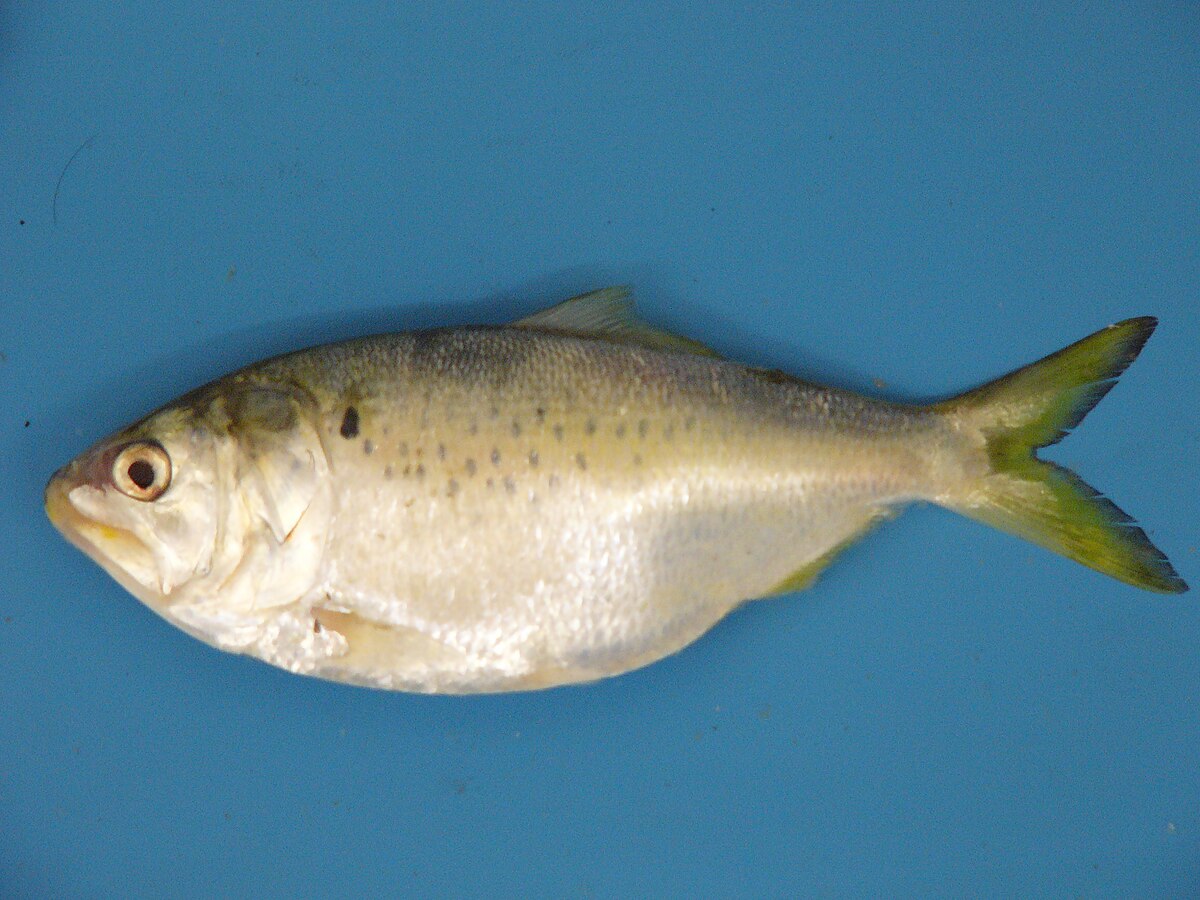
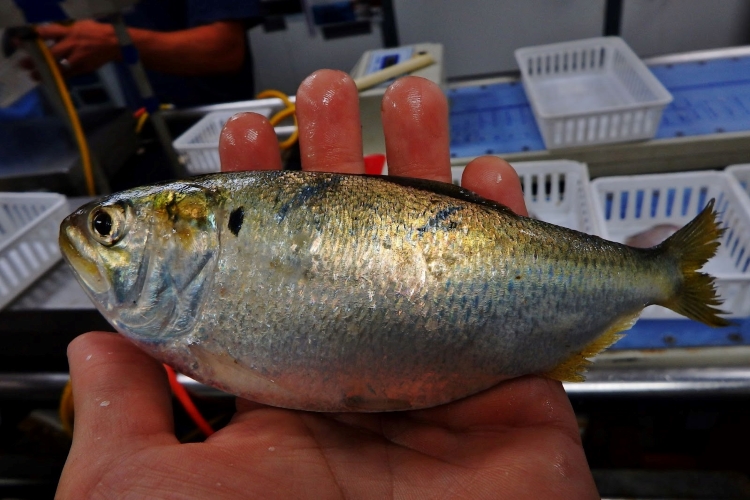
The menhaden, or "pogie," fishery has supplied fertilizer, animal feed, bait, and omega-3-rich oils for over a century. Menhaden are small, oily fish that play a vital role in coastal ecosystems while supporting significant local employment. The industry operates under state and regional management and is subject to ongoing scientific monitoring to ensure sustainable harvest practices.
Backwoods University is a bi-weekly podcast series from the MeatEater network examining the intersection of outdoor life, conservation, and culture. Hosted by Lake Pickle, a lifelong hunter, conservationist, and Mississippian, the show highlights diverse perspectives on environmental and policy issues affecting the modern outdoors.
About the Menhaden Fisheries Coalition
The Menhaden Fisheries Coalition (MFC) is a collective of menhaden fishermen, related businesses, and supporting industries. Comprised of businesses along the Atlantic and Gulf coasts, the Menhaden Fisheries Coalition conducts media and public outreach on behalf of the menhaden industry to ensure that members of the public, media, and government are informed of important issues, events, and facts about the fishery.
Ocean Harvesters Statement on ASMFC's One-Year, 20% Menhaden TAC Cut for 2026
REEDVILLE, VA / October 29, 2025
Yesterday the Atlantic States Marine Fisheries Commission (ASMFC) voted to reduce the coastwide Atlantic menhaden quota by 20% for the 2026 season and to revisit specifications again next year rather than adopting a full three-year package through 2028.
REEDVILLE, VA / October 29, 2025 / Yesterday the Atlantic States Marine Fisheries Commission (ASMFC) voted to reduce the coastwide Atlantic menhaden quota by 20% for the 2026 season and to revisit specifications again next year rather than adopting a full three-year package through 2028.
Based on the peer-reviewed assessment record, a 20% reduction was unnecessary to avoid ecosystem overfishing. The latest SEDAR 102 work shows menhaden are not overfished, overfishing is not occurring, and the probability of crossing the ecosystem overfishing threshold at the current Total Allowable Catch (TAC) is low. The same record indicates that maintaining the status quo or making, at most, a modest, precautionary trim is consistent with risk policy; in particular, a reduction on the order of 10% eliminates overfishing risk in 2026 and remains extremely low if carried forward, so deeper cuts are not supported by the risk framework.
Ecological Reference Point (ERP) based management already accounts for predator needs by constraining fishing mortality to remain below the ERP threshold; under this system the stock remains healthy in both single-species and ecosystem contexts. The Atlantic menhaden fishery is independently certified as sustainable by the Marine Stewardship Council.
There will likely be some operational adjustments required at our Reedville facility to comply with a 20% harvest reduction; we are evaluating the extent of those changes now. Looking ahead, pushing harsher cuts in 2027 and beyond, particularly in the absence of new data, would impose needless harm on working families and a 150-year-old fishery, without ecological justification under the ERP risk analyses.
We urge all interested parties to watch this video to hear directly from our union fishermen whose jobs and communities are on the line. These are unionized local crews supporting hundreds of family-sustaining jobs in Virginia’s Northern Neck.
On Maryland’s Bay-Cap Motion: New Chesapeake Bay-specific limits are not warranted. The existing Bay cap is a policy-based landings limit, not a Bay-specific biological reference point, and past adjustments were precautionary policy choices rather than science-derived thresholds. With the Science Center for Marine Fisheries now funding a Chesapeake Bay research roadmap—led by scientists from UMCES’s Chesapeake Biological Laboratory, VIMS, and NOAA—to define what a scientifically defensible, ecologically meaningful Bay cap should look like, the Board should await those results before adding new measures.
We support moving forward with targeted new Bay science, now funded, to guide any future Bay-specific decisions, so that upcoming choices are grounded in robust, transparent analysis.
We respect the Board’s desire for caution, but the science indicates a 20% cut was not needed to avoid overfishing. Maintaining the status quo or, at most, a 10% reduction would have met the ERP risk standard while avoiding unnecessary harm to workers and coastal communities. We stand ready to collaborate with managers and scientists as Bay-focused work proceeds and to support a durable, science-based multi-year TAC next year.
About Ocean Harvesters
Ocean Harvesters owns and operates a fleet of more than 30 fishing vessels in the Atlantic Ocean and Gulf of Mexico. The company's purse-seine fishing operation is exclusively engaged in the harvest of menhaden, a small, nutrient-dense fish used to produce fish meal, fish oil, and fish solubles. Both its Atlantic and Gulf Menhaden fisheries are certified sustainable by the Marine Stewardship Council. Committed to responsible fishing operations, Ocean Harvesters is proud to be heir to a fishing legacy that extends nearly 150 years.
Menhaden Fisheries Coalition Refutes False Claims by Chesapeake Bay Foundation's Chris Moore
WASHINGTON, DC / October 27, 2025
At a Chesapeake Bay Foundation (CBF) event titled "The Impacts of Climate on Fisheries," held on September 24, 2025, at the Virginia Aquarium & Marine Science Center in Virginia Beach, Chris Moore, CBF's Senior Regional Ecosystem Scientist, made several inaccurate statements about the Atlantic menhaden fishery and its management.
WASHINGTON, DC / October 27, 2025 / At a Chesapeake Bay Foundation (CBF) event titled "The Impacts of Climate on Fisheries," held on September 24, 2025, at the Virginia Aquarium & Marine Science Center in Virginia Beach, Chris Moore, CBF's Senior Regional Ecosystem Scientist, made several inaccurate statements about the Atlantic menhaden fishery and its management.
The Menhaden Fisheries Coalition (MFC) issues the following response to clarify the facts and ensure the public record reflects the best available science.
CLAIM: The menhaden industry has blocked Bay-specific science.
FACT:
The menhaden industry has a long record of collaborating with scientists and agencies throughout the Atlantic coast, contributing to more than a dozen cooperative studies with universities and NOAA. When new acoustic survey methods were proposed for Bay research, industry representatives supported conducting a pilot study to validate the technology before applying it across the entire Chesapeake. The disagreement was about scientific rigor, not opposition to research.
Today, a Bay-specific research roadmap funded through the Science Center for Marine Fisheries and led by scientists at the University of Maryland Center for Environmental Science, VIMS, and NOAA is underway to design a scientifically defensible Chesapeake Bay menhaden harvest cap, the very type of work Mr. Moore claimed was being prevented.
CLAIM: The ASMFC Technical Committee called for a 50% reduction in harvest to maintain healthy populations.
FACT:
No scientific body has issued such a recommendation. The Atlantic States Marine Fisheries Commission's most recent peer-reviewed assessment concluded that Atlantic menhaden are not overfished and not experiencing overfishing. The current harvest limit is set conservatively using ecological reference points that ensure sufficient menhaden remain in the water to feed predators such as striped bass and ospreys. Demands for a 50% reduction stem from advocacy campaigns, not from Commission scientists.
CLAIM: The latest assessment shows the population dropped by roughly 37%.
FACT:
Updates to assessment models are routine as part of the scientific process, but the most recent analyses confirm that menhaden remain abundant and well within sustainable harvest levels. The fishery operates far below the ecological threshold set by the ASMFC and remains certified as sustainable by the Marine Stewardship Council, one of the world's most respected independent standards for fisheries management.
CLAIM: Menhaden are under stress in the Chesapeake Bay due to climate change.
FACT:
Maryland's Department of Natural Resources' annual young-of-year surveys show that for three consecutive years, juvenile menhaden have been abundant and widespread throughout the Bay, including the highest levels recorded since 1990. These findings indicate that menhaden continue to be at healthy levels in the Bay despite changing environmental conditions.
CLAIM: There are not enough menhaden to support wildlife such as striped bass and osprey.
FACT:
The Ecological Reference Points used to manage Atlantic menhaden were developed by the Atlantic States Marine Fisheries Commission between 2017 and 2020 through a collaborative process that included federal and state scientists, university researchers, and environmental organizations, among them, the Chesapeake Bay Foundation. These ERPs replaced single-species management with an ecosystem-based model that explicitly accounts for the needs of key predators that depend on menhaden for food. The multispecies model incorporated striped bass as the principal indicator species, along with bluefish, weakfish, and spiny dogfish to represent the broader predator community.
Research by the U.S. Geological Survey, the Virginia Institute of Marine Science, and others demonstrates that osprey breeding success is influenced by multiple factors, including weather patterns, predation by recovering bald eagle populations, and the availability of other prey species.
Importantly, the regulated menhaden fishery begins after osprey nesting and feeding periods are already underway, meaning fishing activity does not coincide with the critical chick-rearing season.
CLAIM: Virginia's reduction fishery takes 70% of the coastwide catch, nearly half of it from inside the Bay.
FACT:
Harvest within the Chesapeake Bay is strictly limited by a 51,000-metric-ton Bay cap, about one-third of historical levels. Actual landings routinely fall below this limit, and most of Virginia's catch is taken from coastal waters outside the Bay. These restrictions, combined with daily reporting and vessel tracking, reflect the fishery's precautionary management approach.
CLAIM: Menhaden fishing harms tourism and whale watching.
FACT:
There is no credible scientific evidence linking regulated menhaden harvests to whale or tourism impacts. Predators feed on a variety of prey species, and menhaden management already incorporates the needs of those predators through ecosystem-based reference points. Menhaden remains the only U.S. fishery managed explicitly for predator needs within a scientifically validated ecological framework.
Setting the Record Straight
The Atlantic menhaden fishery is one of the best-studied and most responsibly managed fisheries in the world. It operates under ecosystem-based quotas developed collaboratively by federal and state agencies, conservation organizations, and industry representatives. These quotas are designed to balance the health of predator populations, the broader ecosystem, and the livelihoods of the communities that depend on the fishery.
The fishery employs unionized Virginia watermen earning strong wages and benefits in one of the region's few remaining working-waterfront industries. Its sustainability has been independently confirmed by both the Atlantic States Marine Fisheries Commission and the Marine Stewardship Council.
Mr. Moore's inaccurate statements on the menhaden fishery begin at the 45:30-mark in the YouTube video.
About the Menhaden Fisheries Coalition
The Menhaden Fisheries Coalition (MFC) is a collective of menhaden fishermen, related businesses, and supporting industries. Comprised of businesses along the Atlantic and Gulf coasts, the Menhaden Fisheries Coalition conducts media and public outreach on behalf of the menhaden industry to ensure that members of the public, media, and government are informed of important issues, events, and facts about the fishery.
Statement of the Menhaden Fisheries Coalition on the Upcoming Atlantic Menhaden Management Board Meeting
WASHINGTON, DC / October 27, 2025
Tomorrow, the Atlantic States Marine Fisheries Commission's Menhaden Board is slated to take up several issues which have the potential to gravely impact this historic fishery. First, it will consider the results of the menhaden and ecological reference points ("ERP") stock assessment. Despite a lower estimate of menhaden fecundity, the stock status remains not overfished and overfishing is not occurring. The assessment team attributed this to the fact that menhaden "management has consistently been more conservative than single-species reference points would have historically prescribed."
WASHINGTON, DC / October 27, 2025 / Tomorrow, the Atlantic States Marine Fisheries Commission's Menhaden Board is slated to take up several issues which have the potential to gravely impact this historic fishery. First, it will consider the results of the menhaden and ecological reference points ("ERP") stock assessment. Despite a lower estimate of menhaden fecundity, the stock status remains not overfished and overfishing is not occurring. The assessment team attributed this to the fact that menhaden "management has consistently been more conservative than single-species reference points would have historically prescribed."
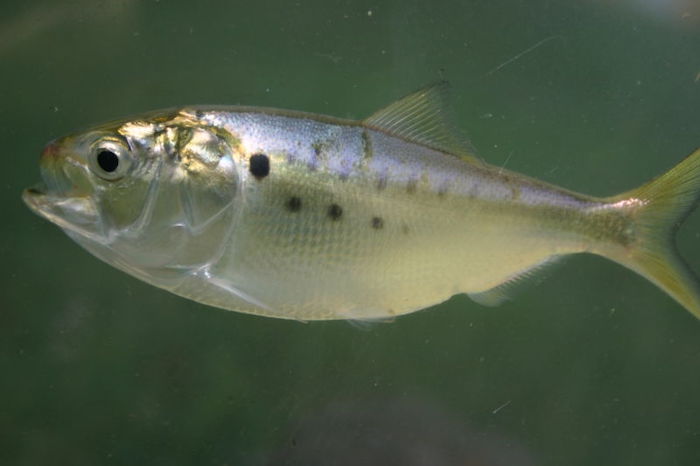
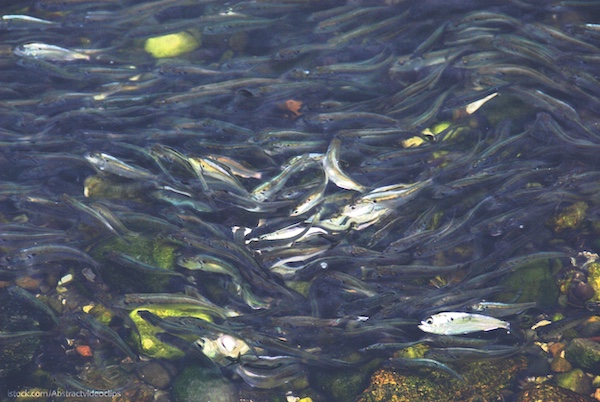
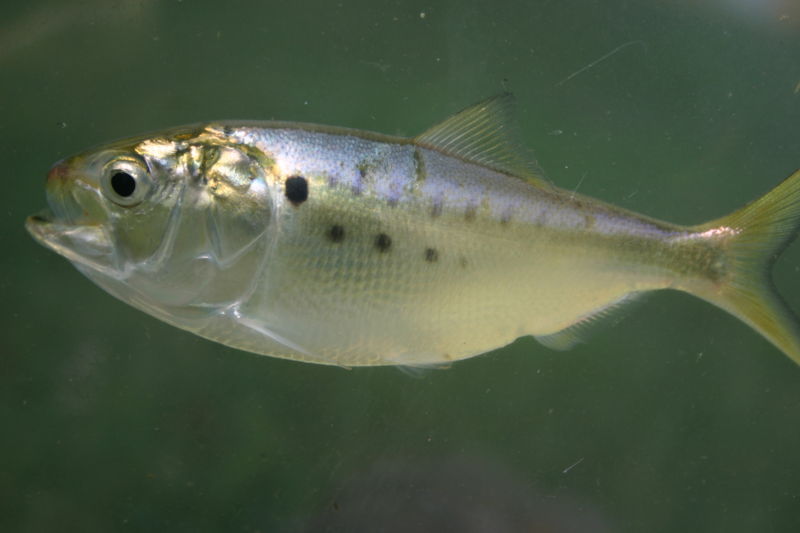
Atlantic menhaden
The second and most immediately consequential decision facing the Board is setting the total allowable catch (TAC) of menhaden for 2026 through 2028. Some are calling for up to 55% cuts to the current TAC, which would devastate not only the 150-year-old reduction fishery, but small-scale bait fishermen all along the Atlantic coast and the lobstermen and crabbers that depend on them. This is wholly unjustified. As the scientists who prepared the ERP assessment noted, even if the current TAC were to be maintained, "the probability of exceeding the ERP FTHRESHOLD [that is, overfishing to the detriment of menhaden predators] is low." They also affirmed that the fishery has little impact on predators like striped bass because, for one, they mostly rely on younger fish that are not targeted by the fishery and, two, because the "main driver for Atlantic menhaden availability to predators is recruitment success," which is mostly determined by environmental factors.
That said, the Menhaden Fisheries Coalition supports a precautionary reduction of no more than 15% to the current TAC (or 198,518 metric tons). This level would ensure that there is no chance of overfishing over the next three years and provides fisheries managers confidence that the stock will remain healthy. This is a responsible TAC that promotes conservation and protects families that rely on the fishery.
The third agenda item of concern is the potential for initiating an action to consider reallocation of the TAC among the states. The Coalition does not oppose a review of current allocations. However, any attempt to mitigate the impact of drastic quota cuts by forcing only one or two states to shoulder the burden of conservation is inconsistent with the ISFMP Charter, which requires that "management measures shall be designed to achieve equivalent management results throughout the range of a stock." As the initial and subsequent allocation systems did, any reallocation should consider current use of and dependence on menhaden. If reductions in the TAC are enacted, the Board should reevaluate the allocation of TAC to states with no fishery.
Finally, the Menhaden Board will address Maryland's proposal to put new, unjustifiable limits on the precautionary Chesapeake Bay menhaden reduction fishery cap. There is simply no scientific justification for any such new measures. The Science Center for Marine Fisheries, administered by the National Science Foundation and supported by the fishing industry, is undertaking new research, led by the most respected scientists in the field, to investigate issues related to management in the Chesapeake Bay. The Board should await this new and relevant science before taking further action.
About the Menhaden Fisheries Coalition
The Menhaden Fisheries Coalition (MFC) is a collective of menhaden fishermen, related businesses, and supporting industries. Comprised of businesses along the Atlantic and Gulf coasts, the Menhaden Fisheries Coalition conducts media and public outreach on behalf of the menhaden industry to ensure that members of the public, media, and government are informed of important issues, events, and facts about the fishery
Menhaden Misinformation: Four Organizations Push Drastic Cuts that Contradict the Assessment Record and Ecosystem-Based Management
WASHINGTON, DC / October 27, 2025
The Chesapeake Bay Foundation (CBF), American Sportfishing Association (ASA), Theodore Roosevelt Conservation Partnership (TRCP), and the American Saltwater Guides Association (ASGA) are circulating claims about Atlantic menhaden that don't match the assessment record or how this fishery is managed.
WASHINGTON, DC / October 27, 2025 / The Chesapeake Bay Foundation (CBF), American Sportfishing Association (ASA), Theodore Roosevelt Conservation Partnership (TRCP), and the American Saltwater Guides Association (ASGA) are circulating claims about Atlantic menhaden that don't match the assessment record or how this fishery is managed.
Managers already have an ecosystem framework in place that ties menhaden harvest to predator needs. The 2025 single-species and Ecological Reference Points (ERP) assessment components (adopted and implemented by the Atlantic States Marine Fisheries Commission (ASMFC)) underwent external peer review; under Total Allowable Catch (TAC) levels set since 2021, the stock is not overfished and overfishing is not occurring in an ecosystem context. Risk management is keyed to avoiding the ERP fishing mortality threshold, and not arbitrary percentage cuts.
Claims being circulated, and the record
1) "Striped bass anglers are making big sacrifices that will be wasted unless menhaden quotas are cut by ~50%."
The record:
Rebuilding success depends on keeping striped bass fishing mortality (F) low and hoping for improved recruitment; the few recent strong year classes (e.g., 2015, 2018) were heavily impacted by fishing mortality, and Chesapeake Bay recruitment has been below average for years, issues not caused by a menhaden-forage deficit. The next striped bass amendment must hold F low enough to protect weaker cohorts.
Assessment-team reinforcement: the Assessment report indicated that "minor changes in Atlantic menhaden harvest rates are not expected to have major negative effects on most predators"; rather only increasing effort to the "overfishing" level (FTHRESHOLD) "would cause declines in biomass for more sensitive predator species, particularly striped bass." "As a result, … the probability of exceeding the ERP FTHRESHOLD under the current TAC is low."
Proposals for cuts up to 55% are not indicated by the risk framework and would devastate the 150-year-old reduction fishery, small-scale bait fishermen along the coast, and the lobstermen and crabbers who depend on them without helping striped bass fishermen.
2) "Striped bass are starving due to a lack of menhaden; severe menhaden cuts are needed to rebuild striped bass."
The record:
Striped bass rebuilding is driven by reducing striped bass mortality within the 10-year plan to 2029; board discussions since 2019 have focused on striped bass controls, not a forage shortage from the menhaden fishery.
Chesapeake Bay workgroup monitoring from Virginia and Maryland reported healthy striped bass body condition; the fish are not underfed.
Menhaden removals overlap little with what predators eat most: predators primarily consume age-0/1 menhaden, while the reduction fishery targets age-2+ fish.
Assessment team reinforcement: the fishery has limited impact on predators like striped bass because they largely rely on younger fish not targeted by the fishery, and recruitment (environment) is the main driver of young menhaden's availability to predators.
3) "Severe coastwide cuts are necessary to hit a probability of not exceeding the ERP mortality (F) target."
The record:
National Standard 1 (NS1) of the Magnuson-Stevens Fishery Conservation and Management Act (MSA) and peer-reviewed advice focus on preventing overfishing; the operative risk line in the ERP control rule is the F threshold, not the policy F target. Managers should select TACs that avoid any chance of exceeding the threshold.
Assessment team reinforcement: even maintaining the current TAC carries a low probability of exceeding the ERP F threshold; if managers seek extra assurance, a precautionary reduction of no more than 10% (to ~210,195 mt) produces no chance of overfishing in 2026 and only ~1% if held through 2027-2028.
ERP-based management already protects predators by capping risk at the ERP F threshold; under this system, menhaden are not overfished, and overfishing is not occurring in an ecosystem context.
Adjusting TAC: a ≤10% precautionary reduction (~210,195 mt) provides no chance of overfishing in 2026 and about 1% if held through 2027-2028. Larger cuts are not indicated by the risk framework.
4) "Past TACs were far too high because menhaden abundance was overestimated."
The record:
ERP-era TACs were set conservatively to avoid exceeding ecosystem risk thresholds; under ERP management since 2021, menhaden remain not overfished and overfishing not occurring in an ecosystem context.
The 2025 assessment's natural mortality (M) re-estimation was empirically derived from the Ahrenholtz tag-recapture database and independently reviewed; the single-species and ERP models were externally peer-reviewed (including through NOAA Fisheries' Center for Independent Experts) and should be treated as authoritative.
Assessment team reinforcement: despite a rigorous reevaluation that reduced fecundity estimates, stock status remains "not overfished" and "overfishing is not occurring," attributed to "management [that] has consistently been more conservative than single-species reference points would have historically prescribed and [which] has continued with a conservative approach even under the 2020 ERPs [i.e., the current TACs]."
5) "Earlier assessments misestimated abundance by ~37%; ‘errors' require a 55% TAC reduction."
The record:
The "37%" talking point is misstated and does not justify fixed percentage cuts. The current natural mortality (M) (~0.932) is higher than historic values sometimes cited and was endorsed by the Center for Independent Experts after intensive scrutiny of the tag-recapture database. There is no basis to convert M updates into a mandated 55% reduction under ERPs.
Assessment team reinforcement: recruitment (environment) is the main driver of menhaden availability to predators; managing to the ERP fishing mortality threshold, not reverse-engineering large headline cuts, aligns with the science.
6) "Because the coastwide assessment ignores Bay impacts, new Chesapeake Bay-specific limits are needed now."
The record:
There is no scientific justification for new Bay-specific limits beyond ERPs at this time; research from the Science Center for Marine Fisheries now underway will inform any Bay-focused questions, and managers should await the new science before acting.
Bottom line
ERP-based management already protects predators by capping risk at the ERP fishing mortality threshold; under this system, menhaden are not overfished, and overfishing is not occurring in an ecosystem context.
Rebuilding striped bass depends on reducing striped bass fishing mortality; broad menhaden cuts are not a substitute and are not indicated by the ERP risk framework.
About the Menhaden Fisheries Coalition
The Menhaden Fisheries Coalition (MFC) is a collective of menhaden fishermen, related businesses, and supporting industries. Comprised of businesses along the Atlantic and Gulf coasts, the Menhaden Fisheries Coalition conducts media and public outreach on behalf of the menhaden industry to ensure that members of the public, media, and government are informed of important issues, events, and facts about the fishery.
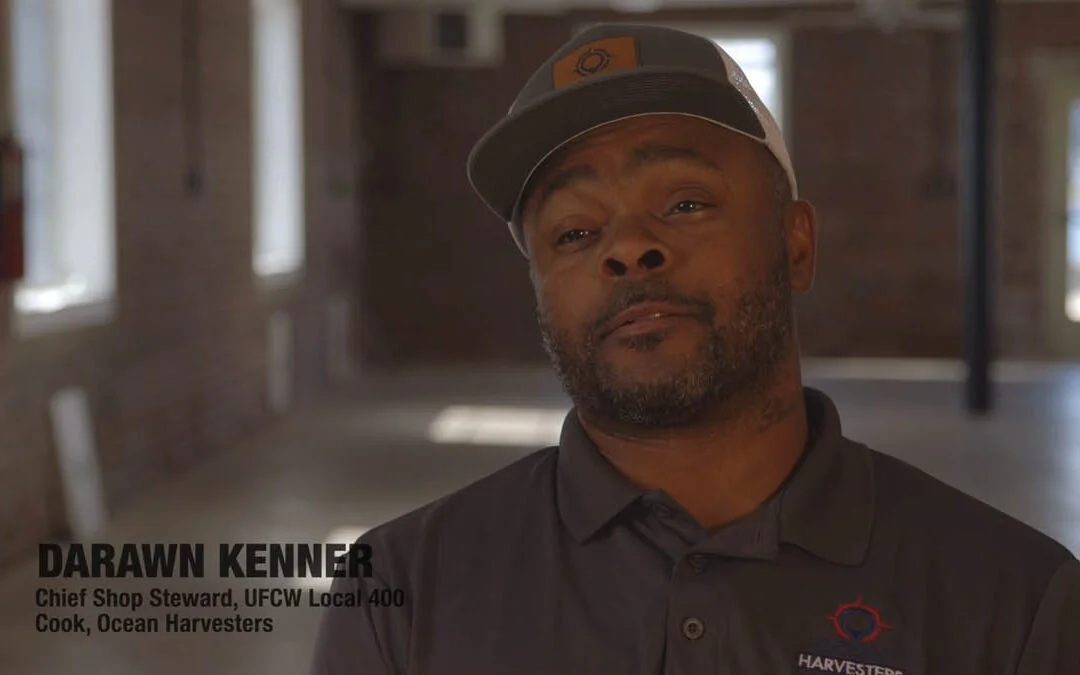
UFCW Local 400 Members Spotlight the Real Faces of the Menhaden Fishery in New Video
REEDVILLE, VA / October 27, 2025
The United Food and Commercial Workers (UFCW) Local 400 Union has released a new video highlighting the voices of its members who work as commercial fishermen in the Atlantic menhaden fishery. The video showcases the pride, tradition, and hard work of union members whose livelihoods depend on a fishery that has operated from Virginia’s Northern Neck for well over a century.
REEDVILLE, VA / October 27, 2025 / The United Food and Commercial Workers (UFCW) Local 400 Union has released a new video highlighting the voices of its members who work as commercial fishermen in the Atlantic menhaden fishery. The video showcases the pride, tradition, and hard work of union members whose livelihoods depend on a fishery that has operated from Virginia’s Northern Neck for well over a century.
In the video, crew members describe the menhaden fleet as a family, one bound by generations of work on the water. Many fishermen are second-, third-, or even fourth-generation employees, carrying on a legacy of providing for their families and their community. They emphasize the importance of safety, solidarity, and teamwork in sustaining both their jobs and the Bay ecosystem.
The video highlights how the menhaden fleet, operated by Ocean Harvesters, an American-owned company, provides hundreds of family-supporting union jobs in Virginia’s Northern Neck. Ocean Harvesters’ crews are overwhelmingly local and members of UFCW Local 400 Union. The company’s operations are deeply tied to the region’s economy, employing one of the largest minority workforces in Northumberland County.
The fishermen also speak about misconceptions surrounding their industry. They describe their roots in the community and their commitment to doing the job the right way. “We love to fish, and we’re not destroying anything.” says one. Another adds, “Some people, you’re not going to get it through their head that we are not out there to destroy what keeps us going.” They urge viewers to look at the facts: “Just don’t take people’s word for it. Go do your research.”
The video also shows the challenges crews face when people suggest they should fish only in the ocean instead of the Chesapeake Bay. Fishermen explain that rough seas and weather conditions often make ocean trips unsafe or impossible, and that they rely on access to the Chesapeake Bay to make a day’s work. The footage underscores why safe, workable Bay conditions are essential for keeping crews employed and families supported.
“Our number one rule is safety first.” one crew member says. Another adds, “On the ocean, you got to be so careful that nobody gets hit, nobody gets whined through there.” A third explains the risk they manage with heavy gear: “The line takes on a lot of tension. It gets to the point where it may snap. You don’t want to be in the way of that line like that.”
Beyond safety, crew members describe the fishery’s impact on their families and the wider community, from paying for healthcare and college to supporting local businesses. “It’s a job. They’re out there trying to make a living. They’re not on these boats just to go out there and play,” one worker explains. Another sums up the local stakes: “This is a vital asset in this community, this company is.”
These firsthand accounts show the real people behind the fishery – skilled, safety-conscious union workers who depend on teamwork, seamanship, and responsible operations to do their jobs. The video captures the pride and resilience of a workforce that has kept the menhaden fishery thriving for generations, a living example of the American labor tradition and stewardship on the Chesapeake Bay.
Watch the full video here: https://youtu.be/zb3JjL_-RPI
Menhaden Fisheries Coalition Applauds Science-Based Review of Chesapeake Bay Menhaden Harvest Cap
WASHINGTON, DC / October 24, 2025
Coalition supports new SCEMFIS-funded research roadmap to develop ecological foundation for Bay management; regulators' statements confirm current cap not based on science
Coalition supports new SCEMFIS-funded research roadmap to develop ecological foundation for Bay management; regulators' statements confirm current cap not based on science
WASHINGTON, DC / October 24, 2025 / The Menhaden Fisheries Coalition today welcomed a newly funded Science Center for Marine Fisheries (SCEMFIS) project to produce a research roadmap for Atlantic menhaden in the Chesapeake Bay as a long-overdue opportunity to replace political compromise with sound science.
For nearly twenty years, the Chesapeake Bay menhaden harvest cap, a harvest limit that applies only to the reduction fishery, has been managed without biological justification. Regulators and scientists have repeatedly acknowledged this fact. The new project from SCEMFIS will identify the research needed to finally develop what the scientists leading the project call a "scientifically defensible and ecologically meaningful Chesapeake Bay cap."
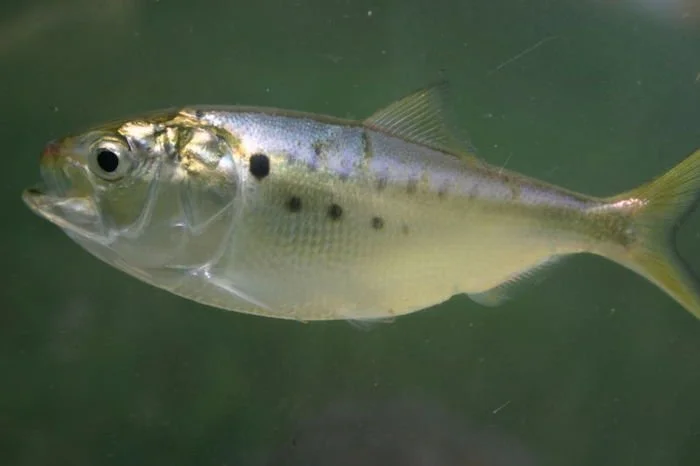
Atlantic menhaden
Regulators Acknowledge Current Bay Cap Was Never Based on Science
When the cap was first imposed in 2006, it was a political compromise between Virginia, Maryland, and environmental groups, not a conservation measure grounded with a scientific justification. As the Atlantic States Marine Fisheries Commission's (ASMFC) own Executive Director at the time, Vince O'Shea, testified before Congress in 2008, the Bay Cap was established "in response to a political problem" and "there was not a science basis for the Cap."
That view was echoed by ASMFC's scientific staff. In 2012, the Menhaden Plan Development Team concluded, "The annual Chesapeake Bay harvest cap is not based on a scientifically quantified harvest threshold, fishery health index, or fishery population level study."
In a follow-up report that same year, the ASMFC Technical Committee stated: "The TC stands by its previous recommendation that, given the current fishery and history of landings, there has not appeared to be any biological benefit to the Chesapeake Bay Reduction Cap since it was implemented."
The Technical Committee reinforced this position during the Commission's December 2012 meeting, with the then-chairperson noting that, "Given the current structure of the industry right now, and the fish that they harvest, and the biological information that we're collecting, there doesn't seem to be any benefit" from the Bay Cap.
Previous ASMFC Chairman Confirms Lack of Evidence for Bay Cap
When Virginia appealed a 41% cut to the Bay Cap in 2018, ASMFC Chairman Jim Gilmore stated in a formal letter that "there is no evidence in Amendment 3 to support the view that lowering the Bay Cap was necessary to protect the Bay as a nursery area for menhaden and there is no evidence to suggest the Bay Cap is necessary to protect the Bay as a nursery for other species." He concluded: "Leadership agrees the Amendment does not provide sufficient evidence to support such claims."
Call for a Science-Based Approach
Despite repeated coastwide stock increases and consistent findings that the Atlantic menhaden population is not overfished and overfishing is not occurring, the Chesapeake Bay menhaden harvest cap has remained fixed at 51,000 metric tons, less than half the level originally set in 2006. Meanwhile, the ASMFC has allowed other Bay fisheries, including Maryland and Potomac River bait harvesters, to increase their quotas.
The Chesapeake Bay menhaden harvest cap has become a symbol of how fisheries policy can drift away from science with outside influence from special interest groups dictating management strategies. The ASMFC's own scientists have said for over a decade that there is no biological justification for this cap.
The Need for a Research Roadmap
The SCEMFIS-funded effort, led by scientists from the Chesapeake Biological Laboratory, the Virginia Institute of Marine Science, and NOAA, will begin by conducting an extensive review of the existing data on relevant issues such as Atlantic menhaden biomass, the movement of schooling pelagic fish, and the consumption of Atlantic menhaden by Chesapeake Bay predators. They will also work with the industry to review data sources such as landings data and spotter pilot reports to complement existing peer-reviewed studies and other sources of data.
After the review, the researchers will identify knowledge gaps, and will propose new study designs and methodologies to fill these knowledge gaps to inform a Chesapeake Bay menhaden harvest cap that is based on data and is scientifically defensible.
SCEMFIS is a collaborative project between the fishing industry and leading finfish and shellfish researchers aimed at improving our understanding of important commercial species and supporting sustainable management of the fisheries that depend on them. It is part of the National Science Foundation's Industry/University Cooperative Research Centers program.
About the Menhaden Fishery
Atlantic menhaden support the largest commercial fishery by weight on the U.S. East Coast and sustain hundreds of unionized, family-supporting jobs in rural Virginia communities where few comparable opportunities exist. Fishermen are represented by the United Food and Commercial Workers (UFCW) Local 400, earning family-sustaining wages and full benefits. The fishery is certified as sustainable by the Marine Stewardship Council, the gold standard for responsible fisheries, and the ASMFC has repeatedly found that menhaden is not overfished and overfishing is not occurring.
About the Menhaden Fisheries Coalition
The Menhaden Fisheries Coalition (MFC) is a collective of menhaden fishermen, related businesses, and supporting industries. Comprised of businesses along the Atlantic and Gulf coasts, the Menhaden Fisheries Coalition conducts media and public outreach on behalf of the menhaden industry to ensure that members of the public, media, and government are informed of important issues, events, and facts about the fishery.
SCEMFIS Funds Chesapeake Bay Menhaden Research Roadmap to Inform a Scientifically Defensible Bay Cap
OCEAN SPRINGS, MS / October 23, 2025
The Science Center for Marine Fisheries (SCEMFIS) has funded a new project that will create a detailed and actionable roadmap that identifies the research needed to develop a scientifically defensible and ecologically meaningful Chesapeake Bay harvest cap for Atlantic menhaden.
Chesapeake Biological Laboratory, Virginia Institute of Marine Science, and NOAA scientists to develop a plan for a scientifically defensible Chesapeake Bay menhaden harvest cap
OCEAN SPRINGS, MS / October 23, 2025 / The Science Center for Marine Fisheries (SCEMFIS) has funded a new project that will create a detailed and actionable roadmap that identifies the research needed to develop a scientifically defensible and ecologically meaningful Chesapeake Bay harvest cap for Atlantic menhaden.
The project, funded at the Center's fall meeting, is being led by scientists from the Chesapeake Biological Laboratory (CBL) at the University of Maryland Center for Environmental Science (UMCES), the Virginia Institute of Marine Science (VIMS), and NOAA. The team is experienced in matters related to Atlantic menhaden in the Chesapeake Bay, bringing decades of peer-reviewed research, assessment leadership, and survey design expertise to this work.
What the project will do
Drs. Genevieve Nesslage and Michael Wilberg (UMCES), Drs. Robert Latour and James Gartland (VIMS), and Dr. Amy Schueller (NOAA SEFSC), will conduct an extensive review of existing menhaden science, focusing on factors such as estimated menhaden biomass, migration patterns of schooling fish, and the consumption of menhaden and other forage species by Chesapeake Bay predators. The review will identify gaps in available information and propose specific study designs, analytical approaches, timelines, and estimated costs to guide new Bay-focused menhaden research.
Research recommendations will likely involve a combination of new data collection and analyses of existing datasets, including industry data such as landings information and spotter pilot reports.
The roadmap is intended to be practical and actionable, leveraging tools and data already in use and identifying where new information, such as novel tagging, hydroacoustics, and spatial modeling, would add significant value.
Why this matters
Current menhaden management in the Chesapeake Bay is built around a landings limit rather than a Bay-specific biological target. Commercial reduction landings of Atlantic menhaden from the Bay are currently subject to a 51,000-metric-ton Bay cap. This cap is based on the average of 2012-2016 reduction landings from the Bay, but it is not a biological reference point, and thus cannot, by itself, inform managers about the status of the portion of the stock within the Bay or the potential ecological impacts of harvest on other species.
Over time, the Chesapeake Bay menhaden harvest cap has been adjusted as a matter of policy: reduced from 109,020 metric tons (2006) to 87,216 metric tons (2012) and then to 51,000 metric tons (2017). These caps were not based on Bay-specific biological analyses, and were intended as precautionary, interim limits. This project will define the research activities needed to evaluate Bay-specific conditions and ecological interactions so that future decisions about the Bay Cap can be grounded in robust, transparent science.
Economic importance of Atlantic menhaden
Atlantic menhaden support the largest commercial fishery by weight on the U.S. East Coast and play a critical role as forage for predators. The fishery supports a unionized workforce with strong wages and full benefits in a rural region with few comparable opportunities.
Project Team (selected qualifications in Atlantic menhaden & Chesapeake Bay)
Genevieve M. Nesslage, Ph.D., Associate Research Professor, CBL (UMCES)
Quantitative fisheries scientist with research focusing on Atlantic menhaden spawning locations and larval dispersal, fishery sampling, survey design, overwintering habitat use, and predator-prey modeling. Former Senior Stock Assessment Scientist at the Atlantic States Marine Fisheries Commission.
Michael J. Wilberg, Ph.D., Professor of Fisheries Science, CBL (UMCES)
Fisheries stock assessment and management strategy evaluation specialist with research focused on Atlantic menhaden movement, mortality, growth, and predator-prey modeling. Lead author of the 2020 survey design for Atlantic menhaden in Chesapeake Bay.
Robert J. Latour, Ph.D., Professor, VIMS (William & Mary)
Quantitative fisheries ecologist focusing on predator-prey interactions, population dynamics, and habitat modeling. Lead/co-author of the 2023 study on female Atlantic menhaden reproductive biology and fecundity and co-author (with Gartland) of Virginia's 2023 Atlantic Menhaden Research Planning report to the General Assembly.
James Gartland, Ph.D., Senior Research Scientist, VIMS (William & Mary)
Quantitative fisheries scientist with extensive experience in the development of fisheries monitoring surveys, prey consumption models, and ecological indicators, including in Chesapeake Bay. Co-author of the 2023 menhaden fecundity study (with Latour and Schueller) and co-author of Virginia's 2023 Atlantic Menhaden Research Planning report guiding Bay-specific research priorities.
Amy M. Schueller, Ph.D., Research Fish Biologist, NOAA Southeast Fisheries Science Center
Lead assessment analyst for Atlantic and Gulf menhaden and key contributor to the working group on ecological reference points (ERPs) that underpin Atlantic menhaden management.
About SCEMFIS
The Science Center for Marine Fisheries (SCEMFIS) brings together academic and industry expertise to address urgent scientific challenges facing sustainable fisheries. Through advanced methods, analytical tools, and collaborative research, SCEMFIS works to reduce uncertainty in stock assessments and improve the long-term sustainability of key marine resources.
SCEMFIS is an Industry-University Cooperative Research Center supported by the National Science Foundation. Industry organizations join SCEMFIS through an Industry Membership Agreement with one of the center's site universities and contribute both financial support and valuable expertise to help shape research priorities.
Its university partners include the University of Southern Mississippi (lead institution) and the Virginia Institute of Marine Science at the College of William and Mary. The center also collaborates with scientists from a broad network of institutions, including Old Dominion University, Rutgers University, the University of Massachusetts-Dartmouth, the University of Maryland, and the University of Rhode Island. These researchers bring deep expertise in finfish, shellfish, and marine mammal science.
Demand for SCEMFIS's services continues to grow, driven by the fishing industry's need for responsive, science-based support. The center provides timely access to expert input on stock assessment issues, participates in working groups, and conducts targeted studies that lead to better data collection, improved survey design, and more accurate modeling-all in service of sustainable, science-driven fishery management.
Maryland's Annual Striped Bass Survey Finds Menhaden Abundant in Chesapeake Bay for Third Consecutive Year
WASHINGTON, DC / October 15, 2025
The Maryland DNR's 2025 survey confirms Atlantic menhaden in the Chesapeake Bay are "widespread for the third consecutive year." This reinforces last year's finding that juvenile menhaden were at their highest levels since 1990 and directly contradicts claims from the same agency that menhaden are absent from Maryland waters.
In August and September of this year, Baltimore experienced three major fish kills, largely consisting of menhaden and totaling over 200,000 fish.
WASHINGTON, DC / October 15, 2025 / SUMMARY: The Maryland DNR's 2025 survey confirms Atlantic menhaden in the Chesapeake Bay are "widespread for the third consecutive year." This reinforces last year's finding that juvenile menhaden were at their highest levels since 1990 and directly contradicts claims from the same agency that menhaden are absent from Maryland waters.
The Maryland Department of Natural Resources (DNR) released its 2025 Chesapeake Bay Young-of-Year Striped Bass Survey Results, and for the third year in a row, the news is clear: Atlantic menhaden remain widespread and abundant throughout the Bay.
According to DNR's announcement, "Biologists captured more than 36,000 fish of 55 different species while conducting this year's survey. Positive findings include three important forage species that were documented in abundance during the survey. Atlantic menhaden and bay anchovies were widespread in the Bay for the third consecutive year."
This continues a strong trend observed in DNR's 2024 and 2023 surveys. In last year's results, the agency reported that "Menhaden abundance was nearly equal to last year, which was the highest measured since 1990." This year's menhaden result is the third highest since 1991.
These findings from Maryland DNR further confirm what scientists and fishery managers have said repeatedly: Atlantic menhaden are abundant and sustainably managed. Despite repeated claims to the contrary, science and state data show menhaden remain plentiful throughout the Chesapeake Bay and along the coast.
The Atlantic States Marine Fisheries Commission (ASMFC) has determined that menhaden are not overfished and overfishing is not occurring, and the fishery is certified sustainable by the Marine Stewardship Council, the global standard for responsible fisheries.
Striped Bass Reproduction Remains Below Average
While the DNR's findings are positive for key forage species like menhaden, bay anchovy, and Atlantic silversides, the survey also reported continuing struggles for striped bass reproduction. According to the agency, the 2025 young-of-year index for striped bass was 4.0, an improvement over recent years but still well below the long-term average of 11. "This marks the seventh consecutive year of below-average spawning success for striped bass," DNR wrote.
As the ASMFC has documented, striped bass declines have been driven primarily by recreational overfishing, environmental changes, and disease, not by menhaden harvest levels.
Maryland's Data Contradicts Its Own Delegates' Claims
These official results from Maryland DNR again contradict repeated statements by the state's own representatives to the ASMFC, who have claimed there are "no menhaden in Maryland waters," bringing into question whether politics is playing a role in fisheries management of the important species. In August 2025, Maryland DNR Fisheries Director Lynn Fegley and Commissioner Russell Dize claimed that menhaden were not reaching Maryland because of Virginia's fishing fleet. But just weeks later, massive menhaden fish kills in Baltimore Harbor demonstrated the opposite, with tens of thousands of fish turning up dead in multiple events, reinforcing the species' abundance in Maryland waters.
A Science-Based Picture of the Bay
Forage fish like menhaden are important to the Chesapeake Bay ecosystem, serving as prey for species such as striped bass, bluefish, ospreys, and marine mammals. Their abundance over three consecutive years underscores that the Bay's food web remains robust, and that the ecological reference points now used in menhaden management are effectively ensuring that enough fish remain in the water for predators.
About the Menhaden Fisheries Coalition
The Menhaden Fisheries Coalition (MFC) is a collective of menhaden fishermen, related businesses, and supporting industries. Comprised of businesses along the Atlantic and Gulf coasts, the Menhaden Fisheries Coalition conducts media and public outreach on behalf of the menhaden industry to ensure that members of the public, media, and government are informed of important issues, events, and facts about the fishery.
Menhaden Fisheries Coalition Responds to Inaccuracies in Osprey Story from "The SandPaper"
WASHINGTON, DC / October 9, 2025
The Menhaden Fisheries Coalition (MFC) is calling out an error-laden article published by The SandPaper, a newsmagazine based in Long Beach Island, New Jersey, titled "Menhaden Scarcity Leads to Bleak Outlook for Ospreys." The article is factually inaccurate, journalistically unbalanced, and overtly reliant on unsupported claims from a single advocacy group. MFC has repeatedly contacted The SandPaper's managing editor Jay Mann asking for corrections, but unfortunately, Mr. Mann has ignored our requests.
WASHINGTON, DC / October 9, 2025 / The Menhaden Fisheries Coalition (MFC) is calling out an error-laden article published by The SandPaper, a newsmagazine based in Long Beach Island, New Jersey, titled "Menhaden Scarcity Leads to Bleak Outlook for Ospreys." The article is factually inaccurate, journalistically unbalanced, and overtly reliant on unsupported claims from a single advocacy group. MFC has repeatedly contacted The SandPaper's managing editor Jay Mann asking for corrections, but unfortunately, Mr. Mann has ignored our requests.
It is difficult to determine whether the article, written by Juliet Kaszas-Hoch, represents an effort at objective journalism or a promotional fundraising appeal on behalf of the Conserve Wildlife Foundation of New Jersey. Either way, it is riddled with factual errors, misleading insinuations, and one-sided narratives.
A bald eagle forces an osprey to relinquish its prey (Photo: Robert Blanton)
Key Omissions and Misrepresentations
The article failed to seek or include perspectives from the menhaden fishing industry. Numerous public statements, scientific reports, and contact listings are readily available online, yet no effort was made to reach out for balance or fact-checking. Instead, the piece relies almost exclusively on speculative commentary from nonprofit advocates.
Among the key factual clarifications:
No "dramatic decrease" in menhaden numbers: The article opens by stating that there has been a "dramatic decrease in numbers of menhaden…in the Atlantic Ocean." There is no scientific evidence to support this claim. The Atlantic States Marine Fisheries Commission (ASMFC), the interstate body that manages menhaden, has repeatedly found the species is not overfished and overfishing is not occurring. The fishery is certified sustainable by the Marine Stewardship Council, the international gold standard for seafood sustainability.
U.S. Vessels and Workers: While the article notes Omega Protein's relationship with Ocean Harvesters, it fails to clarify that Ocean Harvesters is a U.S.-based company employing American citizens, not Canadians. The claim that "two-thirds of the total amount of catch for the entire Atlantic coast is being removed by a Canadian company" is false. The menhaden fishing fleet is American-crewed, American-flagged, unionized (represented by UFCW Local 400), and primarily owned by U.S. stakeholders.
Osprey Populations and Scientific Findings: The article's central claim-that a lack of menhaden is causing osprey populations to collapse-is not supported by scientific consensus. It selectively quotes individuals while ignoring a May 2025 letter to Congress from the U.S. Geological Survey (USGS), which explained that osprey reproductive challenges are due to a range of ecological stressors, including weather, interspecies competition, and prey access. The USGS has found no direct link between the menhaden harvest and osprey nesting failures. In a recent Associated Press video, Dr. Dr. Bryan Watts, the same scientist cited in the article, stated that additional research is needed to determine whether climate change may be contributing to the trend.
No Evidence of Localized Depletion: The article recycles the unsubstantiated theory of "localized depletion" of menhaden in nearshore areas. Yet peer-reviewed stock assessments by ASMFC have found no evidence of localized depletion. Menhaden harvests occur primarily offshore and are tightly regulated under Ecological Reference Points (ERPs) designed to maintain balance between prey species and predator needs.
Slogan ≠ Science: The article repeats the oft-used phrase that menhaden are "the most important fish in the sea," a line from a book by Rutgers historian H. Bruce Franklin. While catchy, this is a rhetorical device, not a scientific conclusion. In reality, predator species depend on a diverse range of forage fish-including bay anchovy, herring, and sand lance-depending on geography, season, and biology.
A Call for Responsible Journalism
The Menhaden Fisheries Coalition urges The SandPaper to correct the factual errors and offer balanced coverage that includes the voices of those in sustainable commercial fishing-many of them unionized, based in New Jersey and Virginia, and actively engaged in conserving the resource.
To uncritically elevate activist slogans while ignoring science and failing to contact the fishing community is a disservice to readers and an abdication of journalistic responsibility.
About the Menhaden Fisheries Coalition
The Menhaden Fisheries Coalition (MFC) is a collective of menhaden fishermen, related businesses, and supporting industries. Comprised of businesses along the Atlantic and Gulf coasts, the Menhaden Fisheries Coalition conducts media and public outreach on behalf of the menhaden industry to ensure that members of the public, media, and government are informed of important issues, events, and facts about the fishery.
Chesapeake Bay Foundation's Menhaden Blame Game Isn't Backed by CCB Findings
REEDVILLE, VA / October 8, 2025
As Virginians, we share the public concern about the poor 2025 osprey breeding results reported by the Center for Conservation Biology (CCB). But the Chesapeake Bay Foundation's (CBF) attempt to pin those outcomes on the menhaden fishery misstates the timeline, overextends the CCB advisory's inferences, and ignores other environmental factors that CCB itself noted.
Osprey nest failures occurred prior to menhaden fishing
REEDVILLE, VA / October 8, 2025 / As Virginians, we share the public concern about the poor 2025 osprey breeding results reported by the Center for Conservation Biology (CCB). But the Chesapeake Bay Foundation's (CBF) attempt to pin those outcomes on the menhaden fishery misstates the timeline, overextends the CCB advisory's inferences, and ignores other environmental factors that CCB itself noted.
What CCB actually reported
CCB's news advisory organizes 2025 results by salinity (used as a proxy for local fish communities) and finds that higher-salinity sites had low productivity while low-salinity sites exceeded population-maintenance thresholds. CCB explicitly states "salinity is a proxy for the fish community" and that ospreys in high-salinity areas are believed to rely more on menhaden. CCB also documents many pairs that did not lay clutches in 2025, arriving on time in late February-early March, then abandoning territories in significant numbers, with many returning in June (a first for the Bay population). Finally, CCB notes that food stress showed up as single-chick broods (67% of broods in waters with salinity levels above 5 parts per thousand) and widespread post-hatch losses.
A presentation given by US Geological Survey scientists to the Menhaden Board of the Atlantic States Marine Fisheries Commission in August 2024 shows that past research, including research by CCB Director Dr. Bryan Watts, identified other species as being the primary prey of osprey in the higher salinity areas of the Bay. To make the leap that menhaden is the singular problem is not supported by the data.
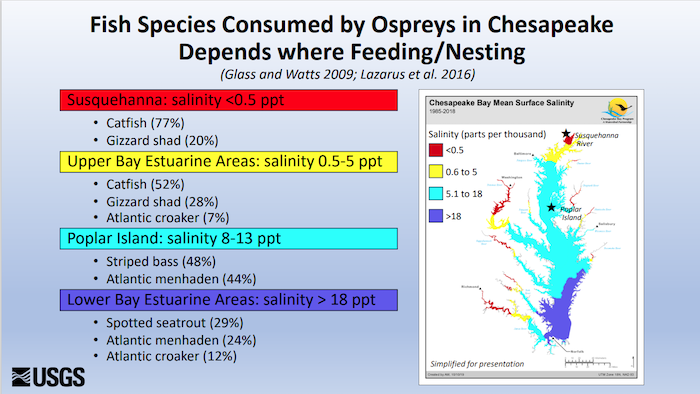
Timeline facts that CBF ignores
By Virginia law, purse-seine fishing for menhaden is closed until the Sunday before the first Monday in May (i.e., there is no fishing until early May).
According to Ocean Harvesters' fleet logs provided to state regulators, menhaden fishing did not begin in the Bay until the week of May 26 in 2025, reflecting late arrival/availability of menhaden that is controlled by nature.
CCB states in a photo caption that: "Most young that starve in the nest die within the first two weeks after hatching." If chicks hatch in April/early May, those deaths occur before fishing started.
CCB records pairs arriving late February-early March; many never laid eggs at all, events that obviously precede any fishing and indicate that birds may not return to the area in good health.
Taken together, CCB's description of timing, plus the dates of the legal fishing season, make clear that early nest failures and the chick mortalities in the first two weeks after hatching occurred before the menhaden fishery began harvesting.
Where CBF goes beyond the CCB advisory
The Chesapeake Bay Foundation's press statement asserts that CCB's results "indicate insufficient local food availability in areas where the osprey diet relies on forage fish like menhaden." CBF points to a decline in bait landings and juxtaposes those figures with the industrial reduction fishery's annual catch to imply cause and effect.
That is CBF's biased interpretation, not CCB's conclusion. CCB does not directly blame the menhaden fishery; it infers food limitation from breeding metrics and salinity as a prey proxy.
CCB itself reports weather-related nest losses (high winds, extended rains) and notes that even low-salinity areas performed worse than recent years, evidence that multiple environmental drivers were at work in 2025.
Ospreys are generalist fish-eaters that take a range of species of suitable size; when menhaden aren't present inshore, ospreys use other prey (e.g., gizzard shad, catfish). CCB's map/photo captions and standard references reflect this dietary flexibility.
Fleet operations and observations indicate menhaden have arrived late in recent years, a function of environmental conditions, not fishing. The fishery has no mechanism to delay migration or in-Bay availability.
While menhaden bait landings may be lower in the Bay than in the past, CBF fails to consider the level of effort. There are documented instances of pound netters who have stopped fishing over the past few years through a combination of factors including higher costs for equipment and the inability to find dependable (and affordable) labor.
Bait landings reflect harvest effort and market conditions and are not a direct measure of local fish abundance or near-shore availability to osprey.
CCB's 2025 advisory shows food stress signals in higher-salinity waters, but the timing and the text do not support CBF's misleading narrative that the regulated menhaden fishery caused this year's early nest failures and first-weeks chick mortalities. Those events occurred before the season opened and menhaden boats were still at the dock. Environmental factors, weather-driven nest losses (high winds/extended rains) and widespread post-hatch starvation, are plainly implicated in CCB's account and must be part of any honest discussion, despite the self-interested view of a special interest group like the CBF.
About Ocean Harvesters
Ocean Harvesters owns and operates a fleet of more than 30 fishing vessels in the Atlantic Ocean and Gulf of Mexico. The company's purse-seine fishing operation is exclusively engaged in the harvest of menhaden, a small, nutrient-dense fish used to produce fish meal, fish oil, and fish solubles. Both its Atlantic and Gulf Menhaden fisheries are certified sustainable by the Marine Stewardship Council. Committed to responsible fishing operations, Ocean Harvesters is proud to be heir to a fishing legacy that extends nearly 150 years.
Maryland ASMFC Delegates Once Again Claim "No Menhaden" - But Baltimore Fish Kills Show Otherwise
WASHINGTON, D.C. / September 29, 2025
For the second year in a row, Maryland's top delegates to the Atlantic States Marine Fisheries Commission (ASMFC) claimed menhaden were absent from Maryland's upper Chesapeake Bay, blaming Virginia's commercial fishermen for intercepting the fish. Yet within weeks of their irresponsible statements, tens of thousands of menhaden turned up dead in a series of massive fish kills in Baltimore Harbor, directly contradicting their testimony.
WASHINGTON, D.C. / September 29, 2025 / For the second year in a row, Maryland's top delegates to the Atlantic States Marine Fisheries Commission (ASMFC) claimed menhaden were absent from Maryland's upper Chesapeake Bay, blaming Virginia's commercial fishermen for intercepting the fish. Yet within weeks of their irresponsible statements, tens of thousands of menhaden turned up dead in a series of massive fish kills in Baltimore Harbor, directly contradicting their testimony.
At the August 7, 2025 ASMFC Atlantic Menhaden Management Board meeting, Maryland Department of Natural Resources Fisheries Director Lynn Fegley and veteran waterman Russell Dize painted a bleak picture. About menhaden, Fegley told fellow commissioners that "they just are meeting maybe an outsized gauntlet" of concentrated harvest and "are in the Bay … but they were not where we are," warning of "lower availability" and "intensive effort" that she said was "creating less escapement for these fish to get through to these small-scale gears." Dize reinforced the point, saying, "There's a reason why the menhaden aren't coming in the Bay, and we need to find [it]."
These 2025 comments closely echoed their testimony a year earlier. At the August 2024 ASMFC summer meeting, Dize flatly asserted, "In Maryland, this year we have no menhaden, none… One half a bushel, Maryland has no menhaden," while Fegley added, "There are no menhaden in Maryland. The artisanal stationary gears that Maryland watermen fish are not capturing bait for our crab fisheries."
Yet in both years, nature quickly told a different story.
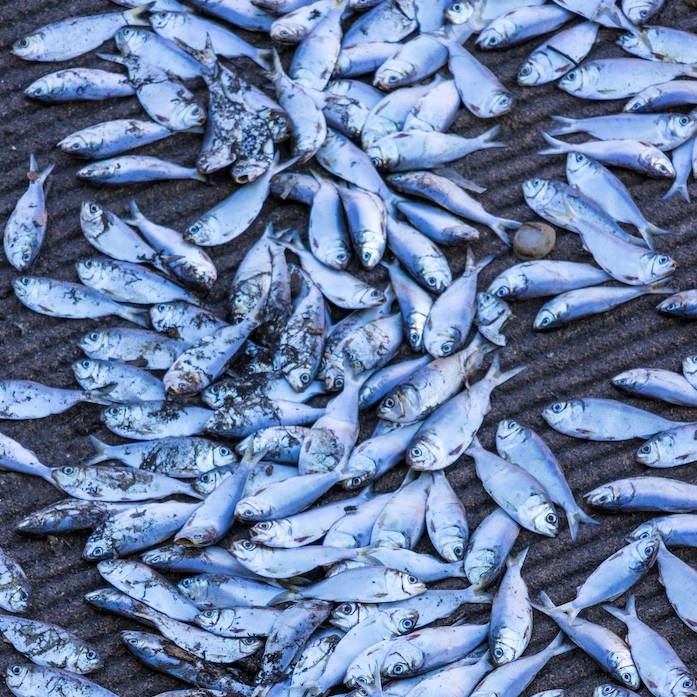
Dead mature menhaden wash ashore on the banks of the Patapsco River near Fells Point in Baltimore Harbor, during the second of three fish kills in August & September 2025
Baltimore Fish Kills Prove Menhaden Are Present
Just weeks after the 2025 meeting, Baltimore experienced three major fish kills, each comprised largely of menhaden. According to the Maryland Department of the Environment (MDE), about 61,000 fish died on August 22, at least 120,000 on August 28, and another 25,000 on September 24 from Canton to Locust Point (CBS Baltimore). Eyewitness posts on Reddit and YouTube confirm that menhaden were the species involved.
Blue Water Baltimore's Leanna Frick told WBAL Radio, "One silver lining is that if there aren't fish in the harbor, you don't see them in a fish kill … there are a lot of menhaden in the harbor, which are food species for other animals."
The same pattern emerged after the 2024 ASMFC meeting. In early September 2024, about 24,000 dead menhaden surfaced in Baltimore Harbor; coverage of the fish kill included Chesapeake Bay Magazine, What's Up? Media, and National Fisherman. This was followed in October 2024 by a Maryland DNR juvenile striped bass survey reporting near-record menhaden abundance, contradicting the commissioners' "no menhaden" statements.
Blaming Virginia Fishermen While Overlooking Home Waters
Fegley and Dize have repeatedly suggested, absurdly, that Virginia's menhaden reduction fleet, comprised of just six fishing vessels, is intercepting all the fish before they reach Maryland. But environmental experts point to Maryland's own water-quality failures as a more direct culprit. The EPA has found zero progress on stormwater runoff, according to the Chesapeake Bay Foundation's Gussie Maguire, who warned that "pollution from stormwater has outpaced any management improvements due to increased development pressure and more intense rainfall from climate change" (What's Up? Media).
National Fisherman likewise reported Maguire's statement that "Maryland's failure to adequately conduct stormwater management means pollution continues to degrade the waterway," compounding problems for wildlife and fisheries (SeafoodSource / National Fisherman).
Bottom line: For two consecutive years, Maryland's own ecological events and scientific surveys have contradicted their ASMFC delegates' dishonest narrative that menhaden are absent. While Maryland delegates blame Virginia fishermen, the state's unaddressed water-quality crisis continues to have negative effects on the menhaden in their waters, which the fish kills and surveys demonstrate are present in force.
About the Menhaden Fisheries Coalition
The Menhaden Fisheries Coalition (MFC) is a collective of menhaden fishermen, related businesses, and supporting industries. Comprised of businesses along the Atlantic and Gulf coasts, the Menhaden Fisheries Coalition conducts media and public outreach on behalf of the menhaden industry to ensure that members of the public, media, and government are informed of important issues, events, and facts about the fishery.
From Osprey to Pound Netters: A Shift in Purpose at the Atlantic States Marine Fisheries Commission Menhaden Board Meeting
WASHINGTON, DC / August 11, 2025
One year ago, scientists from the U.S. Geological Survey (USGS) presented data to the Atlantic States Marine Fisheries Commission (ASMFC) showing that osprey reproduction was under stress in multiple regions across the country-including on the West Coast and along parts of the East Coast where no menhaden fishing occurs at all. Their findings suggested that while the Chesapeake Bay osprey decline was real, it likely stemmed from a complex array of ecological stressors, not simply the availability of menhaden. In fact, USGS explicitly did not attribute osprey declines to menhaden harvest pressure.
WASHINGTON, DC / August 11, 2025 / One year ago, scientists from the U.S. Geological Survey (USGS) presented data to the Atlantic States Marine Fisheries Commission (ASMFC) showing that osprey reproduction was under stress in multiple regions across the country-including on the West Coast and along parts of the East Coast where no menhaden fishing occurs at all. Their findings suggested that while the Chesapeake Bay osprey decline was real, it likely stemmed from a complex array of ecological stressors, not simply the availability of menhaden. In fact, USGS explicitly did not attribute osprey declines to menhaden harvest pressure.
Despite hearing from the USGS experts, the ASMFC formed a Work Group focused on menhaden management in the Chesapeake Bay, spurred by osprey concerns. The group was tasked with exploring precautionary management measures-such as time-area closures-to protect piscivorous birds and fish during critical life stages. That Work Group presented its report at the May 2025 board meeting.
Heading into the August 7 meeting, many stakeholders expected the discussion to focus squarely on the osprey topic and how-or whether-to pursue management options justified by the Work Group's findings. Instead, what unfolded was a striking pivot in purpose, led by Maryland's representative, Commissioner Lynn Fegley.

Commercial menhaden fishermen at work.
Fegley's Presentation: A Bait and Switch
When Ms. Fegley took the floor, she offered only a one sentence acknowledgment of the original concern that launched the Work Group-mentioning the word osprey just twice and the USGS presentation once. From there, she quickly reframed the entire, year-long conversation around a new issue: anecdotal reports from Maryland pound net fishermen suggesting that menhaden were no longer appearing in northern Chesapeake Bay waters during the summer months.
Instead of returning to the ecosystem-based concerns outlined by the Work Group (and the explicit osprey focus it was formed to address), Fegley built a case around fishery access issues, claiming that the increase in mid-Bay harvest activity by the menhaden reduction fleet was possibly creating a "gauntlet" that menhaden must pass through-limiting escapement to areas where smaller fisheries operate. This narrative was tied to the original Work Group report only by a reference to one table from the document, repurposing its data to support a new narrative: that Maryland's pound net fishery-not its birds-was in crisis.
This narrative shift culminated in a motion to task the Plan Development Team (PDT) with creating management options to redistribute the Chesapeake Bay reduction harvest quota more evenly across the fishing season.
The Motion: A Departure from the Agenda and Original Charge
The agenda item under which this discussion occurred was titled:
"Discuss Technical Committee Direction in Response to Work Group Report on Precautionary Management in Chesapeake Bay."
The stated intent of the Work Group, per its original charge in 2024, was to:
"…consider and evaluate options for further precautionary management of Chesapeake Bay menhaden fisheries, including time and area closures to be protective of piscivorous birds and fish during critical points of their life cycle."
Maryland's pound netters, while economically important, are neither piscivorous birds nor fish. The motion that ultimately passed had little to do with protecting wildlife or following the technical direction envisioned in the Work Group's mandate. Instead, it asked the PDT to examine a quota partitioning scheme that will threaten the reduction fleet operations under the justification of alleviating fishery bottlenecks for Maryland harvesters.
This raises a significant procedural and governance concern: the motion that passed did not match the scope of the agenda item, nor did it reflect the original justification for the Work Group's existence. Rather than a technical discussion of wildlife protection or stock assessment, Ms. Fegley drew the Board into a policy discussion about fishery allocation and timing, prompted not by new data, but by anecdotal reports and political pressure.
It is important to note that at no point over the last year's worth of meetings has any scientist reviewed this process or made any determination that there is an actual problem with menhaden availability in the Bay. The process is being forced on the Commission by the Maryland delegation, led by Fegley and the Chesapeake Bay Foundation's Allison Colden.
Procedural Irregularities: Should the Motion Have Been Ruled Out of Order?
Given the mismatch between the agenda title, the Work Group's formal mandate, and the motion that passed, a strong argument could be made that the discussion and resulting motion were out of order. The Board had been convened to review scientific and technical direction stemming from an osprey-centered report-not to debate harvest redistribution in favor of a specific user group.
Moreover, the choice to bypass the Technical Committee, which was identified in the agenda as the committee which was to be given direction, and instead assign the work to the PDT adds further complexity. This shift in responsibility-framed as necessary because "this isn't a technical issue"-adds further grounds to argue that the entire discussion and eventual motion was out of order. It appears that the ASMFC wants to unjustly pick winners and losers among its menhaden stakeholders.
Maryland's Shifting Narrative: From Incidental Bycatch to Directed Fishery
The fishery Maryland now claims must be "saved" from interception by the Virginia reduction fishery is not the fishery it described when the 20% coastwide quota reduction was enacted in Amendment 2 to the Atlantic Menhaden Fishery Management Plan. It is not a directed menhaden fishery at all, but an incidental bycatch fishery-a designation created as a direct result of Maryland's own efforts and arguments at the Atlantic Menhaden Management Board.
In December 2012, Ms. Fegley described the state's pound net fishery as, "These are pound nets where they're fishing primarily for striped bass in November", with menhaden taken only as incidental bycatch. She explained that pound nets set for striped bass might "get a slug of menhaden" simply due to the nature of the gear. This was the context for her motion to raise the bycatch allowance for nondirected fisheries from 2,000 to 6,000 pounds per day-allowing pound-net operators to keep incidental menhaden catches after Maryland's quota was met. At the time, the framing was explicit: this was a nondirected, stationary gear fishery, and the higher allowance was meant to avoid waste and dead discards, not to enable a targeted menhaden harvest.
Yet Maryland is now recasting the same fishery in a very different light. At last week's meeting, Ms. Fegley said, "we're hearing from commercial fishermen they're not even setting their nets in the Potomac because the fish aren't there." She was referring to pound netters fishing in the summer months-a different seasonal fishery entirely from the Fall striped bass pound net fishery she described in 2012. Back then, Maryland argued that menhaden in the pound nets were unavoidable bycatch that should not count against their Total Allowable Catch, and ASMFC created an exception so these post-quota bycatch landings required no payback.
Now, when fishermen report low summer menhaden catch, Maryland frames the pound net fishery as a targeted menhaden fishery under threat from Virginia's "intercept" fleet-itself an incredible stretch to suggest six menhaden fishing boats "blockade" the lower Chesapeake Bay. When landings are high and risk closing the fishery, pound nets are described as incidental bycatch gear to justify keeping menhaden beyond quota. This shifting narrative is inconsistent at best and deliberately misleading at worst. Maryland spearheaded the 2012 coastwide reduction in menhaden landings while securing a special bycatch carveout for its own pound nets. Today, they insist that this same "incidental" fishery-whether fall striped bass nets with unavoidable menhaden or summer nets now cast as a directed fishery-must be preserved as if it were a primary target fishery. When it's Maryland's quota on the line, pound nets are just bycatch gear; when they want to limit Virginia's fleet, pound nets are suddenly a vital directed fishery. This two-faced position underscores a pattern of selective framing, dishonesty, and self-interest.
Were There "No Menhaden" or An Abundance?
Last year, at the August 2024 ASMFC meeting, when arguing for restrictive measures on large purse seine vessels and the creation of the work group on menhaden and osprey, Maryland's two delegates painted a stark picture of forage fish scarcity in the state's waters. Governor Appointee Russel Dize stated flatly, "In Maryland, this year we have no menhaden, none," citing a friend's pound-net catch as evidence. Ms. Fegley echoed the point: "There are no menhaden in Maryland. The artisanal stational gears that Maryland watermen fish are not capturing bait for our crab fisheries."
Yet, in the weeks that followed, two events directly contradicted those claims. In early September, roughly 24,000 dead menhaden floated to the surface of Baltimore Harbor-a fish kill that the Chesapeake Bay Foundation attributed to low-oxygen conditions from poor water quality, not to a lack of menhaden in the ecosystem.
Then, in October, Maryland DNR's annual juvenile striped bass survey reported that menhaden abundance was nearly equal to 2023 levels, which had been the highest recorded since 1990. Far from supporting the ASMFC testimony that Maryland waters held "no menhaden," these events demonstrate that menhaden were present in substantial numbers-enough to produce a large fish kill and to sustain historically high abundance in a statewide survey. The commissioners' declarations stemmed from a preconceived bias against Virginia's historic menhaden fleet, and were not borne out by the subsequent ecological evidence from their own waters and their own agency's science.
A Cautionary Note on Process and Precedent
Ms. Fegley's presentation led the Board to pivot discussion from unproven osprey allegations to economically motivated redistribution of harvest quotas. This should raise concerns for all stakeholders and marks a troubling moment for the ASMFC.
The Commission allowed one commissioner to use an unproven ecological allegation as the gateway to initiate a discussion on a new form of management. In bypassing the original scope and purpose of the Work Group, the Board risks setting a precedent where new management measures can spring from unrelated commission work groups to benefit narrow regional interests, without transparent scientific justification or procedural safeguards.
About the Menhaden Fisheries Coalition
The Menhaden Fisheries Coalition (MFC) is a collective of menhaden fishermen, related businesses, and supporting industries. Comprised of businesses along the Atlantic and Gulf coasts, the Menhaden Fisheries Coalition conducts media and public outreach on behalf of the menhaden industry to ensure that members of the public, media, and government are informed of important issues, events, and facts about the fishery.
What Do Gulf Predators Really Eat? Groundbreaking Study Finds Menhaden Play a Smaller Role Than Expected
GULFPORT, MS / July 31, 2025
What do some of the Gulf of America's most iconic predator fish really eat? Scientists at the University of Southern Mississippi are moving closer to answering that question with a groundbreaking new study that delivers some of the most detailed insights to date on the Gulf food web. To do this they've combined two powerful approaches: cutting-edge stable isotope analysis and an extensive meta-analysis of hundreds of published stomach content studies dating back to the 1950s.
University of Southern Mississippi research challenges long-held assumptions about predator-prey dynamics in the Gulf of America
GULFPORT, MS / July 31, 2025 / What do some of the Gulf of America's most iconic predator fish really eat? Scientists at the University of Southern Mississippi are moving closer to answering that question with a groundbreaking new study that delivers some of the most detailed insights to date on the Gulf food web. To do this they've combined two powerful approaches: cutting-edge stable isotope analysis and an extensive meta-analysis of hundreds of published stomach content studies dating back to the 1950s.
Despite the ecological and commercial importance of species like red drum, summer flounder, and spotted sea trout, our understanding of their interactions with prey species has been limited. This new research challenges long-standing assumptions, most notably the idea that Gulf menhaden is a primary food source for these key predators.Funded by the Science Center for Marine Fisheries (SCEMFIS), a member of the National Science Foundation's Industry-University Cooperative Research Center program, the study provides a comprehensive understanding of the Gulf food web and charts the trophic interactions that structure it. The findings have fishery management implications for several of the species evaluated in the study. Most notably, Gulf menhaden was not found to be a primary food source for any of the predator species studied.
"We looked at some 30-plus predator species, many of them exceptionally well-studied. We did not find any single species where we would say Gulf menhaden was the most important fish in their diet," said Dr. Robert Leaf, one of the authors of the study and Director of the School of Ocean Science and Engineering at the University of Southern Mississippi.
"When you look at the information that we have, what we find is that Gulf menhaden are a prey item-certainly they play a role in the trophic dynamics of predators-but not to the extent of other prey items, which are also very important-in fact, more important," Dr. Leaf continued.
Traditionally, determining what predators eat has been limited to analyzing samples of their stomach contents. This provides information about what predators have eaten recently, but it offers only a limited snapshot and does not reveal long-term dietary patterns or prey availability. To bridge this gap, the study incorporates new data, developed from analyzing stable isotope levels taken from predator tissue samples.
Stable isotopes are heavier forms of elements, like carbon and nitrogen, that are present in all species and at all points in the food web. Because these isotopes do not decay, they accumulate in predator species in different proportions, depending on the diet of the predator. By analyzing the levels of stable carbon and nitrogen isotopes in predator species, the study authors are able to determine what types of diet sources the predators generally rely on, as well as what trophic level they predominantly feed on. This technique offers a much broader view of predator diets than stomach content analysis alone.
"When an animal eats a prey item, there is a differential uptake in the carbon and the nitrogen," said Dr. Kevin Dillon, another author of the study and an Associate Professor at the University of Southern Mississippi's Gulf Coast Research Laboratory. "So we can measure those small differences to try to piece this together and look at each organism's trophic position within that food web. So we're able to tell from a fish's isotopic signature whether the fish was eating phytoplankton or if it was eating another fish that had eaten phytoplankton."
The study pairs the data from the stable isotope analysis with a meta-analysis of hundreds of previously published stomach content databases dating back to the 1950s. Integrating the two data sources into a single modeling framework provides clearer insight into the role of low-trophic-level species in the Gulf. The scientists found that species like red drum, summer flounder, and spotted sea trout are general, opportunistic feeders that do not rely solely on a single prey species. Instead, their diets vary depending on factors such as seasons, prey availability, and other climatic conditions.
Species like Gulf menhaden are important parts of the diet, but there is no single prey species that these predators overwhelmingly rely on. There is no "most important" prey species in the Gulf.
While this study focused on the Gulf ecosystem and food web, its insights may have broader relevance for similar species and predator-prey dynamics in other regions. On the East Coast, for instance, Atlantic menhaden play a role comparable to their Gulf counterparts, serving as forage for many similar predators-including striped bass, summer flounder, weakfish, and bluefish-which are also common in the northern Gulf of America. While additional research is needed, the Mid-Atlantic ecosystem likely exhibits similarly complex trophic dynamics and variability in predator diets.
8-Minute Video Brings the Science to Life
An eight-minute YouTube video released alongside the study features Dr. Robert Leaf and Dr. Kevin Dillon explaining how their team used stable isotope analysis and decades of stomach content data to map the Gulf's complex food web. Viewers will see the inside of the university's isotope lab, close-up footage of the specialized equipment used to analyze predator tissue samples, and field scenes from the Mississippi coast where the research team collected specimens.
Dr. Leaf and Dr. Dillon walk through how their findings overturn long-held assumptions about the role of Gulf menhaden in predator diets-revealing instead a diverse, seasonally shifting prey base that includes crabs, shrimp, anchovies, and Atlantic croaker. They demonstrate how isotopic tracers such as carbon-13 and nitrogen-15 help identify what predators eat over time and how high they sit in the food web.
Also featured is graduate student Calvin Chee, who offers a field-level perspective and personal observations about the Gulf's biodiversity. Together, the scientists describe how combining isotope data with traditional stomach content analysis provides a more complete, long-term view of predator-prey interactions.
About the Methodology
Around the world, scientists have increasingly turned to this emerging method of combining stable isotope analysis (SIA) and stomach content analysis (SCA) to better understand what animals eat. Stomach content analysis provides a direct but short-term snapshot of recently ingested prey, while stable isotope ratios in muscle tissue reflect assimilated diet over longer time frames. When used together, the two methods offer complementary perspectives on trophic relationships across seasons, habitats, and life stages.
This dual approach has now been used successfully in ecosystems around the globe from tropical rivers to polar seas, including nine species in the Eastern Adriatic Sea, coral reef groupers in Australia's Great Barrier Reef, and Nile perch in East Africa's Lake Victoria.
No such combined study has been conducted involving menhaden species in U.S. waters-until now.
Note on Naming: The body of water traditionally known as the Gulf of Mexico has been renamed "Gulf of America" within U.S. federal usage, following Executive Order 14172 issued earlier this year. As of early 2025, U.S. agencies, including the Coast Guard, and major platforms like Google Maps, Apple Maps, etc. (for U.S. users) have adopted the new name in compliance.
About SCEMFIS
The Science Center for Marine Fisheries (SCEMFIS) brings together academic and industry expertise to address urgent scientific challenges facing sustainable fisheries. Through advanced methods, analytical tools, and collaborative research, SCEMFIS works to reduce uncertainty in stock assessments and improve the long-term sustainability of key marine resources.
SCEMFIS is an Industry-University Cooperative Research Center supported by the National Science Foundation. Industry organizations join SCEMFIS through an Industry Membership Agreement with one of the center's site universities and contribute both financial support and valuable expertise to help shape research priorities.
Its university partners include the University of Southern Mississippi (lead institution) and the Virginia Institute of Marine Science at the College of William and Mary. The center also collaborates with scientists from a broad network of institutions, including Old Dominion University, Rutgers University, the University of Massachusetts-Dartmouth, the University of Maryland, and the University of Rhode Island. These researchers bring deep expertise in finfish, shellfish, and marine mammal science.
Demand for SCEMFIS's services continues to grow, driven by the fishing industry's need for responsive, science-based support. The center provides timely access to expert input on stock assessment issues, participates in working groups, and conducts targeted studies that lead to better data collection, improved survey design, and more accurate modeling-all in service of sustainable, science-driven fishery management.
Independent Study Confirms Gulf Menhaden Fishery Has Minimal Impact on Red Drum
BATON ROUGE, LA / July 8, 2025
New independent data confirms that the Gulf menhaden fishery accounts for just 3.4% of all red drum removals in Louisiana waters, while recreational fishing is responsible for 96.6% by number of fish.
Comprehensive Louisiana-funded study finds menhaden harvesters account for just 3.4% of red drum removals, with 96.6% from recreational sector
BATON ROUGE, LA / July 8, 2025 / New independent data confirms that the Gulf menhaden fishery accounts for just 3.4% of all red drum removals in Louisiana waters, while recreational fishing is responsible for 96.6% by number of fish.
That fact - backed by the most comprehensive bycatch study in the fishery's history - directly rebuts claims that commercial menhaden fishing is a major driver of red drum mortality. Released today, the study reaffirms what decades of science have consistently shown: Louisiana's Gulf menhaden fishery is sustainable, selective, and not a threat to red drum populations.
The study was welcomed by the Menhaden Fisheries Coalition and Louisiana's Gulf menhaden industry as a landmark moment in science-driven fisheries management - and a model of how transparency, innovation, and collaboration can deliver measurable conservation gains.
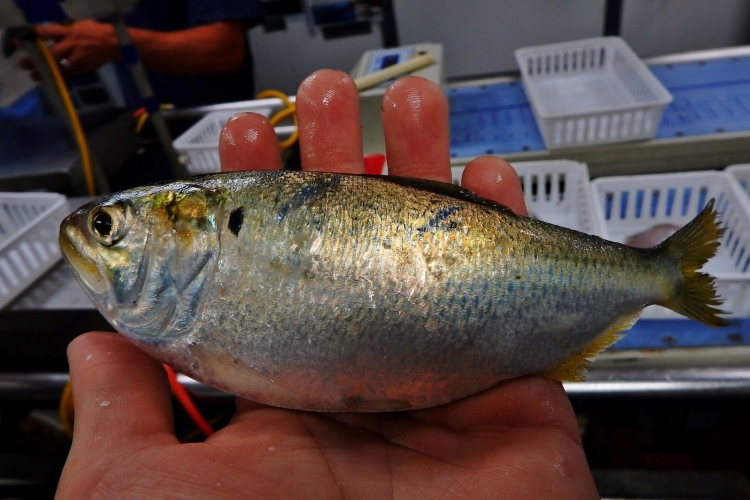
Gulf menhaden (Photo: NOAA Fisheries)
Setting the Record Straight on Red Drum
Some advocacy groups have cited the study's red drum numbers out of context to stir public concern. But the full data tell a different story:
Recreational anglers are responsible for 96.6% of red drum removals in Louisiana - a number that far eclipses the 3.4% attributed to the menhaden industry.
Importantly, the State of Louisiana restricts bycatch to no more than 5% by weight for non-target species, and the study confirmed that the fishery remains comfortably under that threshold at just 3.4% - reinforcing both regulatory compliance and biological selectivity.
In 2024, an estimated 26,847 red drum were released alive after incidental capture, with an 84% survival rate in rollover releases.
Total red drum mortality from menhaden fishing was just 30,142 individuals statewide - a tiny fraction of overall red drum losses from all causes.
In response to the findings, the industry voluntarily upgraded gear fleetwide in 2025 to further reduce red drum mortality - action that's already producing results.
"This study should put to rest the misinformation that's too often circulated about this fishery," said Bob Vanasse, spokesperson for the Menhaden Fisheries Coalition. "This independent science reaffirms what we've always said: the Gulf menhaden fishery is guided by data, not politics or guesswork. These findings must inform any future regulatory decisions. This is a model of how transparency, swift industry action, and investment in better gear deliver real conservation gains without compromising coastal jobs or economies."
State Investment Yields Landmark Science
The study was funded through a $1 million appropriation from the Louisiana Legislature and administered by the Gulf States Marine Fisheries Commission (GSMFC). It was conducted by LGL Ecological Research Associates Inc. during the 2024 fishing season and represents the most detailed assessment of bycatch in the history of the Gulf menhaden fishery.
The study was awarded through a competitive public bidding process and conducted independently by LGL Ecological Research Associates, Inc., a respected firm with experience in fisheries research across the Gulf Coast and beyond. It was publicly presented at the July 2025 meeting of the Louisiana Wildlife and Fisheries Commission.
Researchers used onboard observers and electronic monitoring to collect data from 418 purse seine sets - representing 3.2% of total fishing effort, more than 50% higher than the original sampling goal.
Key Findings from the Study
Red Drum Bycatch Is Minimal: Menhaden harvesters accounted for just 30,142 red drum mortalities in 2024 - only 3.4% of statewide removals.
High Survival Rates: Of the 44,593 red drum released, 22,805 survived. Survival was 84% for fish released via rollover, and just 2% for those released via the chute.
Post-Study Gear Upgrades: Hose-end cage design was found to significantly improve survivability. The most effective design was standardized across the entire fleet for the 2025 season.
Scientific Rigor: The study used validated techniques including Reflex Action Mortality Predictors (RAMP) and 24-hour live holding tanks to assess fish survival.
Clarifying Croaker and Seatrout Numbers
The study also recorded large numbers of small Atlantic croaker and sand seatrout (also known as white trout) in the retained catch. These species are common in coastal Louisiana and:
Are not overfished or subject to overfishing, per federal and state assessments.
They were retained primarily due to their small size, not gear inefficiency.
Are short-lived forage fish with naturally high natural mortality, meaning most would not survive to adulthood even without fishing pressure.
"Some critics are highlighting these numbers without context," Vanasse said. "But the science shows these species are abundant, biologically resilient, and well within safe harvest levels."
Post-Study Gear Upgrades in 2025 Target Further Red Drum Mortality Reduction
A key finding of the study showed that retaining red drum and similar species in the net - then releasing them after pumping - significantly reduces mortality. In response, the industry promptly adopted the most effective hose-end cage design across the entire fleet prior to the 2025 fishing season. This fleetwide standardization is already driving further reductions in the already-low red drum mortality observed during the study.
The study estimated 44,593 red drum were released via rollover or chute, with 84% surviving after rollover and only 2% surviving chute release. Factoring in an estimated 8,354 red drum from the retained bycatch, the total red drum mortality across the entire fishery in 2024 was 30,142 individuals - a small fraction of overall red drum removals coastwide.
Industry Response and Rapid Action
Leaders from Louisiana's Gulf menhaden industry welcomed the study's findings as both a validation of their conservation efforts and a call to action - quickly upgrading their gear and reinforcing their commitment to science-based, sustainable fishing.
"At Ocean Harvesters, we've always believed that good science leads to better fishing," said Ben Landry, representative of Ocean Harvesters, based in Abbeville, LA. "This study confirmed much of what we've seen firsthand - high survival rates when fish remain in the net and real gains from gear improvements. We didn't wait to act. As soon as the science came in, we upgraded our entire fleet's gear to reflect the findings. It's another step forward in our long-standing commitment to responsible, sustainable fishing."
"Westbank Fishing is proud to lead with both innovation and accountability," said Francois Kuttel, President and Principal Owner of Westbank Fishing, based in Empire, LA. "This research gives the public independent, science-backed confirmation that notwithstanding that our fishery has already been assessed as sustainable, we continue to strive to improve. Based on these findings, we invested in fleet-wide gear upgrades to reduce red drum interactions and protect other species. We'll continue working with regulators, scientists, and communities to ensure this fishery remains a model of science-driven management - for the environment, for fishermen, and for future generations."
Science-Based Regulation and Certification
The Gulf menhaden fishery is the most closely regulated fishery in Louisiana, overseen by a range of federal and state agencies, including the National Marine Fisheries Service (NMFS), the Gulf States Marine Fisheries Commission (GSMFC), the Louisiana Wildlife and Fisheries Commission (LWFC), and the Louisiana Department of Wildlife and Fisheries (LDWF).
Certified as sustainable by the Marine Stewardship Council (MSC), the industry operates under rigorous science-based management. According to the GSMFC's 2024 stock assessment, Gulf menhaden stocks are healthier than at any time in the past four decades. The spawning stock biomass has more than tripled since the 1990s, while fishing mortality rates have fallen to one-third of 1990s' levels.
Vital Role in Nutrition and Global Food Security
The fishery harvests less than 2% of the total Gulf menhaden biomass-helping to maintain ecological balance while preserving a key food source for marine predators. Beyond their role in the wild, menhaden are also essential to global food systems. Rich in omega-3s, protein, and vital nutrients, they are used in aquaculture feed, pet food, and human nutritional supplements. These high-value uses underscore the fishery's importance to both nutrition security and sustainable food production worldwide.
Economic Engine for Coastal Louisiana
Those coastal jobs and economies are significant. Louisiana's Gulf menhaden industry generates more than $419 million in economic output each year, supporting over 2,000 jobs across 32 parishes and contributing $25 million in state and local tax revenue. In 2023, the industry paid roughly $60 million in employee compensation, underscoring the industry's role as a major employer and driver of rural economic resilience.
The Path Forward: Letting Science Lead
With independent science confirming the fishery's sustainability and low bycatch - and with decades of data showing strong stock health and declining fishing mortality - it's clear that future management decisions must be grounded in science, not speculation. Thousands of Louisiana coastal families, hundreds of millions in economic activity, and global food systems all depend on the continued sustainability of this fishery.
Vanasse added, "This comprehensive bycatch study doesn't just validate our industry's conservation record - it shows what happens when science drives decision-making. The Gulf menhaden fishery is living proof of the vision laid out in President Trump's Executive Order to restore American seafood competitiveness. By cutting red tape, empowering innovation, and investing in better data, we've achieved real-world results: lower bycatch, healthier stocks, and stronger coastal communities. It's a model for what modern fisheries management should look like."
###
About the Menhaden Fisheries Coalition
The Menhaden Fisheries Coalition (MFC) is a collective of menhaden fishermen, related businesses, and supporting industries. Comprised of businesses along the Atlantic and Gulf coasts, the Menhaden Fisheries Coalition conducts media and public outreach on behalf of the menhaden industry to ensure that members of the public, media, and government are informed of important issues, events, and facts about the fishery.
Chesapeake Bay Foundation Continues to Spread Menhaden Misinformation
WASHINGTON, DC / June 30, 2025
The Chesapeake Bay Foundation (CBF) issued a press release on June 25, 2025 that includes multiple false and misleading claims, omits important context, and makes unfounded accusations that misrepresent both the scientific record and the operations of the menhaden fishery.

A bald eagle forces an osprey to relinquish its prey. Eagles are known to be kleptoparasitic, stealing food from other birds of prey. Photo credit: Robert Blanton
WASHINGTON, DC / June 30, 2025 / The Chesapeake Bay Foundation (CBF) issued a press release on June 25, 2025 that includes multiple false and misleading claims, omits important context, and makes unfounded accusations that misrepresent both the scientific record and the operations of the menhaden fishery.
The release, written by CBF's Virginia Communications & Media Relations Manager Vanessa Remmers, responds to a May 2025 aerial survey of osprey nesting by Dr. Bryan Watts of the College of William and Mary's Center for Conservation Biology, whose own release on the survey does not mention the menhaden fishery. This response addresses and corrects the major inaccuracies.
Misleading Claims of Menhaden Fishing Activity
The press release claims:
"…the seaside of Virginia's Eastern Shore, a frequent area for industrial menhaden fishing by Omega Protein."
Correction: This is false on two counts.
Geographically inaccurate: No menhaden sets were made by Ocean Harvesters in the area of the Eastern Shore of Virginia either before or during the period of the recent osprey aerial survey conducted by Dr. Watts. For the past three years, Ocean Harvesters has not operated within one mile of the shoreline on the lower bayside as the result of a voluntary agreement with the state to address concerns of local residents, leaving a substantial buffer zone in place. On the oceanside, while there are no formal regulatory restrictions, the natural contour and depth of nearshore waters effectively limit operations, creating incidental buffers of anywhere from a quarter to one mile where fishing does not occur.
While no sets were conducted in the region during this timeframe, fishing vessels did transit the area and spotter planes have observed significant numbers of menhaden in these waters, consistent with the area's long-standing reputation as a prolific fishing ground. Accordingly, there is no factual basis for a suggestion that menhaden fishing is related to any lack of prey in this location during the period the survey was conducted.
Wrong entity: CBF incorrectly identifies the fishing company. Omega Protein does not fish. It is a processing company that manufactures nutritional products for humans, pets, and agriculture. Fishing is conducted by Ocean Harvesters, a U.S.-owned and operated company whose vessels are crewed by unionized American fishermen, members of United Food & Commercial Workers Local 400, AFL-CIO. This information has been widely distributed and is well known to CBF, yet the special interest group continues to use the scare tactic of claiming foreign vessels are operating in the Chesapeake Bay.
Osprey Reproduction: The Real Science
The release references questions surrounding prey availability, but inaccurately implies that menhaden is the only important prey species, and that this situation is unique to the Chesapeake Bay, stating:
"The Center for Conservation Biology concluded ‘the most likely cause of the decline is prey availability,'" and "The U.S. Geological Survey (USGS) corroborates the osprey decline, likely attributing it to a scarcity of food."
Correction: This is a mischaracterization of the science, and it takes the words of the U.S. Geological Survey out of context.
The USGS, in a 2025 letter to Congress, did address prey issues, but noted that "Adult Osprey capture a variety of fish species, and several studies have shown that Osprey diet composition differs in various regions of the Chesapeake." They identified both menhaden and striped bass, a species that has been overfished by recreational anglers for years, as possible primary prey types, and also cited Atlantic croaker, gizzard shad, and catfish as important osprey prey species.
In their letter, USGS also noted that "the published research of Watts and colleagues does not explore all the possible causes of nestling starvation. The amount of food delivered to young in a nest can be influenced by many factors, including prey abundance, access to prey, exposure to contaminants, incidence of disease, increased predation risk, parental condition, brood size, and adverse weather conditions."
At an August 2024 meeting of the Atlantic States Marine Fisheries Commission (ASMFC), USGS scientists stated that while they observed a leveling off of osprey populations between 2012 and 2022, populations remain high by historical standards. Furthermore, USGS reported that this slight decreasing trend has been observed in numerous other locations including Florida, South Carolina, North Carolina, and Delaware, as well as the Pacific Coast-regions without menhaden fisheries-raising serious questions about the validity of blaming menhaden fishing as the sole culprit for the Chesapeake's osprey dynamics.
False Claim about Industry Blocking Science and Data Secrecy
CBF alleges:
"Had Omega Protein not consistently opposed menhaden science, Virginia would be developing better answers on ecology and fishery impacts during these challenging times."
This statement, made by Chris Moore, Virginia Executive Director of the Chesapeake Bay Foundation, is demonstrably false and a huge disappointment given Mr. Moore's established knowledge of the menhaden industry's involvement in collaborative science.
Correction: The industry has actively supported science and data collection. It has participated in over 15 research collaborations with respected institutions such as the Virginia Institute of Marine Science (VIMS) and NOAA. Notably, the industry contributed to the design of the very Bay-specific study that groups like CBF advocate for. While voicing scientific concerns about unproven methods, the industry even offered to assist in the development of a pilot study to validate new technology. That offer was rejected by other parties.
CBF also implies the fishery is lacking transparency. But the menhaden industry's confidential landings data are routinely submitted to NOAA, the ASMFC, and the Virginia Marine Resources Commission. These data are integrated directly into ecological reference points (ERP) and other models used in fishery management. Every net set since 1955 has been provided to NOAA Fisheries.
Ecological Reference Points (ERPs): An Inclusive Process
The Chesapeake Bay Foundation was directly involved in developing ecological reference points, the scientific models now used to manage the fishery with a focus on predator-prey balance. This process, coordinated by ASMFC and its Menhaden Management Board, took place between 2017 and 2020 and included multiple environmental NGOs, scientists, and agency staff.
CBF's current rhetoric ignores their own participation and the consensus-building that led to the current management framework, which continues to find that menhaden are not overfished, and overfishing is not occurring.
The release on CBF's website includes a prominent fundraising appeal and a pop-up alert encouraging contributions to be matched by The Orokawa Foundation of Towson, Maryland. The release itself reflects a pattern of advocacy-driven storytelling that omits important facts, scientific nuance, and regulatory clarity. Rather than contributing to constructive discussion, it amplifies unsupported claims, vilifying hardworking, blue-collar fishermen in the Atlantic menhaden fishery. Virginia's menhaden fishery is sustainably managed, domestically operated, unionized, and scientifically scrutinized. Public debate about menhaden management should be rooted in data, not distortion, and the Chesapeake Bay Foundation should be held accountable for misrepresenting both the science and the stakeholders.
About the Menhaden Fisheries Coalition
The Menhaden Fisheries Coalition (MFC) is a collective of menhaden fishermen, related businesses, and supporting industries. Comprised of businesses along the Atlantic and Gulf coasts, the Menhaden Fisheries Coalition conducts media and public outreach on behalf of the menhaden industry to ensure that members of the public, media, and government are informed of important issues, events, and facts about the fishery.
TRCP Continues to Mislead on Menhaden: Facts Contradict Claims About Chesapeake Bay Fishery
WASHINGTON, DC / May 28, 2025
The Theodore Roosevelt Conservation Partnership (TRCP) promotes several inaccuracies and omits key scientific and regulatory findings in its description of the recent meeting of the Atlantic States Marine Fisheries Commission's (ASMFC) Menhaden Management Board ("Menhaden Management Board to Continue Exploring Chesapeake Bay Management Changes"). These claims are inconsistent with peer-reviewed science, the most recent ASMFC stock assessments and management decisions, and the reality of fishery operations.
WASHINGTON, DC / May 28, 2025 / The Theodore Roosevelt Conservation Partnership (TRCP) promotes several inaccuracies and omits key scientific and regulatory findings in its description of the recent meeting of the Atlantic States Marine Fisheries Commission's (ASMFC) Menhaden Management Board ("Menhaden Management Board to Continue Exploring Chesapeake Bay Management Changes"). These claims are inconsistent with peer-reviewed science, the most recent ASMFC stock assessments and management decisions, and the reality of fishery operations.
TRCP's scare tactics about alleged data secrecy, ecological collapse, and foreign ownership distort the conversation. Public and regulatory decisions should be based on rigorous science and verified data, not speculation or advocacy-driven messaging.
Here's a breakdown of the inaccuracies and misleading claims:
Misrepresentation of Foreign Ownership
False Claim: "Foreign-owned Omega Protein removes millions of pounds of menhaden annually from Bay waters."
Fact: Omega Protein, a subsidiary of Cooke Inc., produces highly refined specialty oils and protein products that improve the nutritional integrity of foods, dietary supplements, and animal feeds. It does not operate vessels that harvest menhaden. Those vessels are owned and operated by Ocean Harvesters, an independent, U.S.-based company employing American crews under union contracts. Both companies have deep roots in Virginia, dating back 147 years. Both Ocean Harvesters and Omega Protein have their corporate headquarters in Reedville, Virginia and over 98 percent of their combined employees are from Virginia. Ocean Harvesters' fishermen are members of United Food and Commercial Workers Union, Local 400.
No Evidence of Menhaden Depletion or "Outsized Impact" of the Fishery
False Claim: "The public has been sounding the alarm about the outsized impacts of the menhaden reduction fishery."
Fact: The ASMFC, which manages the fishery, has consistently found that Atlantic menhaden are not overfished, and overfishing is not occurring. The Commission most recently made this determination in its 2022 stock assessment, the most up-to-date picture of the health of menhaden fishery available. Since 2019, the fishery has been certified sustainable by the Marine Stewardship Council (MSC).
In 2020, the Atlantic menhaden became the first fishery on the east coast to shift to an ecosystem management approach. Whit Fosburgh, then president and CEO of the Theodore Roosevelt Conservation Partnership stated, "This landmark decision represents a new era in fisheries management…This decision will spur healthier menhaden and gamefish populations while supporting the recreational fishing economy along the eastern seaboard."
Menhaden harvests in the Chesapeake Bay are precautionarily capped and have been cut from 109,020 to 51,000 metric tons since 2006.
Osprey Breeding Claims Misrepresented
False Claim: "A lack of food availability…most importantly, nutrient-dense menhaden…was causing widespread osprey nest failure…"
Fact: This narrative has been publicly called into question by the U.S. Geological Survey (USGS) in a 2025 letter to Congress. The USGS stated that the scientific study most frequently cited to justify the menhaden-osprey link did not demonstrate a biologically significant change in osprey diet composition and emphasized that striped bass, a currently overfished species due to recreational fishing, are also a critical osprey prey species. The letter also noted that multiple ecological stressors are likely affecting osprey reproduction, including prey access, parental condition, brood size, and weather.
Misleading on the Availability of Menhaden Data
False Claim: "The fishery operates…with no data on the amount of menhaden present…"
Fact: This is blatantly false. The menhaden reduction fishery's confidential landings data has been provided to the National Oceanic and Atmospheric Administration (NOAA), ASMFC, and the Virginia Marine Resources Commission and is central to all stock assessments, including those using Ecological Reference Points (ERPs). NOAA has received this data for close to 70 years. While not released publicly to prevent competitive harm, this data is a backbone of modern fishery management.
Economic Impact Omitted
Omission: TRCP omits that the fishery is a major employer and economic driver in Virginia's rural Northern Neck region. It supports, either directly or indirectly, over 500 jobs, many of which are held by minority and union workers, and generates over $100 million in annual economic activity in the Northern Neck Region, where similarly sized economic alternatives are limited.
Misleading on Industry's Support of Science
False Claim: "The industry refuses to support science…"
Fact: The industry has participated in over 15 scientific research collaborations with institutions including the Virginia Institute of Marine Science (VIMS) and NOAA and even contributed to the design of the Bay-specific study that TRCP advocates for. While concerns were raised about using unproven methods, the industry offered to support a pilot study to validate new technology, a compromise that was not moved forward by the state legislature.
Localized Depletion Assertions Are Unproven
False Claim: "Harvest of entire schools in one area could remove potential food source…"
Fact: VIMS scientists and ASMFC commissioners have repeatedly stated that claims of localized depletion are speculative and unsupported. Menhaden are a migratory species with no evidence of a distinct Chesapeake Bay stock.
About the Menhaden Fisheries Coalition
The Menhaden Fisheries Coalition (MFC) is a collective of menhaden fishermen, related businesses, and supporting industries. Comprised of businesses along the Atlantic and Gulf coasts, the Menhaden Fisheries Coalition conducts media and public outreach on behalf of the menhaden industry to ensure that members of the public, media, and government are informed of important issues, events, and facts about the fishery.
