NEWS
What The Washington Post and Mark Robichaux Got Wrong About Menhaden
WASHINGTON, D.C. / August 20, 2026
The Washington Post today published an opinion column by Mark Robichaux which misleadingly portrayed Atlantic and Gulf menhaden fisheries as ecologically destructive, weakly regulated and headed toward crisis. Readers unfamiliar with these fisheries may likely come away believing that menhaden stocks are collapsing, predators are being starved by commercial fishing, and regulators have largely failed to act. Which was Mr. Robichaux's point.
WASHINGTON, D.C. / August 20, 2026 / The Washington Post today published an opinion column by Mark Robichaux which misleadingly portrayed Atlantic and Gulf menhaden fisheries as ecologically destructive, weakly regulated and headed toward crisis. Readers unfamiliar with these fisheries may likely come away believing that menhaden stocks are collapsing, predators are being starved by commercial fishing, and regulators have largely failed to act. Which was Mr. Robichaux's point.
That is not what the record shows. But just as troubling is that Mr. Robichaux and Washington Post opinion editors were provided with substantial information prior to publication addressing the menhaden stock, menhaden management, and the latest menhaden science. Nevertheless, the final column still contains factual errors, misleading source use and conclusions that go beyond what the cited science establishes.
This is not the first time Mr. Robichaux has used the Washington Post's opinion pages to advance a crisis narrative about menhaden. In a November 20, 2025 column, he wrote that menhaden were "disappearing," warned that striped bass could be "next to vanish," and said the ecosystem was being pushed toward collapse. Today's column repeats much of that same argument and adds new claims about osprey, Maine bait supply, Chesapeake Bay harvest and Gulf management. Both columns repeatedly blur the line between advocacy and what the underlying science actually establishes. Despite the Post prominently noting Mr. Robichaux's tenure at the Wall Street Journal from twenty-five years ago, this most recent piece has the tone of a special interest group press release rather than the work of a journalist.
1. Atlantic menhaden are not a stock on the verge of disappearing.
According to the Atlantic States Marine Fisheries Commission (ASMFC) Atlantic menhaden are not overfished and overfishing is not occurring, based on the Commission's 2025 stock assessment update. Even with this finding, managers still reduced the 2026 coastwide allowable catch by 20 percent to ensure a 0 percent chance of overfishing. While some argue that management should be even more precautionary, that is very different from suggesting the coastwide stock is in crisis.
2. The column misstates what the ecosystem target means.
Mr. Robichaux emphasizes that a harvest cut of roughly 50 percent or more would be needed to move fishing mortality toward the ecosystem-based target. That is true, and it sounds terrible, but only because he leaves out half the story. As is explained on the ASMFC FAQs, fisheries managers receive both an ecological target and an ecological threshold from their scientists. The target is a more conservative management objective; the threshold is the ecological overfishing line. Fishing between the two does not constitute overfishing, and the adopted 2026 catch level was projected to have a zero percent probability of exceeding the ecological overfishing threshold. The lower target may be a policy preference for some observers, but it is not accurate to describe it as the minimum level predators simply "need." Had the ASMFC done nothing at its October 2025 meeting, the stock would still continue to be healthy, and overfishing would not be occurring. Mr. Robichaux either didn't understand this or ignored this to drive home his flawed personal opinion.
3. Osprey science doesn't show commercial harvest caused the problem.
The peer-reviewed osprey study documents serious reproductive deficits and food stress in parts of the Chesapeake Bay and suggests reduced menhaden availability as a primary driver of this stress in high-salinity areas. But the study also says that the data needed to determine the effect of commercial harvest on adult menhaden abundance in the Bay do not exist. The ASMFC likewise says its coastwide assessment cannot determine the status of the menhaden stock at the Bay level. Mr. Robichaux acknowledges that the study does not establish harvest causation and then argues that the pattern is "hard to read any other way." That is his inference, not the study's conclusion.
That research gap is precisely why Bay-specific work is so important and why the industry has supported new research initiatives. Virginia has now funded a dedicated Bay menhaden study, and there is ongoing work involving the Virginia Institute of Marine Science, NOAA and the University of Maryland Center for Environmental Science aimed at identifying the data needed for a science-based Bay harvest cap. Treating the unanswered local abundance question as already settled undermines the purpose of the research now underway.
4. The Maine bait story points in the opposite direction.
Mr. Robichaux cites tightening bait supplies for Maine lobstermen as part of a broader menhaden scarcity narrative. Yet the article he links is primarily about reduced Atlantic herring quotas. It says menhaden helped replace lost herring supply, describes a strong return of pogies (another term for menhaden) and quotes a bait dealer saying there was "no lack of bait" and "there's too many pogies!" A source about herring scarcity in which menhaden helped fill the gap should not be used to leave readers with the impression that Maine is experiencing a menhaden shortage. In fact, Maine has fully harvested their menhaden quota for 2026, which would be impossible if you believe Mr. Robichaux's claims of a scarcity.
5. "Rudderless" ignores the management and regulatory record.
Atlantic menhaden are managed through a coastwide quota, state allocations, ecological reference points, accountability provisions and a separate Chesapeake Bay cap. The ASMFC recently cut the coastwide quota and is currently considering further Bay measures. Even the much-cited 2019 Chesapeake compliance dispute was more complicated than presented: the ASMFC had lowered the Bay cap to 51,000 metric tons while Virginia law still contained the older, higher statutory limit. The ASMFC found Virginia out of compliance with the interstate plan, but the episode reflected a conflict between state law and interstate requirements, not the absence of rules.
Louisiana has likewise adopted buffers, spill reporting rules, retrieval requirements, tracking measures and penalties. The industry has gone above and beyond the regulations on paper. KPLC reported the move toward stronger purse seine nets after the 2023 spills, while The Advocate later reported stronger nets and standardized improved excluder devices designed to keep larger fish, including redfish, out of the pumping system.
A Louisiana state-funded study adds important context to the bycatch issue: for 2015-2024 removals by weight, the menhaden fishery's red drum bycatch accounted for 9.9 percent of total fishery removals, compared with 90.1 percent from recreational harvest and dead discards. For spotted seatrout, the menhaden share was 2.7 percent. Those numbers show that the column presents an incomplete picture when it treats spills and commercial bycatch as if they define the entire fishery.
6. Commercial use is not evidence of biological unsustainability.
NOAA's Atlantic menhaden page explains that the menhaden reduction fishery produces fishmeal, fish oil and solubles used in aquaculture, animal feeds and human nutritional supplements. Those are important products, and the fishery supports vessels, processing and waterfront jobs. The ASMFC has also evaluated the economic and employment effects of quota reductions; management decisions affect not only vessels and plants, but also shoreside suppliers, transportation, maintenance and communities built around commercial fishing. Whether a fish becomes meal or oil does not determine whether the harvest is sustainable; stock assessments and management reference points do.
The Post had the opportunity to get these distinctions right.
Before publication, Mr. Robichaux was provided detailed information explaining that Atlantic menhaden are not overfished; that the ecological target and threshold mean different things; that the osprey research does not show commercial harvest causation; that Bay-specific science remains incomplete; and that substantial management, compliance and mitigation measures are already in place. Washington Post opinion editors were separately provided those concerns before the column appeared.
The final piece nevertheless leaves readers with several of the same misleading impressions. These disputed points were not obscure details discovered only after publication but were among the central factual distinctions raised in advance.
Menhaden should be managed carefully. Bay-specific research should continue. Gulf operators should keep reducing bycatch and preventing spills. But precautionary management does not require overstating what the evidence shows. This issue is too important to treat advocacy and science as one and the same.

Sources and Links
ASMFC Atlantic Menhaden: https://asmfc.org/species/atlantic-menhaden/
ASMFC 2025 Stock Assessment Update: https://asmfc.org/resources/stock-assessment/2025-atlantic-menhaden-stock-assessment-update/
ASMFC Atlantic Menhaden FAQs: https://asmfc.org/news/fact-check/atlantic-menhaden-faqs/
ASMFC 2026 TAC Decision: https://asmfc.org/news/press-releases/asmfc-atlantic-menhaden-board-reduces-2026-tac-by-20-and-initiates-addendum-for-chesapeake-bay-cap/
Frontiers in Marine Science Osprey Study: https://www.frontiersin.org/journals/marine-science/articles/10.3389/fmars.2026.1685158/full
Center for Conservation Biology Mobjack Bay Page: https://ccbbirds.org/2023/07/14/the-center-for-conservation-biology-documents-unprecedented-osprey-nest-failures-within-the-lower-chesapeake-bay/
WFXR Chesapeake Menhaden Research Funding Story: https://www.wfxrtv.com/news/outdoors-bound/after-four-years-atlantic-menhaden-study-funding-finally-in-place/
Maine Lobstermen's Community Alliance Bait Article: https://www.mlcalliance.org/post/herring-quota-decline-transforms-maine-s-bait-business
ASMFC Draft Addendum II: https://asmfc.org/actions/atlantic-menhaden-draft-addendum-ii/
National Fisherman 2019 Chesapeake Bay Cap Report: https://www.nationalfisherman.com/mid-atlantic/atlantic-states-commission-says-omega-violated-menhaden-limit
KPLC 2023 Spill / Stronger Nets Report: https://www.kplctv.com/2023/09/20/net-tears-cause-large-fish-spills-near-holly-beach/
The Advocate Louisiana Bycatch / Gear Report: https://www.theadvocate.com/baton_rouge/news/environment/louisiana-fishing-menhaden-pogy-redfish-speckled-trout/article_79121240-156e-5a7c-bc88-de48517dc5cf.html
LDWF 2024 Menhaden Rule Action: https://www.wlf.louisiana.gov/news/lwf-commission-amends-notice-of-intent-to-modify-rules-for-menhaden-fishery
LDWF 2023 Menhaden Rule Proposal: https://www.wlf.louisiana.gov/news/lwfc-passes-noi-to-modify-rules-for-menhaden-fishery
LDWF Menhaden Bycatch Study Results: https://www.wlf.louisiana.gov/news/menhaden-bycatch-study-results-presented-by-lgl-ecological-research-associates
NOAA Atlantic Menhaden: https://www.fisheries.noaa.gov/species/atlantic-menhaden
ASMFC Economics and Social Sciences Memo: https://asmfc.org/resources/management-technical-committee/committee-on-economics-and-social-sciences-memo-to-atlantic-menhaden-board/
About the Menhaden Fisheries Coalition
The Menhaden Fisheries Coalition (MFC) is a collective of menhaden fishermen, related businesses, and supporting industries. Comprised of businesses along the Atlantic and Gulf coasts, the Menhaden Fisheries Coalition conducts media and public outreach on behalf of the menhaden industry to ensure that members of the public, media, and government are informed of important issues, events, and facts about the fishery.
Former Menhaden Vessel F/V Calcasieu Pass Begins Second Life as Artificial Reef Off Delaware
REEDVILLE, VA / August 14, 2026
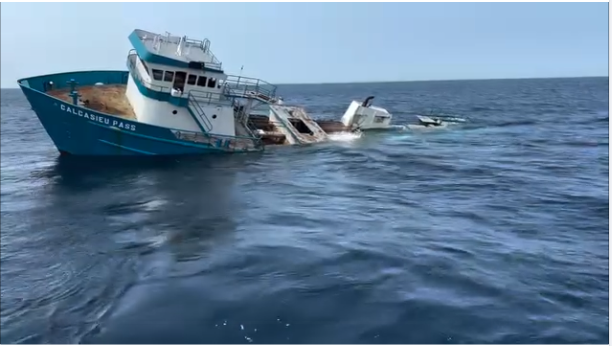
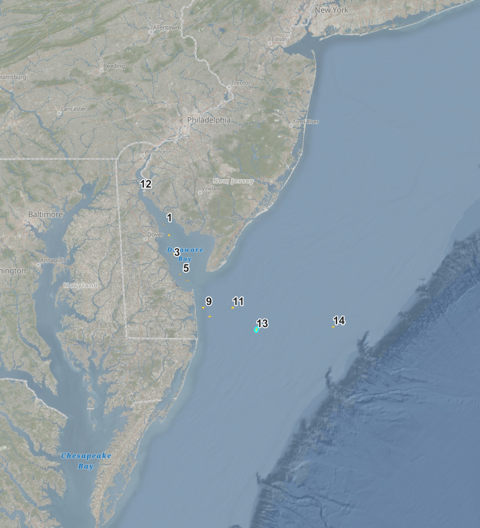
The F/V Calcasieu Pass, a retired menhaden fishing vessel formerly operated by Ocean Harvesters, was intentionally sunk Wednesday, August 12, at Delaware Reef Site 13, approximately 26 miles off Indian River Inlet.
Retired vessel deployed at Delaware Reef Site 13, continuing longstanding tradition of repurposing decommissioned vessels as marine habitat
REEDVILLE, VA / August 14, 2026 / The F/V Calcasieu Pass, a retired menhaden fishing vessel formerly operated by Ocean Harvesters, was intentionally sunk Wednesday, August 12, at Delaware Reef Site 13, approximately 26 miles off Indian River Inlet.
The Calcasieu Pass will now begin a second life as artificial reef habitat, adding structure for marine life and providing new opportunities for recreational fishing and diving off the Delaware coast.
Ocean Harvesters transferred the retired vessel to Coleen Marine for a nominal $1 purchase price in 2024, donating the Calcasieu Pass for conversion into an artificial reef. Coleen Marine subsequently prepared, towed and sank the vessel at the Delaware reef site.
"Retired working vessels can continue to provide value long after their fishing days are over," said Monty Deihl, CEO of Ocean Harvesters. "We're pleased to see the Calcasieu Pass begin a new chapter as marine habitat, supporting the ecosystem while creating new opportunities for anglers and divers."
Menhaden vessels have a long history of being repurposed as artificial habitats. In 2023, the former F/V Mermentau and F/V G.P. Chauvin were intentionally sunk off the Mississippi coast as part of that state's artificial reef program. Other retired vessels associated with the menhaden fishery have been deployed as artificial reefs in Louisiana, Delaware and Mississippi.
Another former menhaden vessel, the Reedville, was sunk off Delaware in 2020. Like the Calcasieu Pass, the vessel was prepared and deployed by Coleen Marine as part of Delaware's artificial reef system.
Artificial reefs provide hard structure on otherwise largely featureless ocean bottom, creating habitat for marine organisms and attracting fish while expanding recreational fishing and diving opportunities. Delaware has developed a network of artificial reef sites along the Atlantic Coast and in Delaware Bay using retired vessels and other cleaned, stable materials.
The Calcasieu Pass deployment adds another retired working vessel to that network and extends a practice that allows vessels which spent decades supporting coastal fishing communities to continue serving the marine environment after their working lives have ended.
Video and Images
Video of the F/V Calcasieu Pass being sunk at Delaware Reef Site 13 is available here.
About Ocean Harvesters
Ocean Harvesters owns and operates a fleet of more than 30 fishing vessels in the Atlantic Ocean and Gulf of America. The company's purse-seine fishing operation is exclusively engaged in the harvest of menhaden, a small, nutrient-dense fish used to produce fish meal, fish oil, and fish solubles. Both its Atlantic and Gulf Menhaden fisheries are certified sustainable by the Marine Stewardship Council. Committed to responsible fishing operations, Ocean Harvesters is proud to be heir to a fishing legacy that extends nearly 150 years.
ASMFC Advances Menhaden Addendum for Public Comment Despite No Clear Definition of the Problem It Seeks to Solve
ARLINGTON, VA / August 5, 2026
The Atlantic States Marine Fisheries Commission's Atlantic Menhaden Management Board today voted to release Draft Addendum II to Amendment 3 of the Atlantic Menhaden Interstate Fishery Management Plan for public comment, despite the document's failure to establish a demonstrated biological problem necessitating the new restrictions it proposes.
Board Sends Flawed Chesapeake Bay Addendum to Public Comment Despite Admitting That Essential Scientific Information Does Not Exist
ARLINGTON, VA / August 5, 2026 / The Atlantic States Marine Fisheries Commission's Atlantic Menhaden Management Board today voted to release Draft Addendum II to Amendment 3 of the Atlantic Menhaden Interstate Fishery Management Plan for public comment, despite the document's failure to establish a demonstrated biological problem necessitating the new restrictions it proposes.
The draft addendum provides several options that would reduce the existing 51,000 metric ton Chesapeake Bay Reduction Fishery Cap, automatically linking the cap to future changes in the coastwide Total Allowable Catch (TAC), and requiring Virginia to divide the Bay Cap into seasonal quota periods intended to redistribute harvest throughout the fishing season. Ocean Harvesters opposed releasing the document for public comment because it asks the public to consider specific management restrictions before establishing that an underlying biological problem exists.
A Statement of the Problem Should Include a Problem
The most obvious flaw in Draft Addendum II remains unchanged following today's vote.
The document's own "Statement of the Problem" begins with what "may" be happening, proceeds through what is "possible" and what "could" occur, and ultimately acknowledges that "there are currently not sufficient scientific data available" to comprehensively characterize the abundance and distribution of menhaden in the Chesapeake Bay or the influence of fishing pressure. It nevertheless proposes new restrictions intended to address a problem it never defines.
The addendum assembles observations, uncertainties and hypotheticals but never demonstrates that Chesapeake Bay menhaden availability has declined because of the reduction fishery or that the proposed measures would produce any biological benefit.
Public Comment Does Not Cure the Scientific Defect
Sending the addendum to public comment does not resolve the absence of a defined biological problem.
The public is now being asked to consider specific restrictions-including further reductions to the Bay Cap, automatic adjustments tied to the coastwide TAC and seasonal quota periods-without a scientifically established Bay harvest threshold, without evidence that the current cap has failed, and without confidence that any particular option would improve ecological conditions.
Virginia's ASMFC Commissioner Adele McClure raised issues with the timing of the public comment at the meeting.
"Without that complete picture, without the proper Bay-specific data, I feel like we are putting the cart before the horse instead of availing ourselves to the upcoming studies and data that could finally guide us," she said. "I believe that the public would be better served as a whole if we had the scientific study results to better inform meaningful comments from the public and input from all parties, especially those closest to the issue."
Specifically, she called on the Commission to wait until upcoming scientific studies are complete.
"We finally got that funded in Virginia at $4.5 million. We have three studies, and this could guide us in the context of good science, which is good for both the public, for union workers, and the fisheries," she said.
Public comment can inform policy choices, but it cannot substitute for the scientific evidence needed to establish the problem those choices are supposed to solve.
The Commission's Own Analysis is Inconclusive
The Menhaden Technical Committee (TC)'s review did not establish a consistent relationship between the timing of reduction fishing and Maryland pound-net catches.
For 2023, the TC's analysis found that Maryland pound-net catch rates during the second half of the year were generally equal to or greater than the recent average, "suggesting little influence of the reduction fishery on pound net catches." For 2024, their analysis identified a different pattern but could not establish cause and effect and acknowledged that any relationship would depend upon fish movements and fishery dynamics at a finer spatial scale than the available analysis could evaluate.
That inconclusive record does not establish that seasonal quotas are necessary or that they would produce a measurable biological benefit.
The absence of supporting evidence is not new. In 2018, then-ASMFC Chair James J. Gilmore Jr. wrote that there was "no evidence in Amendment 3" showing that lowering the Bay Cap was necessary to protect the Chesapeake Bay as a nursery area for menhaden or other species. He added that Commission leadership agreed the amendment did not provide sufficient evidence to support those claims.
The Research Needed to Answer These Questions is Already Underway
The Commission is moving forward just as significant public and industry-supported research is beginning.
The Science Center for Marine Fisheries has funded a collaborative research roadmap involving scientists from the Virginia Institute of Marine Science, the University of Maryland Center for Environmental Science and NOAA. The project is intended to identify the data, methods, costs and timetable needed to establish a scientifically defensible and ecologically meaningful Bay Cap. It is examining how future research could measure Bay-specific menhaden abundance, fishing mortality, movement between the Chesapeake Bay and coastal waters and availability to predators.
Virginia has also committed $2 million over two years to a VIMS-led Atlantic menhaden research program. The authorized work includes menhaden abundance and movement, predator consumption, timing and location of commercial fishing effort and localized depletion questions. The state budget expressly permits the VIMS work to build upon the SCEMFIS roadmap. Recent federal appropriations have also approved $2.5 million for NOAA to conduct a new menhaden survey in the Chesapeake Bay.
These complementary research efforts were created to produce the Bay-specific scientific information the Commission acknowledges is presently lacking. Yet the Board has advanced the addendum before either effort has produced its findings.
Public Comment Should Be Informed by Science
Today's vote begins the public comment process; it does not resolve the scientific questions at the center of the proposal.
Ocean Harvesters encourages stakeholders to carefully review the addendum and consider whether it establishes a demonstrated biological problem, whether the proposed restrictions are supported by the available scientific evidence and whether additional management measures should be adopted before the ongoing research has been completed.
The company will participate fully in the public comment process and will continue to advocate for management decisions grounded in sound science, transparency and a clearly demonstrated biological need.

About Ocean Harvesters
Ocean Harvesters owns and operates a fleet of more than 30 fishing vessels in the Atlantic Ocean and Gulf of America. The company's purse-seine fishing operation is exclusively engaged in the harvest of menhaden, a small, nutrient-dense fish used to produce fish meal, fish oil, and fish solubles. Both its Atlantic and Gulf Menhaden fisheries are certified sustainable by the Marine Stewardship Council. Committed to responsible fishing operations, Ocean Harvesters is proud to be heir to a fishing legacy that extends nearly 150 years.
Court Affirms Dismissal of False Claims Act Lawsuit Against Ocean Harvesters, Cooke Inc., Omega Protein and Related Defendants
REEDVILLE, VA / August 5, 2026
The United States Court of Appeals for the Second Circuit today affirmed the dismissal of a False Claims Act lawsuit brought by private relators W. Benson Chiles and Chris Manthey against Ocean Harvesters, Cooke Inc., Omega Protein and other defendants. The lawsuit arose from allegations concerning applications for and the issuance of fishery endorsements under the American Fisheries Act.
Second Circuit Upholds Complete Dismissal of All Claims Asserted by Private Relators
REEDVILLE, VA / August 5, 2026 / The United States Court of Appeals for the Second Circuit today affirmed the dismissal of a False Claims Act lawsuit brought by private relators W. Benson Chiles and Chris Manthey against Ocean Harvesters, Cooke Inc., Omega Protein and other defendants. The lawsuit arose from allegations concerning applications for and the issuance of fishery endorsements under the American Fisheries Act.
In a unanimous opinion, the Second Circuit affirmed the judgment of the United States District Court for the Southern District of New York, which had previously dismissed the relators' amended complaint in its entirety. The appellate court agreed that the relators failed to state a claim under the False Claims Act and affirmed the dismissal of all four causes of action in the amended complaint.
The Court held that wild fish in public waters do not constitute government "property" for purposes of the False Claims Act. In rejecting the relators' principal theory, the Court concluded that the absence of a government property interest in wild fish was "fatal to any attempt to assert an FCA cause of action."
The Court further held that unassessed civil penalties under the American Fisheries Act do not create the type of established payment obligation necessary to support a reverse false claim. The Court found it "abundantly clear from the statutory framework" that such penalties are not self-executing and remain subject to agency discretion.
Based on those conclusions, the Second Circuit affirmed the dismissal of all claims against the defendants.
From the outset of this case, Cooke Inc., Omega Protein and Ocean Harvesters have maintained that the lawsuit, which alleged violations of the False Claims Act, misstated the facts and ignored the law. The district court dismissed the amended complaint, and the Second Circuit has now affirmed that judgment, holding that the pleaded claims failed under the False Claims Act.
"We are pleased that the Second Circuit carefully considered the legal issues and unanimously affirmed the district court's dismissal of this case," said Ben Landry, spokesperson for Ocean Harvesters. "This decision confirms what the defendants have maintained throughout this litigation: the claims asserted by the relators did not satisfy the requirements of the False Claims Act. The Court held that wild fish in public waters are not government property under the FCA and that unassessed, discretionary civil penalties do not create an obligation to pay under the statute."
The Court also affirmed the district court's denial of the relators' request to further amend their complaint. The Second Circuit concluded that the relators had unduly delayed in asserting their proposed additional claim, noting that they could have raised it earlier and did not do so until after the district court had warned that no further amendments would be permitted.
The lawsuit was pursued by private relators under the False Claims Act after the United States declined to intervene. The Second Circuit's decision leaves intact the district court's complete dismissal of the action.
The case is United States ex rel. Chiles v. Cooke Inc., No. 25-155 (2d Cir. Aug. 5, 2026).
About Ocean Harvesters
Ocean Harvesters owns and operates a fleet of more than 30 fishing vessels in the Atlantic Ocean and Gulf of America. The company's purse-seine fishing operation is exclusively engaged in the harvest of menhaden, a small, nutrient-dense fish used to produce fish meal, fish oil, and fish solubles. Both its Atlantic and Gulf Menhaden fisheries are certified sustainable by the Marine Stewardship Council. Committed to responsible fishing operations, Ocean Harvesters is proud to be heir to a fishing legacy that extends nearly 150 years.
Proposed ASMFC Menhaden Addendum Is a Solution Searching for a Problem
REEDVILLE, VA / August 3, 2026
The Atlantic States Marine Fisheries Commission's Atlantic Menhaden Management Board is considering Draft Addendum II to Amendment 3 of the Atlantic Menhaden Interstate Fishery Management Plan, which proposes further reductions to the Chesapeake Bay Reduction Fishery Cap, automatically linking the Bay Cap to the coastwide total allowable catch, and directing Virginia to divide the cap into seasonal quotas.
Proposal fails to establish a biological problem, omits serious economic warnings, and threatens livelihoods of union and African American working families before ongoing research is complete.
KEY POINTS
No demonstrated biological problem. The draft relies on statements about what "may" happen, what "could" occur, or what is "possible," while acknowledging that sufficient data do not exist.
The ASMFC's own record does not support new restrictions. The current Bay Cap is already highly precautionary, and the Technical Committee found no consistent relationship between fishing timing and Maryland pound-net catches.
Critical economic warnings were omitted. The addendum leaves out the ASMFC's Committee on Economics and Social Sciences warnings of structural unemployment, a minimum operating volume threshold, and a possible 100 percent shutdown.
Civil rights and labor concerns have been raised. The Southern Christian Leadership Conference expresses concern that African American workers, union families, and rural communities may be disproportionately affected.
The research is not finished. The ASMFC is considering new restrictions before work intended to support a scientifically based Bay Cap is complete.
REEDVILLE, VA / August 3, 2026 / The Atlantic States Marine Fisheries Commission's Atlantic Menhaden Management Board is considering Draft Addendum II to Amendment 3 of the Atlantic Menhaden Interstate Fishery Management Plan, which proposes further reductions to the Chesapeake Bay Reduction Fishery Cap, automatically linking the Bay Cap to the coastwide total allowable catch, and directing Virginia to divide the cap into seasonal quotas.
The proposal raises three serious concerns. First, its own "Statement of the Problem" does not establish that a biological problem exists, and the ASMFC leadership previously acknowledged that the record did not provide evidence supporting the reduction that produced the current cap. Second, the Menhaden Technical Committee found no consistent evidence that the timing of reduction fishing affects Maryland pound-net catches. Third, the addendum leaves out the most serious warnings from the ASMFC's economic advisers-including structural unemployment and the possibility that further cuts could force a 100 percent shutdown of the Reedville facility.
Those risks fall on a rural union workforce that includes a majority African American workers and supports multigenerational families in a community with no comparable jobs. At the same time, the Commission acknowledges that additional research is needed to develop a scientifically based process for setting the Bay Cap. The Board is therefore considering specific new restrictions, with certain economic pain, before that research is complete, without demonstrating that the existing cap has failed or that the proposed measures would produce a documented biological benefit.
For these reasons, Ocean Harvesters has written to the Atlantic Menhaden Management Board urging it not to approve Draft Addendum II for public comment or potential implementation. The company is asking the Board to take no further action until ongoing research provides the information necessary for a scientifically defensible management decision.
The Addendum Does Not Establish a Biological Basis for New Restrictions
The addendum is a solution in search of a problem. Its own "Statement of the Problem" begins with what "may" be happening, proceeds through what is "possible" and what "could" occur, acknowledges that "there are currently not sufficient scientific data available," and proposes restrictions to address a problem it never defines.
The addendum says menhaden availability "may be affected" by changes in abundance and distribution and that recent observations "suggest that availability of menhaden in Chesapeake Bay may be changing." It then concedes that "there are currently not sufficient scientific data available" to comprehensively characterize menhaden abundance and distribution in the Bay or the influence of fishing pressure.
The lack of evidence is not new. In a 2018 letter responding to Virginia's appeal of Amendment 3's 41 percent Bay Cap reduction, then-ASMFC Chair James J. Gilmore Jr. wrote:
"There is no evidence in Amendment 3 to support the view that lowering the Bay Cap was necessary to protect the Bay as a nursery area for menhaden and there is no evidence to suggest the Bay Cap is necessary to protect the Bay as a nursery for other species. Leadership agrees the Amendment does not provide sufficient evidence to support such claims."
The current 51,000 metric ton Bay Cap is the product of repeated precautionary reductions. It was established in 2006 to prevent expansion of the reduction fishery while scientific studies examined the possibility of localized depletion, reduced by 20 percent in 2013, and lowered again 41 percent down to 51,000 metric tons in 2018.
Eight years later, Draft Addendum II proposes still further reductions without supplying the evidence ASMFC leadership said was missing when the current cap was adopted. The existing cap has constrained Chesapeake Bay reduction harvests to historically low levels, yet the addendum identifies no scientifically established Bay-harvest threshold and does not demonstrate that the current cap has failed to protect the resource.
The rationale for seasonal quotas is equally speculative. The addendum says "it is possible" that higher catch rates "could affect" availability to predators or other fisheries, but it does not establish that localized depletion occurred, that predators lost access to menhaden, or that another fishery was harmed.
The Menhaden Technical Committee's review found no consistent relationship between the timing of reduction fishing and Maryland pound-net catches. For 2023, the analysis indicated little influence from the reduction fishery. For 2024, it said only that an effect was possible and acknowledged that any relationship would depend upon fish movements and fishery dynamics at a finer scale than the analysis could evaluate.
Taken together, the addendum says menhaden availability may be changing; several different factors could cause it; available science cannot determine Bay abundance, distribution, or fishing effects; and therefore the Commission should consider reducing and seasonally redistributing reduction harvest. That is not a demonstrated problem-and-cause relationship or a scientific basis for imposing new restrictions.
The Draft Omits Its Own Advisers' Most Serious Warnings
Draft Addendum II selectively presents the findings of the ASMFC's Committee on Economics and Social Sciences. The highlighted sections-covering the reduction industry's central role in the Reedville economy, the risk of structural unemployment, the minimum operating-volume threshold, and the potential for a 100-percent shutdown-were left out of the addendum text.
In the fall of 2025 and spring of 2026, CESS was tasked with examining how changes in menhaden management could affect jobs in the commercial reduction and bait sectors. It found that the reduction sector supported approximately 519 full- and part-time jobs in Maryland and Virginia, including 347 in Northumberland County, where comparable employment opportunities are limited.
For Chesapeake Bay-specific restrictions, the analysis associated each 1,000 metric ton quota reduction with approximately 3.7 total jobs, including 2.1 direct reduction sector jobs. If Bay harvest were eliminated and vessels could not replace those landings in coastal waters, Northumberland County could lose as many as 176 jobs, including 98 direct jobs.
CESS warned that the reduction industry is a "critical and central sector" for the Reedville economy and that job losses could lead to "structural unemployment rather than frictional transition." The Reedville operation is a capital-intensive business with substantial fixed costs associated with its processing plant, fleet, insurance, infrastructure, and workforce. As CESS explained, "a processing plant would require a minimum volume of fish to cover its fixed costs of operation."
"If additional restrictions push landings below that break-even threshold, the result could be ‘not a partial layoff but potentially a 100% shutdown of the facility.'"
A 10 or 20 percent reduction in allowable harvest therefore would not necessarily produce only a 10 or 20 percent reduction in employment. A seemingly modest cut could push the operation below the minimum volume needed to remain viable, triggering major layoffs or the complete loss of the facility. CESS did not identify the precise reduction that would cross that threshold, but warned that the consequences could become dramatic once it is reached.
The addendum repeats the older linear estimates of jobs associated with each 1,000 metric ton quota change and emphasizes that those models may overstate long-term effects because they do not account for market adjustments or business adaptation. But it omits the companion warning that the reduction sector's response may be nonlinear, that job losses could become structural, that the operation must maintain a minimum volume, and that crossing its break-even threshold could result in a complete shutdown rather than a proportional reduction in employment.
The full CESS memorandum appears later in the broader meeting packet, but the addendum itself-the document the Board is being asked to approve for public comment-does not adequately disclose those risks. Emphasizing the possibility that a linear model may overstate gradual losses while omitting the warning that it may fail to capture a catastrophic threshold presents an incomplete and potentially misleading picture of the economic consequences.
A Maryland-Initiated Proposal Could Impose Lasting Harm on Union and Minority Workers
The effort to develop the addendum began with a motion by Maryland's delegation to the ASMFC to consider seasonal Bay Cap periods and reductions of as much as 50 percent. The consequences, however, would fall primarily on a Virginia-based workforce that includes union members and many African American workers in and around Reedville.
The Southern Christian Leadership Conference, the civil rights organization whose founding president was Dr. Martin Luther King Jr., has urged Maryland Governor Wes Moore to ensure that the state considers the workers and families whose livelihoods are at risk. SCLC asked that Maryland's position be guided by "balance, sound science, environmental stewardship, economic justice, and a full recognition of the workers and families whose lives may be directly affected."
SCLC said the issue sits at the intersection of environmental responsibility, rural economic life, labor, wages, race, and the dignity of work. It stressed that protecting workers, wages, benefits, and family stability is particularly important "where African American workers, union families, and rural communities may be disproportionately affected."
"The menhaden fishery has long provided meaningful blue-collar employment for workers in communities where stable jobs with benefits are increasingly difficult to find."
SCLC described the jobs as locally rooted, multigenerational, and connected to working waterfront communities where people are trying to remain close to home, raise their families, and build a future with dignity. For African American working families and rural communities, it said that employment is "not simply an economic statistic." It represents "stability, opportunity, and the ability to provide for one's household with pride."
SCLC did not dismiss the importance of the Chesapeake Bay or responsible environmental management. It asked Maryland to recognize the full complexity of the issue and cautioned against treating affected workers as an afterthought.
"The goal should not be to place the Bay against working people, or working people against the Bay, but to make policy in a way that honors both."
The Workers and Families Behind the Numbers
The Reedville workforce includes union members represented by United Food and Commercial Workers Local 400 and many African American workers whose families have depended on the fishery for generations. In a brief UFCW Local 400 video, fishermen explain how these jobs provide middle class wages, health insurance, retirement security, homeownership, college opportunities, and stability for multigenerational working families.
The video also explains the importance of these jobs and benefits to the African American community in Northumberland County, where comparable employment is limited and health coverage continues during winter months when seasonal workers are not working. The workers describe what the loss of the fishery would mean for their families and the wider Northern Neck community.
Watch the UFCW Local 400 video
The video Our Sundays Are Different portrays the distinctive rhythm of life in this multigenerational fishing community. During the season, fishermen may leave Reedville on Sunday and remain away until Wednesday or Friday. Their families describe emotional Sunday goodbyes, missed birthdays, interrupted church responsibilities, and the ordinary family moments sacrificed to earn a living and provide for their households.
The fishermen also explain how the fishery allows them to support their families, remain in the communities where they were raised, and continue a way of life passed from one generation to the next. In a rural county with few comparable opportunities, these union jobs provide stable income, health insurance, and the means to build a secure life.
Watch Our Sundays Are Different
Complete the Research Before Imposing New Restrictions
Ocean Harvesters is asking the Board to take no further action on the addendum until ongoing research provides the information needed to make a scientifically defensible decision about Chesapeake Bay menhaden management.
That research is no longer merely proposed. In October 2025, the Science Center for Marine Fisheries (SCEMFIS), funded a team of scientists from VIMS, the University of Maryland Center for Environmental Science and NOAA to develop a research roadmap identifying the data, methods, costs and timetable needed to establish a scientifically defensible and ecologically meaningful Chesapeake Bay harvest cap. The project is examining how future research could measure Bay-specific menhaden abundance, fishing mortality, movement between Chesapeake Bay and coastal waters, and availability to predators. Its final recommendations are expected by the end of 2026. Ocean Harvesters and Omega Protein support the SCEMFIS project, and Ocean Harvesters is cooperating with pilot work evaluating whether tagged fish can be detected through commercial fishing and processing operations.
Virginia has also committed $2 million over two years to a VIMS-led Atlantic menhaden research program. The funding was restored through an amendment submitted by Governor Abigail Spanberger and approved by the General Assembly in June. The budget directs VIMS, working with the Virginia Marine Resources Commission and affected stakeholders, to conduct research needed to inform a scientifically defensible Bay Cap. The authorized work includes menhaden abundance and movement, predator consumption, the timing and location of commercial fishing effort, localized-depletion questions and the workforce consequences of future harvest restrictions. The budget language expressly permits VIMS to build upon the recommendations of the SCEMFIS roadmap.
These complementary industry-supported and publicly funded efforts are intended to develop the Bay-specific scientific information the Commission acknowledges is presently lacking. Yet the Board is considering reductions, automatic cap adjustments and seasonal quotas before either effort has produced its findings.
The imbalance is clear: the addendum offers speculative and undefined biological benefits while exposing a rural, multigenerational workforce, including union members and many African American workers, to substantial and potentially irreversible economic harm.
The Commission should not release for public comment a document that does not define the problem, does not demonstrate that the proposed measures would solve it, does not fully disclose the possibility that the restrictions could cost hundreds of jobs, and does not disclose that they could cause the shutdown of the Reedville operation.

About Ocean Harvesters
Ocean Harvesters owns and operates a fleet of more than 30 fishing vessels in the Atlantic Ocean and Gulf of America. The company's purse-seine fishing operation is exclusively engaged in the harvest of menhaden, a small, nutrient-dense fish used to produce fish meal, fish oil, and fish solubles. Both its Atlantic and Gulf Menhaden fisheries are certified sustainable by the Marine Stewardship Council. Committed to responsible fishing operations, Ocean Harvesters is proud to be heir to a fishing legacy that extends nearly 150 years.
Response to Dr. Bryan Watts: Repeating Misinformation Should Not Happen - Including in the Menhaden Debate
REEDVILLE, VA / July 20, 2026
We thank The Virginian-Pilot and Daily Press for respectfully providing the opportunity for both sides of an Atlantic menhaden debate to appear in their pages. In a June 30 guest column, Ocean Harvesters CEO Monty Deihl questioned whether an academic paper recently published with Dr. Bryan Watts as the lead author is appropriate to use in arguments against menhaden fishing in the Chesapeake Bay. On July 6, Dr.Watts responded.
REEDVILLE, VA / July 20, 2026 / We thank The Virginian-Pilot and Daily Press for respectfully providing the opportunity for both sides of an Atlantic menhaden debate to appear in their pages. In a June 30 guest column, Ocean Harvesters CEO Monty Deihl questioned whether an academic paper recently published with Dr. Bryan Watts as the lead author is appropriate to use in arguments against menhaden fishing in the Chesapeake Bay. On July 6, Dr.Watts responded.
We wholeheartedly agree, as Dr. Watts said in his response, that repeating misinformation should not happen. But repeating misinformation is precisely what Dr. Watts and others have done. In the interest of producing the fairest and most open response, we are including a bibliography of all scientific, regulatory, and other sources referenced.
1. Dr. Watts has now publicly confirmed the central point: his paper does not link poor osprey reproduction to menhaden harvest.
Dr. Watts writes: "Deihl is incorrect in suggesting that our paper attempts to link poor osprey reproduction to menhaden harvest. We do not."
But Mr. Deihl did not say the paper itself makes that link. What he said was that the paper "will almost certainly be used to argue for harsh restrictions on this well-regulated fishery."
The Chesapeake Bay Foundation has already issued a press release explicitly using Dr. Watts' study under the headline "New Study Links Starving Chesapeake Bay Osprey to Menhaden Woes." In that release, CBF stated that the report "adds urgency for pausing menhaden reduction fishery in the Bay" and quoted Forage Campaign Manager Will Poston as saying: "Ultimately, decision makers must pause reduction fishing inside the Bay until menhaden research is completed."
That is exactly what Mr. Deihl warned would happen. The paper is being used to argue for harsh restrictions on the well-regulated Chesapeake Bay menhaden fishery. And given Dr. Watts' own public statement that his paper does not link poor osprey reproduction to menhaden harvest, CBF and Mr. Poston are wrong to use his paper as the basis for pausing reduction fishing in the Bay.
An academic paper may raise important ecological questions. It may identify food stress in osprey nests and support further research into prey availability, environmental conditions, and other factors. But unless it demonstrates a causal connection to menhaden harvest, it cannot be presented to the public or regulators as though that causal connection has been established.
When a paper that expressly does not link osprey reproduction to harvest is nevertheless used to demand fishery-specific restrictions, the public is no longer being given science. It is being given advocacy dressed in scientific language.
2. The "intercept fishery" or "gauntlet" theory is not supported by the available evidence.
Dr. Watts repeats the claim that Ocean Harvesters is operating an "intercept fishery," catching menhaden at the mouth of the Bay and preventing fish from reaching the rest of the Chesapeake. That theory is contradicted by the analyses now before managers.
The theory ignores basic menhaden life history. Menhaden are not a static Bay-resident population. NOAA Fisheries explains that mature menhaden spawn in coastal waters, and juveniles remain in estuaries such as the Chesapeake Bay for about a year before joining adult schools. Many menhaden are migratory, and others remain resident in their area. NOAA also notes that menhaden are common in all Chesapeake Bay salinities and swim in large surface schools during spring, summer, and fall. That life history is hard to square with a simple "intercept" story that assumes one lower-Bay fishery is blocking a single, predictable flow of fish to the rest of the Bay. Equally important, Virginia law does not allow the menhaden reduction fishery to begin before the first Monday in May, and actual fishing activity often starts later.
A January 2026 analysis conducted by Georgetown Economic Services of Washington, D.C. and submitted to the Atlantic States Marine Fisheries Commission directly addressed the so-called "gauntlet" theory. It explained that if the purse seine fleet were preventing menhaden from traveling into the upper Bay, pound-net catch rates should show a corresponding steep decline during the relevant weeks. Instead, the submitted analysis found that pound-net catch rates remained on a relatively steady increase through the season. The same submission reported that, in months when Virginia reduction purse-seine net sets exceeded their 10-year average, Maryland pound-net harvest also tended to be above its 10-year average; the converse was also true. The submission concluded that the relationship did not support the "gauntlet" claim.
A second analysis by estuarine scientist Dr. Arnoldo Valle-Levinson focused on Chesapeake Bay physics and environmental conditions. Rather than assuming an "intercept" mechanism, it examined how summer Bay conditions can compress livable habitat and affect where fish concentrate and how catchable they are. The same public summary reports that Maryland catches and trips both declined together, while catch per unit effort did not show the steady collapse one would expect if the upper Bay were being systematically starved of fish.
Dr. Watts compares the issue to water withdrawals on the Rio Grande affecting downstream farmers, but fish are not water. Water flows downstream in one direction; menhaden are migratory schooling fish whose movement and availability depend on season, age, salinity, temperature, dissolved oxygen, plankton, predator pressure, and other Bay conditions. The analogy assumes a simple one-way flow that does not exist in a dynamic fishery. That is why the "intercept" or "gauntlet" theory must be tested against actual fishery data, timing, catch rates, effort, and Bay conditions.
3. Food stress in osprey nests is not proof that one fishery caused reduced prey availability.
We do not dismiss osprey observations. We do not dismiss food stress. We do not dismiss the ecological importance of menhaden. Menhaden are an important forage fish, and ospreys are important indicators of aquatic ecosystem conditions.
But an indicator is not a cause.
Earlier Chesapeake Bay osprey diet studies show why food stress cannot be evaluated through menhaden alone. Glass & Watts reported that Atlantic menhaden and seatrouts/weakfish were dominant prey in lower-estuarine nests - meaning nests in the saltier lower Bay, closer to where the Chesapeake meets the Atlantic Ocean and freshwater mixes with seawater - while gizzard shad and catfish dominated upper-estuarine diets (Glass & Watts 2009). Their Table 1 shows that spotted seatrout were more frequent than menhaden by number in lower-estuarine nests, 28.8% versus 24.2% (Glass & Watts 2009, Table 1). Lazarus et al. later reported that Poplar Island ospreys fed predominantly on striped bass, 47.8% of diet, and Atlantic menhaden, 44.3% of diet, while ospreys on the Susquehanna, Anacostia/middle Potomac, and James Rivers fed predominantly on catfish and gizzard shad (Lazarus et al. 2016).
That broader prey-base context matters because one of those prey species, striped bass, remains overfished. ASMFC says Atlantic striped bass was declared overfished in 2019 and remains overfished under the 2024 stock assessment update (ASMFC 2024 Atlantic Striped Bass Stock Assessment Update; ASMFC Atlantic Striped Bass Species Page). ASMFC also reports that in 2024 the recreational sector accounted for about 85% of total striped bass removals by number of fish, and that from 2022-2023 recreational harvest and recreational release mortality together accounted for roughly 89% of total removals (ASMFC Atlantic Striped Bass Species Page; ASMFC 2024 Atlantic Striped Bass Stock Assessment Update). Watts' own research shows that deliveries of other prey species declined at a steeper rate than menhaden between 2006-07 and 2021 (Watts et al. 2024, Table 2). If osprey food delivery is now insufficient, the more relevant question is whether availability of the full prey base - including striped bass, seatrout/weakfish, gizzard shad, catfish, and menhaden - has changed, and why.
In his response, Watts states that "[w]hile it is true that ospreys have a varied diet, all fish are not the same," claiming that menhaden are more nutritious because they are "rich in oils." Dr. Watts is correct that menhaden are generally an oily forage fish, but "oily" is not a fixed condition throughout the year. A NOAA/NMFS study of Atlantic menhaden from the Chesapeake Bay area found strong seasonal variation in oil content, with early-season fish averaging roughly 8-10% lipid content, compared with about 20% at the October peak (Dubrow et al. 1976). Resident forage species also matter: Maryland DNR describes gizzard shad as present across Maryland's Chesapeake river systems and spawning during the same spring period when osprey nesting begins, which reinforces the need to evaluate the full prey base rather than assume menhaden alone explain spring food stress. Because osprey breeding begins in spring, before menhaden reach peak oil content, the question is not whether menhaden are nutritious in general. The question is whether spring menhaden are uniquely more valuable than other prey actually available to nesting ospreys at that time, including resident forage species such as gizzard shad.
Timing is important. The Watts et al. paper states that Chesapeake Bay osprey pairs return to breeding territories from late February through late March and lay clutches in early April. Virginia law identifies the relevant menhaden purse-net season in certain waters as running from the first Monday in May through the third Friday in November. If nest initiation, egg-laying, or non-laying behavior is already being set before the reduction fishery is active, those early reproductive outcomes cannot be attributed to harvest later in the season.
USGS describes the Chesapeake osprey question as one involving menhaden and other fish prey, while stating that ongoing work is intended to help determine whether prey delivery or other environmental factors are affecting reproductive success.
The 2026 Watts et al. paper itself lists multiple factors that may influence menhaden abundance in the Chesapeake Bay, including commercial harvest, predation, competition, recruitment, plankton availability, larval transport, temperature, salinity, water quality, and other environmental conditions.
The 1980s comparison also needs context. Dr. Watts points to a period when menhaden made up a higher percentage of osprey deliveries, but Chesapeake striped bass were then at historic lows. The University of Maryland Center for Environmental Science reports that by the mid-1980s striped bass had fallen to the lowest numbers in decades. A peer-reviewed study of Chesapeake Bay striped bass management likewise reported that commercial landings reached a record high in 1973 and then declined by almost 90 percent during the following decade, with depressed juvenile production during the 1970s. A period when a major menhaden predator was severely depleted is not a neutral baseline for judging today's osprey diet composition. Furthermore, there were only 3,500 osprey breeding pairs in the mid-1990s (fewer in the 1980s). There are10,000 breeding pairs today (Watts et al. 2026).
The timeline also undercuts the blame-the-fishery narrative. Chesapeake ospreys rebounded during decades when Bay menhaden harvests were much higher than they are today. The Bay reduction fishery is now capped at 51,000 metric tons - roughly one-third of levels seen during portions of the osprey rebound from the 1970s through the early 2000s. Ospreys recovered while the Bay menhaden fishery was far larger.
It is also important to understand why this debate exists in the first place. While Dr. Watts now says his 2026 paper does not link poor osprey reproduction to menhaden harvest, prior work by Dr. Watts and colleagues went much further. In their 2023 Mobjack Bay osprey food-supplementation study, Academia & Watts acknowledged that "local levels of menhaden abundance were not available," but nevertheless concluded that "the menhaden population within Mobjack Bay is not currently adequate to sustain the osprey breeding population" and recommended that "industrial purse seine fishing occur outside Chesapeake Bay" (Academia & Watts 2023). A later Watts et al. paper likewise acknowledged that "no menhaden stock index has been developed that is specific to the Mobjack Bay study area," yet argued that osprey viability required menhaden to be restored to 1980s levels (Watts et al. 2024). That is the leap at the heart of the dispute: food limitation may be real, and menhaden may be important prey, but those facts do not prove that the menhaden fishery caused the condition observed in Mobjack Bay.
A Frontiers in Marine Science commentary on the Mobjack Bay osprey paper raised related scientific concerns. The commentary noted that Watts et al. relied on coastwide juvenile menhaden abundance indices as a proxy for menhaden availability to ospreys in Mobjack Bay. Those indices are model-based estimates drawn from surveys spanning a large portion of the Atlantic coast, from Rhode Island to South Carolina. The concern is straightforward: a coastwide juvenile index is not the same thing as measuring the local abundance, size, timing, and availability of menhaden to nesting ospreys in one Chesapeake Bay sub-estuary. As the commentary explained, the analysis assumed that those broad indices represented the menhaden actually available to ospreys in Mobjack Bay - an assumption that had not been directly tested (Latour, Gartland, and Ralph, 2024). That distinction matters because a study may show that ospreys benefit from more menhaden without proving that the menhaden fishery caused the local prey conditions observed at those nests.
That is why Latour et al. concluded that Watts et al.'s analyses "do not establish a clear relationship with menhaden abundance and availability" and encouraged concurrent osprey nest and menhaden sampling to directly assess the ecological linkage (Latour et al. 2024). That is also why Ocean Harvesters has supported new Bay-specific menhaden research rather than policy decisions based on inference, proxy indices, or advocacy claims that go beyond the available data.
The relevant question is not simply whether some osprey nests show food stress. The relevant question is what caused the food stress, whether it is connected to adult menhaden abundance, whether adult menhaden abundance is connected to harvest, and whether any proposed fishery restriction would actually address the cause.
Those links have not been demonstrated.
4. Coastwide stock science is not a distraction; it is the official management foundation.
Dr. Watts argues that Ocean Harvesters has used the Atlantic States Marine Fisheries Commission's coastwide stock assessment to suggest, "without evidence," that Chesapeake Bay menhaden conditions remain healthy. That framing is misleading.
No one should pretend that coastwide stock status answers every Bay-specific question. Bay-specific abundance, movement, predator availability, and localized ecological conditions are legitimate research questions. But it is equally wrong to dismiss the official coastwide assessment as irrelevant. Atlantic menhaden are a migratory species managed through a coastwide interstate process because the stock moves across state boundaries and in and out of estuarine systems.
The ASMFC's 2025 stock assessment update states that, using the current ecological reference point benchmarks, "the Atlantic menhaden population is not overfished and overfishing is not occurring."
Coastwide science does not prove every Bay-specific claim, but it does provide the official management baseline. Meanwhile, Bay-specific claims require Bay-specific evidence.
The absence of a validated Bay-specific adult abundance index does not license advocates to substitute osprey diet observations, bait landings, or anecdotes for proof of fishery-caused depletion. It means the Bay-specific science needs to be done.
And that is exactly the work the industry has supported. Through the Science Center for Marine Fisheries, industry members have supported a Chesapeake Bay menhaden research roadmap to identify the data and methods needed to develop a scientifically defensible and ecologically meaningful Bay harvest cap. That project brings together researchers from the Chesapeake Biological Laboratory, the Virginia Institute of Marine Science, and NOAA to evaluate the research needed to answer Bay-specific management questions.
More recently, with support from Ocean Harvesters and Omega Protein, Virginia approved $2 million for menhaden research in the Chesapeake Bay. The funding will go to William & Mary's Virginia Institute of Marine Science for research over the next two years, in collaboration with the Virginia Marine Resources Commission. That is the proper path forward: identify the data gaps, fund the science, and let the results guide management - rather than using a paper that does not link osprey reproduction to harvest as a justification for fishery-specific restrictions.
5. Certification and independent review also matter.
The U.S. Atlantic menhaden purse-seine fishery has been certified by the Marine Stewardship Council since 2019.
MSC certification is an independent third-party assessment process that represents a global gold standard for sustainability. Reasonable people can debate management choices, but the public should know that this fishery has passed rigorous sustainability review beyond being managed by the ASMFC.
6. Bait landings are not adult menhaden abundance indices.
Dr. Watts points to bait fishermen and homeowners watching osprey nests as evidence that menhaden abundance has changed. These observations may be worth investigating, but they are not substitutes for a validated adult abundance index.
Bait landings can change because fish are less abundant. They can also change because effort changes, markets change, labor availability changes, gear use changes, weather changes, fish distribution changes, or environmental conditions affect catchability. That is why the "gauntlet" analyses matter: they look at catch rates, effort, timing, and environmental conditions rather than assuming that lower landings equal fishery-caused depletion.
The right path is Bay-specific science, not Bay-specific blame.
Ocean Harvesters and the broader menhaden industry support better Chesapeake Bay science. We support research that can answer the questions regulators actually need answered: adult menhaden abundance in the Bay, movement between coastal and Bay waters, local availability to predators, fishery interactions, environmental drivers, and the real effects of any proposed management measure.
The wrong approach is to begin with blame and then look for facts to support it.
Dr. Watts' column asks the public to view Ocean Harvesters as the source of misinformation. But the public record shows a different story.
The "gauntlet" theory he cites is contradicted by analyses submitted to ASMFC.
USGS frames the osprey question as a multi-factor ecological investigation.
ASMFC says menhaden are not overfished and overfishing is not occurring.
ASMFC manages menhaden with ecological reference points specifically designed to account for predator needs.
Earlier Chesapeake Bay osprey diet studies, including Watts' own (Glass & Watts 2009), found that ospreys relied on a broader prey base than menhaden alone, including seatrouts/weakfish, striped bass, gizzard shad, and catfish, during periods when Bay osprey populations were growing.
Chesapeake Bay ospreys rebounded when menhaden harvests were much higher than they are today. The Bay reduction fishery is now capped at roughly one-third of levels seen during portions of that rebound period.
That is the scientific and regulatory record.
We invite readers to review it for themselves.
Source Links
Access Newswire - "Statement by Monty Deihl, Ocean Harvesters CEO, on Governor Spanberger's Amendments Restoring Funding for Virginia Chesapeake Bay Menhaden Study": https://www.accessnewswire.com/newsroom/en/industrial-and-manufacturing/statement-by-monty-deihl-ocean-harvesters-ceo-on-governor-spanbergers-1183322
Academia, Michael H., and Bryan D. Watts - "Food Supplementation Increases Reproductive Performance of Ospreys in the Lower Chesapeake Bay," Frontiers in Marine Science, 2023: https://www.frontiersin.org/journals/marine-science/articles/10.3389/fmars.2023.1172787/full
Atlantic States Marine Fisheries Commission - 2025 Atlantic Menhaden Single-Species Stock Assessment Update: https://asmfc.org/wp-content/uploads/2025/11/2025AtlMenhadenSingleSpeciesAssmtUpdate_October2025.pdf
Atlantic States Marine Fisheries Commission - Atlantic Menhaden Assessments Overview: https://asmfc.org/wp-content/uploads/2025/11/AtlanticMenhadenAssessmentsOverview_October2025.pdf
Atlantic States Marine Fisheries Commission - Atlantic Menhaden Fact-Check FAQ: https://asmfc.org/news/fact-check/atlantic-menhaden-faqs/
Atlantic States Marine Fisheries Commission - Atlantic Menhaden Frequently Asked Questions: https://asmfc.org/wp-content/uploads/2025/11/Menhaden-FAQ-Oct2025.pdf
Atlantic States Marine Fisheries Commission - Atlantic Menhaden Management Board Supplemental Materials, February 2026: https://asmfc.org/wp-content/uploads/2026/01/AtlMenhadenBoardSupplemental_Feb2026.pdf
Atlantic States Marine Fisheries Commission - Atlantic Menhaden Stock-Status Page: https://asmfc.org/stock-assessment/atlantic-menhaden/
Atlantic States Marine Fisheries Commission - Atlantic Striped Bass Species Page: https://asmfc.org/species/atlantic-striped-bass/
Atlantic States Marine Fisheries Commission - 2024 Atlantic Striped Bass Stock Assessment Update: https://asmfc.org/wp-content/uploads/2025/01/2024_AtlStripedBassAssessmentUpdate.pdf
Atlantic States Marine Fisheries Commission - 2024 Atlantic Striped Bass Stock Assessment Press Release: https://asmfc.org/news/press-releases/atlantic-striped-bass-stock-assessment-update-finds-resource-remains-overfished-with-a-less-than-50-chance-of-rebuilding-by-2029-2/
Chesapeake Bay Foundation - "New Study Links Starving Chesapeake Bay Osprey to Menhaden Woes": https://www.cbf.org/news/new-study-links-starving-chesapeake-bay-osprey-to-menhaden-woes/
Dubrow, David L., Malcolm B. Hale, and Anthony P. Bimbo - "Seasonal Variations in Chemical Composition and Protein Quality of Menhaden," Marine Fisheries Review 38(9), 1976: https://spo.nmfs.noaa.gov/sites/default/files/pdf-content/MFR/mfr389/mfr3892.pdf
Glass, K. Andrew, and Bryan D. Watts - "Osprey Diet Composition and Quality in High- and Low-Salinity Areas of Lower Chesapeake Bay," Journal of Raptor Research 43(1):27-36, 2009: https://www.researchgate.net/publication/254441715_Osprey_Diet_Composition_and_Quality_in_High_and_Low_Salinity_Areas_of_Lower_Chesapeake_Bay/link/547cf4f90cf2cfe203c1ff30/download?_tp=eyJjb250ZXh0Ijp7ImZpcnN0UGFnZSI6InB1YmxpY2F0aW9uIiwicGFnZSI6InB1YmxpY2F0aW9uIn19
Latour, Robert J., John Gartland, and Gary M. Ralph - "Commentary: Demographic Response of Osprey Within the Lower Chesapeake Bay to Fluctuations in Menhaden Stock," Frontiers in Marine Science, 2024: https://www.frontiersin.org/journals/marine-science/articles/10.3389/fmars.2024.1416687/full
Lazarus et al. - "Chesapeake Bay Fish-Osprey (Pandion haliaetus) Food Chain: Evaluation of Contaminant Exposure and Genetic Damage," Environmental Toxicology and Chemistry, 2016: http://digitalcommons.unl.edu/usgsstaffpub/966
Marine Stewardship Council - U.S. Atlantic Menhaden Purse-Seine Fishery Certification Page: https://fisheries.msc.org/en/fisheries/u.s-atlantic-menhaden-purse-seine/%40%40assessments
Maryland Department of Natural Resources - American Gizzard Shad Fish Facts: https://dnr.maryland.gov/fisheries/Pages/Fish-Facts.aspx?fishname=American+Gizzard+Shad
Menhaden Fisheries Coalition - SCEMFIS-Funded Chesapeake Bay Menhaden Research Roadmap Announcement: https://www.menhaden.org/scemfis-funds-chesapeake-bay-menhaden-research-roadmap-to-inform-a-scientifically-defensible-bay-cap
NOAA Fisheries - Atlantic Menhaden Species Profile: https://www.fisheries.noaa.gov/species/atlantic-menhaden
Richards, Rebecca A., and Paul J. Rago - "A Case History of Effective Fishery Management: Chesapeake Bay Striped Bass," North American Journal of Fisheries Management, 1999: https://doi.org/10.1577/1548-8675%281999%29019%3C0356%3AACHOEF%3E2.0.CO%3B2
Saving Seafood / Menhaden Fisheries Coalition - "Two Independent Reviews Find No Evidence That Virginia's Menhaden Season Is Blocking Fish From Reaching Maryland Pound Nets": https://www.savingseafood.org/science/two-independent-reviews-find-no-evidence-that-virginias-menhaden-season-is-blocking-fish-from-reaching-maryland-pound-nets/
University of Maryland Center for Environmental Science - Chesapeake Bay Fisheries History, Including Striped Bass Moratorium Context: https://chesapeakebaystory.umces.edu/solutions/fisheries/
U.S. Geological Survey - Osprey Population and the Availability of Menhaden as Their Food Source in Chesapeake Bay: https://www.usgs.gov/centers/eesc/science/osprey-pandion-haliaetus-population-and-availability-menhaden-brevoortia
Virginia Law - § 28.2-409, Menhaden Fishing Season and Area Restrictions: https://law.lis.virginia.gov/vacode/28.2-409/
Watts, Bryan D., Christine H. Stinson, Peter K. McLean, K. Andrew Glass, Michael H. Academia, and Mitchell A. Byrd - "Demographic Response of Osprey Within the Lower Chesapeake Bay to Fluctuations in Menhaden Stock," Frontiers in Marine Science, published 2024: https://www.frontiersin.org/journals/marine-science/articles/10.3389/fmars.2023.1284462/full
Watts et al. - "Widespread Reproductive Deficits in Chesapeake Bay Ospreys," Frontiers in Marine Science, 2026: https://www.frontiersin.org/journals/marine-science/articles/10.3389/fmars.2026.1685158/full
WVTF / Radio IQ - "Virginia Budget Funds Long-Awaited Research on Menhaden in the Chesapeake Bay": https://www.wvtf.org/2026-06-30/virginia-budget-funds-long-awaited-research-on-menhaden-in-the-chesapeake-bay
About Ocean Harvesters
Ocean Harvesters owns and operates a fleet of more than 30 fishing vessels in the Atlantic Ocean and Gulf of America. The company's purse-seine fishing operation is exclusively engaged in the harvest of menhaden, a small, nutrient-dense fish used to produce fish meal, fish oil, and fish solubles. Both its Atlantic and Gulf Menhaden fisheries are certified sustainable by the Marine Stewardship Council. Committed to responsible fishing operations, Ocean Harvesters is proud to be heir to a fishing legacy that extends nearly 150 years.
Statement by Monty Deihl, Ocean Harvesters CEO, on Governor Spanberger's Amendments Restoring Funding for Virginia Chesapeake Bay Menhaden Study
REEDVILLE, VA / June 26, 2026
"We are extremely pleased that Gov. Abigail Spanberger has announced her intention to send budget language to the General Assembly that includes a study of menhaden in the Chesapeake Bay. We look forward to continuing to work with the Virginia Institute of Marine Science (VIMS) in collaboration with the Virginia Marine Resources Commission (VMRC) to develop a scientific study of the Bay's Atlantic menhaden population.
REEDVILLE, VA / June 26, 2026 / "We are extremely pleased that Gov. Abigail Spanberger has announced her intention to send budget language to the General Assembly that includes a study of menhaden in the Chesapeake Bay. We look forward to continuing to work with the Virginia Institute of Marine Science (VIMS) in collaboration with the Virginia Marine Resources Commission (VMRC) to develop a scientific study of the Bay's Atlantic menhaden population.
We were especially pleased to see that the ongoing work being funded by the Science Center for Marine Fisheries (SCEMFIS), a National Science Foundation-supported cooperative research center, will be available to support the study. The SCEMFIS-funded researchers from VIMS, NOAA, and the University of Maryland Center for Environmental Science have already provided a great deal of scientific guidance as part of their roadmap project to identify the research needed to support a science-based Bay harvest cap. We hope the Virginia General Assembly will adopt the Governor's amendment, and we look forward to working with stakeholders involved in the process.
Last, we are also very grateful to the legislators who have worked to help ensure that jobs are protected and the study is based on sound scientific data."
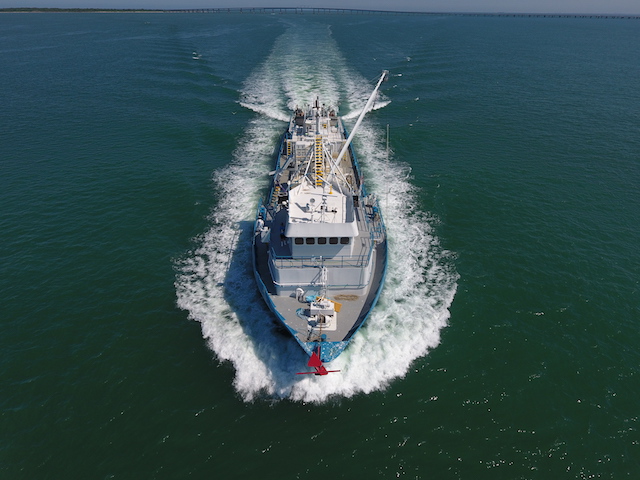
About Ocean Harvesters
Ocean Harvesters owns and operates a fleet of more than 30 fishing vessels in the Atlantic Ocean and Gulf of America. The company's purse-seine fishing operation is exclusively engaged in the harvest of menhaden, a small, nutrient-dense fish used to produce fish meal, fish oil, and fish solubles. Both its Atlantic and Gulf Menhaden fisheries are certified sustainable by the Marine Stewardship Council. Committed to responsible fishing operations, Ocean Harvesters is proud to be heir to a fishing legacy that extends nearly 150 years.
Ocean Harvesters and Omega Protein Reject Claim that Industry Opposed Funding for Chesapeake Bay Menhaden Research
EEDVILLE, VA / June 23, 2026
Ocean Harvesters and Omega Protein flatly deny playing any role in the Virginia General Assembly's decision not to include funding to study the Chesapeake Bay's Atlantic menhaden population in the two-year state budget. These false claims were made by the Chesapeake Bay Foundation, an organization that has misled Virginians as part of a special interest campaign against the industry for more than two decades.
Chesapeake Bay Foundation continues decades-long misinformation campaign against Virginia's blue-collar menhaden fishermen
REEDVILLE, VA / June 23, 2026 / Ocean Harvesters and Omega Protein flatly deny playing any role in the Virginia General Assembly's decision not to include funding to study the Chesapeake Bay's Atlantic menhaden population in the two-year state budget. These false claims were made by the Chesapeake Bay Foundation, an organization that has misled Virginians as part of a special interest campaign against the industry for more than two decades.
The proposed research initiative would have provided $1 million per year for two years to the Virginia Institute of Marine Science (VIMS) to establish an Atlantic menhaden research fund and develop a report to help inform a scientifically justifiable Chesapeake Bay harvest cap. The proposed work was expected to be led by VIMS in collaboration with the Virginia Marine Resources Commission, with input from relevant stakeholders, including recreational anglers, the reduction and bait fishery sectors, and non-governmental organizations.
The funding would have built on industry-supported work already underway through the Science Center for Marine Fisheries (SCEMFIS), which has funded a roadmap project to identify the research needed to support a science-based Bay harvest cap. SCEMFIS is a member of the National Science Foundation's Industry-University Cooperative Research Centers program, which brings together scientists, government researchers, and partners in the fishing industry to support collaborative, peer-reviewed fisheries research.
The SCEMFIS menhaden roadmap is being developed by leading menhaden scientists from institutions including VIMS, the Chesapeake Biological Laboratory at the University of Maryland Center for Environmental Science, and NOAA. That work is focused on identifying the data, methods, timelines, and costs needed to answer Bay-specific questions about seasonal abundance, movement between the Bay and the Atlantic coast, predator demand from species such as striped bass and osprey, commercial fishing patterns, and whether localized depletion is occurring in the Bay, and the feasibility of tagging or other survey approaches.
The Chesapeake Bay Foundation (CBF) is using the budget issue to once again spread false claims about the menhaden fishery. CBF's latest press statement attempts to portray the absence of budget funding as an industry victory, which is purposely misleading and oversimplifies the complex budget process.
CBF's statement, written by David Sherfinski, falsely claims that Virginia lawmakers excluded menhaden research funding from the budget because they were "bowing to pressure from industry to delay this vital research," while Will Poston, CBF's Forage Campaign Manager, falsely stated, "The menhaden industry has not once offered public support for funding state menhaden research." Ocean Harvesters and Omega Protein support more science, not less, directly supporting the SCEMFIS roadmap study and supporting funding for credible state-led menhaden research.
Mr. Poston further claimed that "continued political pressure" from "Omega Protein and their McGuireWoods lobbyists" was exerted "to delay science." That statement is false, defamatory, and should be withdrawn immediately.
The need for better data is especially important because current Chesapeake Bay menhaden management is built around a harvest cap that was established as a precautionary political compromise, not as a Bay-specific biological reference point. Future changes to the Bay cap should be informed not by politics, but by credible science and a clear understanding of ecological, economic, and workforce impacts.
CBF's ironic "no science, no industrial fishing" slogan ignores the fact that the Atlantic States Marine Fisheries Commission has repeatedly found that menhaden is not overfished and overfishing is not occurring. Since 2020, the fishery has been managed using ecological reference points designed specifically to account for menhaden's role as forage for predators. The fishery is independently certified as sustainable by the Marine Stewardship Council.
The latest available data do not support CBF's claim that the Chesapeake Bay is being "emptied" of menhaden. The most recent ASMFC assessment indicates that coastwide adult menhaden biomass remains roughly twice the levels seen 50 years ago. Maryland's young-of-the-year surveys show strong recent juvenile abundance, with Atlantic menhaden widespread in the Bay for three consecutive years, and the 2025 index reported as the third-highest since 1991.
Fisheries policy affects real communities. Any future changes to coastwide or Chesapeake Bay catch limits should consider not only ecological questions, but also potential effects on workers, businesses, bait supply, infrastructure, and coastal communities that depend on the menhaden fishery.
Ocean Harvesters and Omega Protein remain committed to sound science, responsible fishing, and meaningful stakeholder engagement. The companies continue to support a serious research agenda for Atlantic menhaden in the Chesapeake Bay and urge state officials, scientists, fisheries managers, and stakeholders to pursue a measured, fact-based approach rather than one driven by political pressure and unsupported claims.

About Ocean Harvesters
Ocean Harvesters owns and operates a fleet of more than 30 fishing vessels in the Atlantic Ocean and Gulf of America. The company's purse-seine fishing operation is exclusively engaged in the harvest of menhaden, a small, nutrient-dense fish used to produce fish meal, fish oil, and fish solubles. Both its Atlantic and Gulf Menhaden fisheries are certified sustainable by the Marine Stewardship Council. Committed to responsible fishing operations, Ocean Harvesters is proud to be heir to a fishing legacy that extends nearly 150 years.
Osprey Paper Fails to Prove Menhaden Fishery Caused Chesapeake Bay Nesting Problems
REEDVILLE, VA / June 11, 2026
A new paper by Dr. Bryan Watts and coauthors reports poor osprey reproduction in high-salinity areas of the Chesapeake Bay and suggests reduced availability of Atlantic menhaden may be a primary driver. While osprey nesting success deserves serious attention, the paper does not prove that Virginia's commercial menhaden fishery caused the problem. The paper, "Widespread Reproductive Deficits in Chesapeake Bay Ospreys," was published in Frontiers in Marine Science this week.
Study catalogs legitimate osprey concerns but does not establish fishery causation
REEDVILLE, VA / June 11, 2026 / A new paper by Dr. Bryan Watts and coauthors reports poor osprey reproduction in high-salinity areas of the Chesapeake Bay and suggests reduced availability of Atlantic menhaden may be a primary driver. While osprey nesting success deserves serious attention, the paper does not prove that Virginia's commercial menhaden fishery caused the problem. The paper, "Widespread Reproductive Deficits in Chesapeake Bay Ospreys," was published in Frontiers in Marine Science this week.
"The study documents osprey concerns, but it does not prove that our fishery caused it," said Monty Deihl, CEO of Ocean Harvesters. "Many of the study areas discussed are not places where our vessels fish, and the paper appears to accuse commercial harvest without showing a clear connection between actual fishing activity and the nesting problems it describes. Before this paper is used to call for new restrictions, the public deserves a careful look at timing, geography, local environmental conditions, and what the data actually prove."
The paper's central inference rests on a chain of assumptions: poor osprey reproduction may indicate food stress; food stress may reflect reduced menhaden availability; reduced availability may indicate broader menhaden scarcity; and that scarcity may be related to commercial fishing. Each step requires evidence. The paper does not carry the argument all the way to fishery causation.
"This paper is likely to draw attention because it reads, at least up front, like an indictment of menhaden availability in the Chesapeake Bay," said Peter Himchak, Senior Fisheries Scientist at Omega Protein. "But the paper also details numerous other possible mechanisms that may affect osprey productivity, and those caveats are critical considerations in evaluating this issue."
Several issues require closer scrutiny:
Timing: Ospreys return to the Chesapeake Bay and begin nesting before the menhaden reduction fishery begins (there is some pound-net fishing at this time). Egg laying occurs in early April, and the earliest and heaviest brood-reduction period occurs in May, before the reduction fleet is on the water. Data presented to the Atlantic Menhaden Plan Development Team show only a handful of Bay sets between the weeks of May 12 and June 9, 2024, with roughly ten percent of annual Bay landings occurring by June 30. If the key osprey reproductive failures occurred before meaningful menhaden harvest, the explanation points to the ospreys returning to the region in poor condition over winter, menhaden migration timing, environmental conditions, or other local factors - not fishery removals.
"Egg laying and the earliest chick losses occur before our vessels start to fish in the Bay," Deihl said. "A fishery that has taken little or nothing from the Bay during the key early nesting window cannot be blamed for reproductive failures."
Geography and fishery operations: Several study areas discussed in the paper are not areas where the reduction fleet fishes or fishes meaningfully. Poor osprey productivity in areas with little or no nearby fishing cannot be attributed to the fishery without evidence connecting actual fishing activity to those local outcomes. The geography problem is especially clear at the Maryland sites, including the Choptank and Patuxent, where the reduction fishery does not operate. Poor performance at sites where the fleet cannot and does not fish undercuts any simple claim that reduction harvest explains the pattern.
Availability versus abundance: The paper does not provide a direct adult menhaden abundance index for the Chesapeake Bay. In fact, the paper acknowledges that there is no fisheries-independent monitoring of adult menhaden in the Chesapeake Bay that would allow a direct assessment of the relationship between osprey reproduction and local menhaden abundance. Menhaden availability to ospreys can be affected by salinity, temperature, dissolved oxygen, freshwater flow, plankton, fish movement, water clarity, and seasonal timing. A fish can be present in the larger system but unavailable to a predator at a particular time, place, depth, or water condition.
Food stress and dietary flexibility: Food stress is not menhaden-specific. Osprey reproductive problems may reflect changes in the broader prey field, including striped bass, spotted seatrout, bay anchovy, gizzard shad, catfish, or other forage species. Ospreys are opportunistic fish-eaters, and their diet varies by location, salinity, and prey availability. The paper's emphasis on menhaden as especially energy-rich prey also requires seasonal context: menhaden caught or available in May are not the larger, higher-oil fish present later in the year. That weakens any claim that early nestling success depends uniquely on May menhaden because of oil content.
Striped bass: The paper's discussion of other prey species should not treat striped bass availability as simply a menhaden issue. Striped bass have their own well-documented stock-status and recruitment challenges and are managed separately. Overfishing occurred for more than a decade, and the stock remains overfished and depleted. If striped bass availability affects osprey productivity, it must be evaluated on its own terms.
Low-salinity comparisons: The paper compares high-salinity osprey sites with low-salinity sites in the James and Rappahannock systems, but those areas have different prey communities. Low-salinity areas with abundant catfish and gizzard shad may not be direct comparisons for high-salinity areas where prey conditions differ.
Environmental and local stressors: The Chesapeake Bay is not a controlled laboratory. Shoreline development, runoff, pollution, water quality changes, hypoxia, weather, predators, nest competition, disease, and broader changes in the fish community can all affect osprey productivity and prey availability. The paper discusses some alternative mechanisms, but discussion is not the same as ruling them out.
Mobjack Bay extrapolation: The paper builds on earlier Mobjack Bay work, but broader observations do not automatically prove that the same cause is operating across the Chesapeake Bay. Any Bay-wide conclusion requires evidence that accounts for local conditions, prey communities, and actual fishery activity.
Landings and effort: Landings are not abundance. The Potomac landing figure cited in the paper is a bait-fishery number from one tributary, not a Bay-wide adult abundance index and not the reduction fishery. Harvest data cannot be treated as a clean measure of how many fish were present unless evaluated alongside fishing effort, weather, regulations, market conditions, gear, participation, location, and catchability.
Stock status and management: The Watts paper should not be mistaken for a menhaden stock assessment. Atlantic menhaden are managed by the Atlantic States Marine Fisheries Commission. The coastwide stock is not overfished, overfishing is not occurring, and the fishery is managed with ecological reference points that account for predator needs. The Chesapeake Bay fishery is also subject to a Bay cap. Available juvenile recruitment data also caution against portraying the paper as evidence of a Bay-wide menhaden collapse. Maryland's 2025 survey found high juvenile Atlantic menhaden abundance in the Bay for the third consecutive year, with the 2025 menhaden result the third highest since 1991, although juvenile indices do not measure adult menhaden availability in the areas used by ospreys.
The more accurate conclusion is this: Dr. Watts' paper documents poor osprey productivity in some high-salinity Chesapeake Bay areas and advances a menhaden-availability hypothesis. It does not prove that commercial menhaden fishing caused the problem.
"Ospreys matter, and so does scientific accuracy. Any fair assessment has to account for where the fleet actually fishes, and whether other prey and local environmental conditions are being considered," Deihl said. "The Bay needs good science, not an oversimplified and irresponsible blame campaign. The people who work in this fishery deserve a fair assessment of what the paper actually proves."
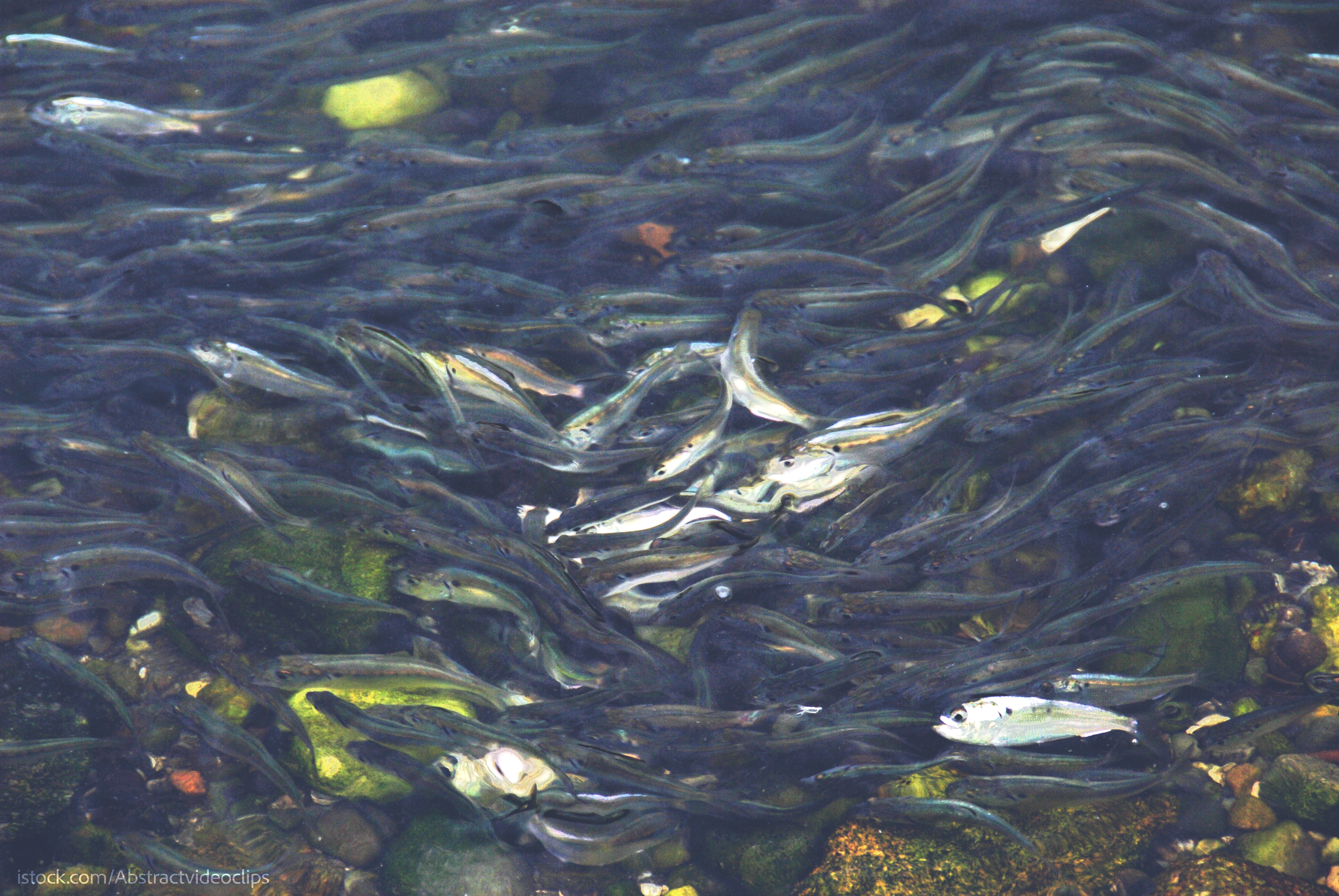
About Ocean Harvesters
Ocean Harvesters owns and operates a fleet of more than 30 fishing vessels in the Atlantic Ocean and Gulf of America. The company's purse-seine fishing operation is exclusively engaged in the harvest of menhaden, a small, nutrient-dense fish used to produce fish meal, fish oil, and fish solubles. Both its Atlantic and Gulf Menhaden fisheries are certified sustainable by the Marine Stewardship Council. Committed to responsible fishing operations, Ocean Harvesters is proud to be heir to a fishing legacy that extends nearly 150 years.
Menhaden Fishermen Are TRCP's Favorite Villains, But the Facts Don't Fit
WASHINGTON, D.C. / May 26, 2026
In a May 6 post by Jaclyn Lunaas, ("Fisheries Board Defers Advancing Plan to Address Chesapeake Bay Menhaden Management"), the Theodore Roosevelt Conservation Partnership (TRCP) calls the Atlantic States Marine Fisheries Commission (ASMFC) Menhaden Board's decision to form a work group on Draft Addendum II "another delay for Chesapeake Bay menhaden conservation," then argues that cutting Chesapeake Bay menhaden harvest (and spreading it across the season) is needed to improve outcomes for predators like striped bass.
Economic Compassion for Anglers, A Cold Shoulder for Union Watermen
WASHINGTON, D.C. / May 26, 2026 / In a May 6 post by Jaclyn Lunaas, ("Fisheries Board Defers Advancing Plan to Address Chesapeake Bay Menhaden Management"), the Theodore Roosevelt Conservation Partnership (TRCP) calls the Atlantic States Marine Fisheries Commission (ASMFC) Menhaden Board's decision to form a work group on Draft Addendum II "another delay for Chesapeake Bay menhaden conservation," then argues that cutting Chesapeake Bay menhaden harvest (and spreading it across the season) is needed to improve outcomes for predators like striped bass.
That framing misses the most important fact: striped bass are overfished because striped bass have been overfished for years, not because managers failed to squeeze menhaden hard enough. But when the ASMFC is asked to make unpopular decisions that directly affect striped bass anglers, TRCP's rhetoric is very different.

1) ASMFC explicitly chose status quo for striped bass in 2026 because of socio-economic consequences
The ASMFC's striped bass management history is clear: striped bass were declared overfished in 2019 and are under a rebuilding plan that requires rebuilding to the spawning stock biomass target by 2029. The ASMFC also notes that while the stock is no longer experiencing overfishing, it remains overfished.
At an October 2025 meeting, the ASMFC's Striped Bass Management Board considered-and ultimately rejected-moving forward with a proposed 12% reduction in fishery removals for 2026. The ASMFC's own summary explicitly cited "severe economic consequences" as a key reason the Board maintained current measures and quotas.
TRCP's response to this decision? Deafening silence. Other than its repeated attacks on the menhaden fishery, Ms. Lunaas and TRCP have not published a comment directly addressing striped bass management since November 2023.
Sticking with the status quo for striped bass will make rebuilding harder and decreases the likelihood that the 2029 rebuilding target will be met, but the ASMFC weighed that against socio-economic harm to the recreational and commercial striped bass fisheries and the communities and businesses they support. That's a legitimate policy tradeoff. But it's exactly the tradeoff TRCP refuses to acknowledge when it comes to menhaden.
2) Silence on protecting striped bass access, no mercy for menhaden workers
TRCP's post pushes menhaden cuts as if predator recovery depends on it, while staying quiet on the striped bass decision that delays rebuilding trajectories and was justified, in part, by economic impacts.
When the affected stakeholders are recreational striped bass anglers (and the coastal economies tied to that fishery), TRCP is aligned with a process that treats economic consequences as central. When the affected stakeholders are the menhaden fishery's working families-a union workforce in a rural community, and one of the largest minority workforces in its area-TRCP's tone shifts to "just do it," even when many of their claims about menhaden fishing remain unproven.
3) TRCP overstates the evidence on seasonal quota periods and Maryland pound nets
TRCP implies that re-timing the Virginia reduction harvest via seasonal quota periods will improve availability for predators and other fisheries, including Maryland's pound-net bait fishery.
But the ASMFC's Plan Development Team (PDT) memo does not support the re-timing story as settled:
The PDT calls its work a preliminary analysis and recommends the Technical Committee as the proper avenue for a detailed test of the hypothesis.
Maryland pound-net landings fell sharply in 2023-2024, but the PDT found the data suggest the decline was "primarily driven by reduced effort" because catch per unit effort (CPUE) fell less dramatically than effort and catch.
For early-season weeks (13-26), the PDT says it is unlikely low pound-net CPUE in 2023-2024 was due to the reduction fishery because reduction harvest usually begins later-and in those years was delayed even further.
For 2024, the PDT says an effect is possible, but the data were inconclusive at the resolution evaluated, and a meaningful conclusion would require finer-scale analysis of movement and fishery dynamics.
So when TRCP pushes seasonal menhaden quota periods as a practical fix to protect other fisheries, it's taking a hypothesis and selling it as if it were established.
Bottom line
Striped bass recovery won't be achieved by blaming menhaden whenever recommended striped bass management proposals become unpopular. The ASMFC's Striped Bass Board chose status quo for 2026, citing economic consequence, while striped bass remain overfished and the 2029 rebuilding requirement still exists but seems unlikely.
If TRCP wants any credibility, it should stop implying that menhaden cuts are a substitute for confronting the real driver of striped bass decline-a long period of excessive striped bass fishing mortality-and face up to the hard tradeoffs between rebuilding timelines and economic realities the ASMFC has repeatedly had to make to protect both the striped bass population and the striped bass fishery itself.
About the Menhaden Fisheries Coalition
The Menhaden Fisheries Coalition (MFC) is a collective of menhaden fishermen, related businesses, and supporting industries. Comprised of businesses along the Atlantic and Gulf coasts, the Menhaden Fisheries Coalition conducts media and public outreach on behalf of the menhaden industry to ensure that members of the public, media, and government are informed of important issues, events, and facts about the fishery.
Chesapeake Bay Foundation Peddles a False Menhaden Crisis-Not Science
WASHINGTON, DC / May 13, 2026
A May 5 statement by David Sherfinski of the Chesapeake Bay Foundation (CBF) misleadingly portrays the Atlantic States Marine Fisheries Commission (ASMFC) as ignoring "dire warning signs" in the Chesapeake Bay by delaying action on Draft Addendum II for menhaden. But the Commission's decision is basic due diligence: the draft addendum is technically complex, and the Board acted responsibly by choosing to refine the proposal before launching public comment.
ASMFC decision to return Draft Addendum II for further development is responsible due diligence
WASHINGTON, DC / May 13, 2026 / A May 5 statement by David Sherfinski of the Chesapeake Bay Foundation (CBF) misleadingly portrays the Atlantic States Marine Fisheries Commission (ASMFC) as ignoring "dire warning signs" in the Chesapeake Bay by delaying action on Draft Addendum II for menhaden. But the Commission's decision is basic due diligence: the draft addendum is technically complex, and the Board acted responsibly by choosing to refine the proposal before launching public comment.
CBF's statement, however, leans on alarmist language, including "dire warning signs," "starving osprey chicks," and "plummeting bait catches," and implies those outcomes are caused by the commercial menhaden fishery. But the available evidence does not support this, and presenting these issues as settled cause-and-effect is exactly how public confidence in fisheries governance gets undermined.
1) CBF is spinning a responsible pause as a crisis
CBF suggests the Board "delayed protections" for menhaden. But the Board's decision to pause and form a work group reflects the reality that Draft Addendum II involves complicated design choices and real-world implementation questions that should be addressed before a public process begins.
CBF Forage Campaign Manager Will Poston called the Board's action a "frustrating delay," but that's exactly backwards. Sending a complicated draft back for further development is what responsible management looks like-especially when the addendum's mechanics and underlying assumptions are still being debated. Treating due diligence as a failure castigates the Board for doing the careful work the public expects.
2) "Dire warning signs" is hyperbole, especially when CBF treats uncertainty as a verdict
Osprey reproduction and local bait availability deserve careful attention. But referring to "dire warning signs" while implying the menhaden fishery is operating irresponsibly is not supported by the record.
On ospreys: The U.S. Geological Survey and other agencies have emphasized that multiple stressors can affect osprey productivity, and that food availability is only one factor among others such as disease, climate conditions, and water quality.
On bait: Declines in local catch cannot, by themselves, be used to diagnose a stock. Catch trends can reflect many different factors, including participation and fishing effort, costs and labor constraints, weather, shifting fish distribution, and conditions that affect where fish can live and how catchable they are.
3) Maryland Commissioner H. Russell Dize rejected scapegoating
During the May 5 Board discussion, Maryland ASMFC Commissioner H. Russell Dize warned the Board against exactly the kind of one-cause narrative CBF is pushing.
He said the Board had "taken the reduction fishery and set them out like a white elephant," and made clear: "You can't tell me that that's the only problem we got with menhaden not coming into Maryland, coming up the Bay."
Commissioner Dize continued: "You're still not going to find the problem until we look further into what's causing it... It's our responsibility to find that and not just... blame this one group."
Reflecting on his own personal history in the menhaden industry, he concluded: "I just don't think they're the culprit... We got other problems."
4) CBF's "mismanagement" insinuation clashes with the oversight record and the fishery's MSC sustainability recertification
CBF's statement insinuates that the fishery is being managed recklessly and must be curbed immediately. But the ASMFC's management framework for menhaden is already precautionary and incorporates the species' forage role through ecosystem-based reference points and oversight.
In March, the Atlantic menhaden fishery was recertified as sustainable under the Marine Stewardship Council (MSC) program. MSC is an international nonprofit that operates the widely recognized blue MSC ecolabel for wild-capture fisheries. MSC certification is based on an assessment against the MSC Fisheries Standard and carried out by independent third-party auditors. Certified fisheries have demonstrated that their fish stocks are sustainable, that they have minimized their environmental impact, and that they are managed effectively.
5) A serious policy debate requires a testable problem statement, not slogans
If the ASMFC is going to consider seasonal quota periods, rollovers, closures, or cap changes, the public deserves more than CBF's headlines. At minimum, the proposal should clearly state:
What exact problem is being measured (where, when, with what data)
What evidence links that problem to fishery activity, as opposed to Bay-wide environmental conditions
What mechanism the rule is intended to change, and how success will be measured
How monitoring and enforcement will work in practice
That is what the work group should do, and what CBF's statement does not do.
6) Advocacy shouldn't substitute for evidence
Like too many CBF alarmist releases on this issue, the May 5 statement uses hyperbolic language to rile up its readers.
Chesapeake Bay challenges are real. But regulation-by-campaign, especially when it treats correlation as causation and elevates rhetoric over evidence, does not protect the Bay. It distorts public understanding and pressures regulators toward decisions that may be politically satisfying, but scientifically unmoored.
About the Menhaden Fisheries Coalition
The Menhaden Fisheries Coalition (MFC) is a collective of menhaden fishermen, related businesses, and supporting industries. Comprised of businesses along the Atlantic and Gulf coasts, the Menhaden Fisheries Coalition conducts media and public outreach on behalf of the menhaden industry to ensure that members of the public, media, and government are informed of important issues, events, and facts about the fishery.
Chesapeake Bay Foundation Continues Spreading False Claims in Latest Attack on Atlantic Menhaden Fishery
WASHINGTON, DC / May 5, 2026 / Just over a month ago, Will Poston of the Chesapeake Bay Foundation once again published false and misleading claims about Virginia's menhaden fishery. Just as CBF did in a March email falsely connecting natural fish die-offs to the menhaden fishery, Poston presents advocacy as science, speculation as fact, and political talking points as settled biology.
WASHINGTON, DC / May 5, 2026 / Just over a month ago, Will Poston of the Chesapeake Bay Foundation once again published false and misleading claims about Virginia's menhaden fishery. Just as CBF did in a March email falsely connecting natural fish die-offs to the menhaden fishery, Poston presents advocacy as science, speculation as fact, and political talking points as settled biology.
Poston's piece is built around a series of assertions that cannot stand up to the actual record.
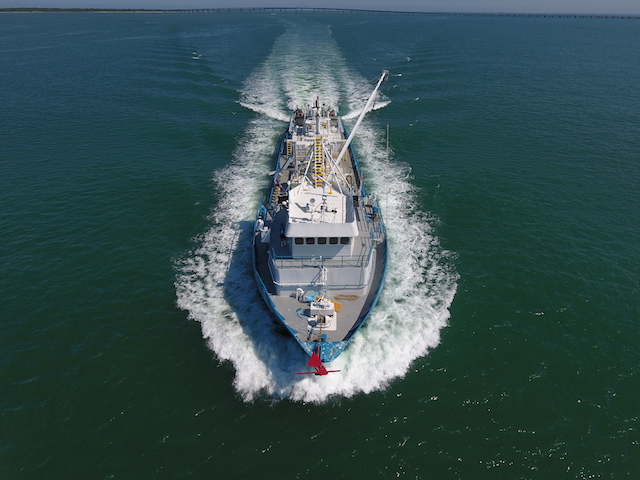
Start with his effort to portray Virginia's 2026 legislative session as proof that industry influence defeated "meaningful conservation measures." What lawmakers rejected were proposals that would have imposed sweeping new restrictions without first establishing any biological basis for them. Atlantic menhaden are not unmanaged, and they are not being harvested in some regulatory vacuum. The Atlantic States Marine Fisheries Commission (ASMFC) manages this stock under ecological reference points specifically designed to account for the species' forage role, and the Commission continues to report the stock is not overfished and that overfishing is not occurring. The fishery is also certified as sustainable by the Marine Stewardship Council, the international gold standard for seafood sustainability.
Then there is Poston's claim that "new coastwide science found the population of menhaden is nearly 40 percent smaller than previously estimated." This is one of the most misleading lines in the entire article. It invites readers to think scientists discovered a dramatic new collapse in the stock. This is not the case. The ASMFC responded directly to this talking point and explained that the difference between the earlier and later estimates is "primarily due to a change in the estimate of natural mortality." Importantly, the ASMFC stated, "the 2025 update indicates total biomass has actually slightly increased since 2021. The lower estimate of biomass from the current assessment compared to the previous assessment is a result of a change in our understanding of the stock rather than a change in the stock itself." Poston is taking a technical model revision and selling it to the public as a conservation crisis.
Poston also points to osprey chick mortality and implies that menhaden harvest is to blame. That claim goes well beyond what the underlying science supports. As the U.S. Geological Survey has stated, many factors affect osprey productivity, including contaminants, disease, predation risk, parental condition, brood size, and weather conditions, as well as prey abundance and access to prey. Current research has not explored all the possible causes of osprey issues in the Bay. It is one thing to say more research is warranted. It is another to repeatedly tell the public that the case is already closed when it is not.
A similar problem appears in Poston's claim that bait fishermen have seen catches decline and that this somehow proves the Bay is being emptied of menhaden by the reduction fleet. That is an anecdote dressed up as population science. Catch levels in local bait fisheries can reflect a range of factors, including effort, participation, market conditions, gear, weather, and location. Poston presents this as if it were hard evidence, when science continues to point to a healthy stock.
Poston's charge that scientific research "has repeatedly been delayed by Omega Protein and their Richmond lobbying firm" is also false. There is a legitimate policy debate over what kind of Chesapeake-specific research should be done, how quickly, by whom, and for what management purpose. But that is very different from claiming the industry has simply blocked science. In fact, the industry has supported a Science Center for Marine Fisheries (SCEMFIS) project to produce a research roadmap for menhaden in the Bay as a long-overdue opportunity to ground Bay management in sound science. SCEMFIS, a member of the National Science Foundation's Industry-University Cooperative Research Program, brings scientists and industry together to fund and conduct applied marine fisheries research.
Last Fall, SCEMFIS funded a team of Atlantic menhaden researchers from the Batten School of Coastal and Marine Sciences & VIMS at William & Mary, the Chesapeake Biological Laboratory at UMCES, and NOAA to identify the research needed to support a scientifically defensible Chesapeake Bay harvest cap. Since then, the team has worked collaboratively online, met in person in February in Solomons Island, Maryland, and presented its progress at the SCEMFIS spring meeting in Nashville. The current focus is on advancing a PIT-tagging pilot study, including controlled holding studies at VIMS and field-planning work starting May 12 with Ocean Harvesters to determine how tagged fish could be detected and recovered during commercial fishing and processing operations.
Poston wants readers to believe that one side supports research and the other side fears it, but that caricature is not an accurate description of the actual debate. One side is helping science progress, while the other side is raising money via fear-mongering.
A broader look at the data only further undermines Poston's narrative. The ASMFC's 2025 Atlantic menhaden assessment update shows that recent coastwide age-1+ biomass remains roughly twice the depressed levels seen in the early 1970s, even after the revised natural-mortality assumption in the 2025 model. At the same time, the ASMFC says coastwide reduction landings today are only about one-third to one-half of what they were in the 1970s and 1980s, and the Chesapeake Bay reduction fishery is already tightly constrained by a 51,000-metric-ton Bay cap that is far below historic Bay harvest levels.
And Maryland's own survey work continues to show strong juvenile menhaden presence in the Bay: Maryland DNR reported that menhaden abundance in 2024 was nearly equal to the previous year, "which was the highest measured since 1990," and in October 2025 stated that "Atlantic menhaden and bay anchovies were widespread in the Bay for the third consecutive year."
The truth is much simpler than Poston would like readers to believe. Atlantic menhaden are managed under one of the most ecosystem-conscious fisheries frameworks on the Atlantic coast. The ASMFC says the stock is not overfished and overfishing is not occurring. The ASMFC says the latest update shows total biomass has actually slightly increased since 2021. And the ASMFC says the lower biomass estimate relative to the earlier model reflects "a change in our understanding of the stock rather than a change in the stock itself." Poston's effort to turn that into proof of collapse is not honest science communication. It is advocacy masquerading as analysis.
About the Menhaden Fisheries Coalition
The Menhaden Fisheries Coalition (MFC) is a collective of menhaden fishermen, related businesses, and supporting industries. Comprised of businesses along the Atlantic and Gulf coasts, the Menhaden Fisheries Coalition conducts media and public outreach on behalf of the menhaden industry to ensure that members of the public, media, and government are informed of important issues, events, and facts about the fishery.
TRCP Video Series Is Latest Campaign to Spread Falsehoods About Atlantic Menhaden Fishery
WASHINGTON, D.C. / May 5, 2026
A recent video series from the Teddy Roosevelt Conservation Partnership continues the organization's near decade-long practice of spreading misinformation about the Atlantic menhaden fishery. From substituting anecdotes for real science to misidentifying the companies involved in the fishery to mischaracterizing the state of the stock, the videos paint a misleading picture of a sustainable and economically vital fishery.
WASHINGTON, D.C. / May 5, 2026 / A recent video series from the Teddy Roosevelt Conservation Partnership continues the organization's near decade-long practice of spreading misinformation about the Atlantic menhaden fishery. From substituting anecdotes for real science to misidentifying the companies involved in the fishery to mischaracterizing the state of the stock, the videos paint a misleading picture of a sustainable and economically vital fishery.
Menhaden Are Important - But the "Most Important Fish in the Sea" Claim Is Misleading
The videos repeatedly refer to menhaden as "the most important fish in the sea," which also serves as the title for the series. This phrase comes from the title of a 2007 book by H. Bruce Franklin, a former Rutgers University English professor. While menhaden are an ecologically and economically important species, the moniker of "most important fish in the sea" has historically been misused by industry opponents to suggest that menhaden play an outsized role in the ecosystem compared to other forage species. This is not borne out by the science.
A 2015 analysis of the diets of five major predator species in the Chesapeake Bay found that Atlantic menhaden was not one of the top four most important prey species. Menhaden was found to be significant for just one predator, striped bass, while bay anchovy was significant for four of the species and was even more important for striped bass than menhaden. Similarly, a 2025 study of Gulf menhaden using cutting-edge stable isotope analysis found that they do not play an outsized role in predator diets and that there is no "most important" prey species in the Gulf.
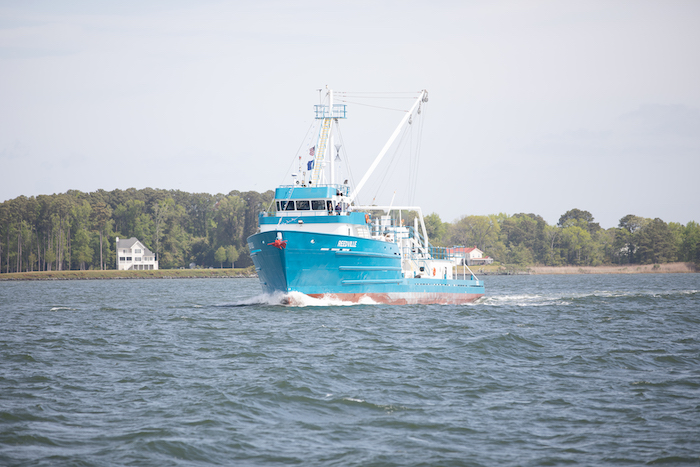
Anecdotes Are Not a Substitute for Science
Besides misleading monikers, the videos frequently use anecdotes as stand-ins for real science. In one video, a drone operator states that she saw menhaden on 76 days in 2023, and just 24 days in 2025. In another, a filmmaker states that she is seeing fewer menhaden inshore, while a few years ago there were "acres and acres of menhaden all summer long" and "you could almost walk on [them]." She also falsely states that the "biggest threat facing menhaden is overfishing."
While the observations of those on the water can in some cases guide sound science, individual anecdotes are not a substitute for the work of numerous scientists and fisheries managers who have found the menhaden population is healthy and sustainable. The Atlantic States Marine Fisheries Commission (ASMFC) has repeatedly found that menhaden are not overfished and overfishing is not occurring. Moreover, the fishery is certified sustainable by the Marine Stewardship Council (MSC), the international gold standard for seafood sustainability.
The Videos Misidentify the Companies Involved in the Fishery
Another video featuring a charter captain is replete with falsehoods. In it, the captain accuses an "industrial company, Omega [Protein]" of "taking more than the Bay can handle - it's not sustainable." This is not only incorrect on the merits - again, the fishery is managed for sustainability by the ASMFC and has been certified sustainable by MSC - but also misidentifies the company that harvests fish. Fishing is conducted by Ocean Harvesters, an American company based in Reedville, Virginia; Omega Protein is a processing company that does no fishing.
Sustainability Is Measured by Science, Not Visual Impressions
The charter captain further states, "you can sit out here and watch them pull up a gigantic net full of [menhaden] and you look at it and it's like ‘how is that sustainable?'" The size of the net has nothing to do with the sustainability of a species that is measured in millions of metric tons. The menhaden fishery adheres to quotas set by federal managers and states based on the best available science. That is how sustainability is measured - not by the size of individuals nets.
The Osprey Narrative Ignores Scientific Complexity
The video series also features frequent fishery detractor Chris Moore of the Chesapeake Bay Foundation continuing to drive the narrative that menhaden fishing is responsible for problems with osprey productivity in the Bay. This claim is echoed by Remy Moncrieffe of the National Audubon Society, who states that a "lack of science in regards to the menhaden population, especially in the Bay, is one of the biggest deterrents we have towards effectively managing menhaden."
Menhaden is one of the most studied fish species on the Atlantic coast. Menhaden fishery members have partnered with the Science Center for Marine Fisheries for the past decade, leading to numerous scientific publications and graduate-level theses. Landings data from the industry is used by NOAA scientists and the ASMFC in their menhaden stock assessments. And the industry is supportive of a new effort to produce a research roadmap for menhaden in the Chesapeake Bay.
There is no scientific consensus that menhaden fishing is related to osprey issues in the Bay. U.S. Geological Survey (USGS) scientists have pointed out that osprey populations have leveled off in numerous areas around the country, including places like California and Washington where there are no menhaden, and that there are numerous environmental factors that impact osprey productivity. Fisheries scientists have also questioned the statistical basis that some avian researchers used to draw a link between menhaden fishing and osprey.
Menhaden Is Already Managed With Extraordinary Precaution
The videos call for "more precautionary management" of menhaden "while we get more science," ignoring the fact that menhaden are already managed with extraordinary precaution, including the use of ecological reference points specifically designed to account for predator needs. This call echoes a TRCP petition to remove the fishery from the Chesapeake Bay, which would effectively lead to its shutdown. The idea of shuttering a fishery that has operated continuously for nearly 150 years, is not overfished nor experiencing overfishing, and is certified sustainable by the world's preeminent seafood certifier flies in the face of all traditional fisheries management. Advocacy videos from TRCP using anecdotes, mischaracterizations, and straight up falsehoods do not change the truth about this fishery.
About the Menhaden Fisheries Coalition
The Menhaden Fisheries Coalition (MFC) is a collective of menhaden fishermen, related businesses, and supporting industries. Comprised of businesses along the Atlantic and Gulf coasts, the Menhaden Fisheries Coalition conducts media and public outreach on behalf of the menhaden industry to ensure that members of the public, media, and government are informed of important issues, events, and facts about the fishery.
Analysis: ASMFC Shows Double Standard on Jobs and Economic Impacts in Striped Bass and Menhaden Management
WASHINGTON, D.C. / May 5, 2026
An MFC analysis of two board meetings held as part of the 2025 Annual Meeting of the Atlantic States Marine Fisheries Commission last Fall finds that the Commission treated socio-economic impacts as central to striped bass management decisions, while giving less practical weight to comparable concerns raised by the menhaden reduction industry, including vessel crews, plant workers, union families, and local communities dependent on the fishery.
The Board Discussions at the ASMFC 2025 Annual Meeting Show the Commission Gave Greater Practical Weight to Charter, Recreational and Service-Economy Impacts in Their Striped Bass Debate Than to Union Workers and Working Families in the Menhaden Industry
WASHINGTON, D.C. / May 5, 2026 / An MFC analysis of two board meetings held as part of the 2025 Annual Meeting of the Atlantic States Marine Fisheries Commission last Fall finds that the Commission treated socio-economic impacts as central to striped bass management decisions, while giving less practical weight to comparable concerns raised by the menhaden reduction industry, including vessel crews, plant workers, union families, and local communities dependent on the fishery.
The analysis, titled "When Jobs Count, and When They Don't," compares the Atlantic Striped Bass Management Board meeting and the Atlantic Menhaden Management Board meeting, both held as part of the ASMFC's 2025 Annual Meeting. The analysis examines how much attention each Board gave to jobs, business impacts, working waterfronts, associated industries, and the livelihoods of people directly affected by regulation.
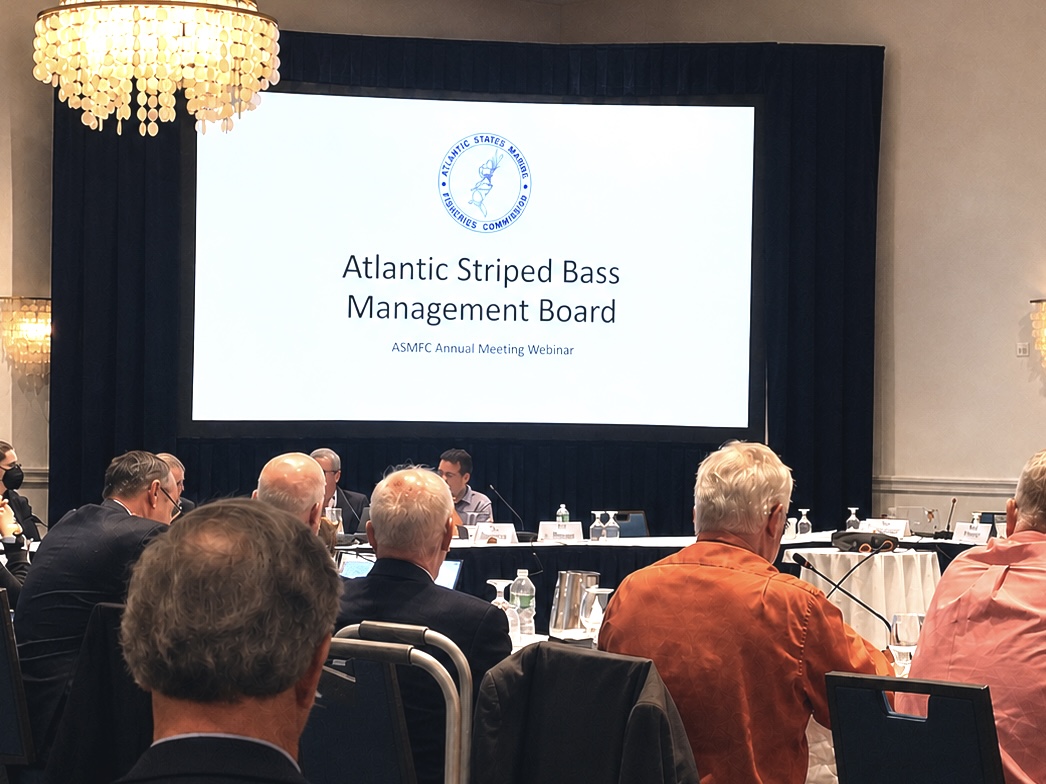
In the Atlantic Striped Bass Management Board meeting, speakers and commissioners repeatedly discussed the economic consequences of further restrictions for charter boats, for-hire operators, commercial fishermen, recreational fishing businesses, tackle manufacturers, bait suppliers, hotels, restaurants, fuel businesses, and coastal communities. Those concerns helped shape the outcome: The Board decided not to move forward with the proposed 12 percent reduction in fishery removals, despite consensus that the striped bass population is below its Target population. Instead, the Board chose status quo rather than an additional reduction and created a work group to examine the future of striped bass management with representation from "all sectors."
In the Atlantic Menhaden Management Board meeting, representatives of the menhaden reduction fishery described local jobs, generational labor, family livelihoods, harassment of fishermen, bait-market impacts, and the economic dependence of workers in and around Reedville, Virginia. Ocean Harvesters' CEO Monty Deihl stated that "100 percent" of Ocean Harvesters and Omega Protein employees are U.S. residents and that "94 percent live within 15 miles of that plant." Retired UFCW Local 400 representative Kenny Pinkard told the Board, "I speak for all working people in Virginia," and reminded commissioners that their decision affected "the livelihood of these gentlemen behind me."
Yet despite that testimony, the Atlantic Menhaden Management Board moved forward with an immediate 20 percent reduction for 2026, even with the menhaden stock having been recently announced to be healthy, not overfished and not experiencing overfishing. The analysis argues that, while the Board acknowledged menhaden-related economic concerns, it did not treat them with the same depth, breadth or procedural seriousness shown in the striped bass debate.
"The Atlantic Striped Bass Management Board meeting and the Atlantic Menhaden Management Board meeting at the ASMFC's 2025 Annual Meeting show that the ASMFC knows how to consider human consequences when it chooses to," the analysis concludes. "The question is why charter trips, tackle sales, hotels, restaurants, and recreational access receive more visible concern than union jobs, plant workers, vessel crews, and working families in the menhaden industry."
The analysis does not argue that the ASMFC ignored socio-economic concerns in the menhaden meeting. Rather, it argues that those concerns were treated differently. In the striped bass meeting, economic harm helped justify status quo, a broader work group, and a management posture focused on preserving access and industry viability. In the menhaden meeting, socio-economic harm helped moderate the severity of the reduction but did not prevent an immediate cut or produce a comparable worker-centered process.
The result, according to the analysis, is a revealing double standard: Socio-economic impacts appear to become management-relevant when they affect the striped bass recreational, charter, and associated service economy, but receive less forceful treatment when they affect the menhaden reduction industry and its workforce.
Read the full analysis below: "When Jobs Count, and When They Don't."
ANALYSIS
When Jobs Count, and When They Don't
What two ASMFC Annual Meeting board discussions reveal about striped bass, menhaden, and selective concern for working people
The Atlantic States Marine Fisheries Commission knows how to talk about jobs.
It knows how to talk about small businesses, charter captains, tackle shops, bait suppliers, hotels, restaurants, fuel docks, working waterfronts, access, community identity, and the human cost of fishery restrictions. It knows how to pause before imposing cuts. It knows how to ask whether another reduction will push fishermen, captains or dependent businesses past the breaking point.
The Atlantic Striped Bass Management Board meeting and the Atlantic Menhaden Management Board meeting, both held as part of the ASMFC's 2025 Annual Meeting, show all of that clearly.
But they also show something else: The Commission does not apply that concern evenly.
When striped bass regulation was on the table, socio-economic impacts were treated as a central management concern. Speakers and commissioners returned again and again to the economic consequences for charter boats, for-hire operators, commercial fishermen, recreational fishing businesses, tackle manufacturers, hotels, restaurants, fuel suppliers, and the broader coastal economy built around striped bass. The Atlantic Striped Bass Management Board ultimately rejected a proposed quota cut of 12%, and instead chose status quo on the key reduction question and created a work group to think more broadly about the future of striped bass management.
When menhaden regulation was on the table, the treatment was different. The menhaden reduction industry's workers were present. Their representatives spoke. Union labor spoke. Vessel captains spoke. People described local jobs, generational work, family impacts, and the economic life of Virginia communities. Yet those concerns were treated less like a reason to pause and more like a factor to manage around while still imposing reductions.
That difference is the story.
The Commission does not ignore socio-economics. It appears to discount them selectively.
How the analysis was done
The analysis compared two board meetings held as part of the 2025 Annual Meeting of the Atlantic States Marine Fisheries Commission: the Atlantic Striped Bass Management Board meeting and the Atlantic Menhaden Management Board meeting. The comparison did not simply look for the word "economic." That would miss the real issue.
Instead, the meetings were reviewed around three questions.
First, how much attention was given to socio-economic consequences? This included direct references to jobs, businesses, income, cost of inputs, bait supply, charter trips, commercial viability, hotels, restaurants, fuel, tackle, and local economies.
Second, whose socio-economic consequences were treated as legitimate? The relevant comparison is not "economics versus conservation." It is whether one group's economic concerns were treated as management-relevant while another group's were treated as secondary.
Third, what did the Board do after hearing those concerns? The most important evidence is not merely that someone spoke at the microphone. It is whether socio-economic concerns influenced the motion, the compromise, the vote, the creation of a work group or the timing of future management.
On those three questions, the meetings show a striking contrast.
In the Atlantic Striped Bass Management Board meeting, economic harm was treated as a reason to stop and rethink
The Atlantic Striped Bass Management Board meeting was saturated with socio-economic concern.
At the beginning of public comment, Brian Hardman, president of the Maryland Charter Boat Association, described steep business losses. He told the Board that Maryland charter boats had gone from catching 92,816 fish in 2023 to 34,000 in 2024 and 26,000 year-to-date in 2025. "You've reduced our businesses by well over 50% in every single category," he said. "We can't survive with these continued reductions and closures and try to stay in business." He also said 54 charter boats had been listed for sale during that period.
Commercial watermen made a similar argument. Captain Robert Newberry of the Delmarva Fisheries Association asked commissioners to look at the fishermen in the room and said, "This is who you're affecting here today." He warned that additional cuts would put working watermen "out of business" and distinguished commercial and charter fishing from purely recreational use: "The recreational side, that's a hobby. We have a living. We pay our bills. We buy vehicles. That is what we do for a living."
The meeting repeatedly framed striped bass cuts as a direct threat to the survival of fishing businesses and working waterfronts. A commercial fisherman, Nick Manzion, argued that cutting the commercial quota would not "promote American seafood" but "destroy it," adding: "Every pound taken from the commercial side is one less pound of wild, sustainable, American-caught fish for our people. One less job, one more blow to those who feed the nation."
Then the Board itself absorbed that frame. Staff summarized public comments as warning of "severe negative economic impacts" and harm to "fishing-related businesses and local economies," with damage to already struggling for-hire and commercial sectors.
The Advisory Panel summary was even more explicit. The AP report summarized status quo supporters as saying that "the for-hire commercial industries are already disappearing," that "any season closure would devastate the for-hire industry," and that "the commercial fishery may no longer be profitable with more cuts."
The Board heard economic hardship, repeated it, and built it into the decision frame.
Striped bass economics were not limited to fishermen
One reason the striped bass discussion received such weight is that its economic footprint was repeatedly described as broad and multi-layered.
The meeting included discussion of charter boats, private anglers, commercial fishermen, tackle manufacturers, hotels, restaurants, fuel, and other associated businesses. ASMFC Commissioner Ray Kane of Massachusetts asked for a broader white paper, saying he kept hearing about socio-economic impacts and wanted to see how those impacts worked beyond the dockside price of striped bass: "hotels, restaurants, fuel."
Tom Fote of the Jersey Coast Anglers Association similarly emphasized the recreational economy, saying recreational fishing is "important to my state as far as the business of my state" and pointing to "hundreds of thousands of jobs making tackle and everything else through the country."
The Advisory Panel also described striped bass as an economic linchpin, describing reduction supporters as saying that "striped bass are the linchpin of the economy" and that they wanted to "ensure a fishery for the future."
That framing matters. In the Atlantic Striped Bass Management Board meeting, the economic ecosystem around the fish was treated as expansive. The Board did not limit its attention to direct harvesters. It was invited to consider the entire service economy around striped bass: charter trips, equipment, bait, tackle, fuel, travel, hospitality, and coastal community identity.
That is exactly the kind of socio-economic analysis the menhaden reduction industry is asking for - but did not receive in the same way.
The Atlantic Striped Bass Management Board converted economic anxiety into process
The most important evidence is the Board's response.
A motion for status quo was offered on the striped bass reduction issue, and the motion-maker, Commissioner Adam Nowalsky of New Jersey, described the decision as "an extremely important decision in the name of conservation" and "an extremely important decision in the name of socioeconomics." He argued that "right now, status quo is the way forward" and that the Board should wait for the next benchmark before responding further.
Commissioner John Clark of Delaware, the seconder of the status quo motion, put the economic concern even more plainly: "If we keep reducing the removals, we're going to end up in a situation where there are no for-hire commercial fisheries when striped bass do recover." He warned that the Board could end up saying "the operation was a success, but the patient died."
That argument carried institutional weight. The Board adopted a status quo approach combined with a work group. The work group was designed to include "representation from all sectors in addition to scientists and managers" and to consider future striped bass management beyond 2029.
The Board then rejected a motion to add a 12 percent reduction and moved forward with status quo plus the work group.
The Board did not merely hear economic concerns. It changed the outcome.
In the Atlantic Menhaden Management Board meeting, the workers were visible - but less protected
The Atlantic Menhaden Management Board meeting also included powerful socio-economic evidence.
Ocean Harvesters' CEO, Monty Deihl, described the Reedville operation as American-owned and local. "100% of our employees at Ocean Harvesters and Omega Protein, who we sell our fish to, are U.S. residents," he said. "Ninety-four percent live within 15 miles of that plant." He also said the debate had made fishermen into targets, describing harassment on the water and threats on social media.
Thomas Moore, a fifth-generation menhaden boat captain for Ocean Harvesters, described a 15-man crew, "most" of whom were present. "They are also generational workers," he said. "Their ages range from 22 to 66." Moore added: "We love our jobs and are very passionate about them," and warned, "Any cuts we face today will hurt us, our families, and our community."
Most importantly for the labor argument, retired UFCW Local 400 representative Kenny Pinkard spoke directly for working people in Virginia. He identified himself as a third-generation fisherman and said, "I speak for all working people in Virginia." He asked the captains and crews to stand, telling the Board: "You all do have something to do with the livelihood of these gentlemen behind me." The message the Board sent, he said, was the message those workers would have to take home "to their wives" and "their children."
That is exactly the type of human evidence that, in the striped bass context, helped justify caution, status quo, and a future work group.
But in the menhaden context, it did not receive the same treatment.
The Atlantic Menhaden Management Board acknowledged socio-economics, then moved past them
To be fair, the Atlantic Menhaden Management Board did not ignore economics altogether.
Several commissioners raised socio-economic concerns. Commissioner Joe Grist of Virginia, where Ocean Harvesters is located, warned that reductions beyond 20 percent would put at risk "directly or indirectly, hundreds, if not thousands of American jobs across several states." He also warned that cuts would reduce supply and increase prices for menhaden used by both commercial and recreational fishing industries.
Commissioner Eric Reid of Rhode Island then said the disparity of concern between the fisheries out loud: "When we talk about striped bass, we talk a lot about socioeconomics, and we're not talking about it here."
The Commission itself, through the words of a board member, recognized the asymmetry. Socio-economic concern was not absent from the menhaden meeting, but it was thinner, more defensive, and less powerful than in the striped bass meeting.
The Menhaden Board did ultimately reject the deepest immediate cut. But the final path still imposed a 20 percent reduction for 2026, with the Board planning to revisit 2027 and 2028 later. That motion carried 16-2.
So yes, there was some accommodation. But the comparison remains: striped bass socio-economics helped produce status quo and a work group; menhaden socio-economics helped reduce the severity of the cut, but still resulted in an immediate 20 percent reduction.
The menhaden workforce was treated as a cost, not a constituency
In the Atlantic Striped Bass Management Board meeting, affected stakeholders were treated as constituencies whose future needed to be built into management. The Board created a process for them.
In the Atlantic Menhaden Management Board meeting, workers were treated more like costs to be balanced against ecological targets. Their testimony mattered, but it did not reorganize the Board's response in the same way.
The menhaden workforce is not faceless. The meeting was attended by local, generational, unionized labor. Vessel crews attended the meeting. They showed workers tied to a particular place in Virginia. It showed families whose economic stability depends on the reduction fishery.
The menhaden workforce includes a significant minority labor force. The public record shows this with workforce demographics. Although information presented in the meeting demonstrated the importance of the union, local, and generational labor, it does not appear, from the reviewed material, to show the Board developing or centering a serious labor-equity record before making a decision affecting those workers.
A commission that can discuss hotels, restaurants, fuel, tackle, charter trips, and recreational access for striped bass can also discuss union jobs, plant labor, vessel crews, minority employment, wage security, and community and customer dependence in the menhaden reduction fishery.
The Atlantic Menhaden Management Board meeting at the ASMFC's 2025 Annual Meeting shows that it largely did not.
The double standard becomes clearer when "associated industries" are compared
The striped bass discussion treated associated industries expansively. The Board heard about charter vessels, tackle manufacturers, hotels, restaurants, fuel, and the broader business ecosystem around recreational fishing.
The menhaden discussion also contained associated-industry impacts. Ross Kellum, who identified himself as owning and operating a vessel in the purse seine bait fishery, warned that any change in the TAC would induce volatility in the bait marketplace. He said higher prices would mean "the lobstermen in New England will no longer be able to afford to work," "the crabbers of Maryland and Virginia won't be able to afford to work," and "chum prices will skyrocket" and depress recreational activity along the Atlantic Coast.
Patrice McCarron of the Maine Lobstermen's Association said excessive quota cuts would cause "significant harm to Maine's lobster industry," describing a fleet of 4,300 lobstermen and 800 students who sustain local families and coastal economies.
So the economic web around menhaden was real and documented. But it was treated differently.
For striped bass, the surrounding economy helped justify restraint.
For menhaden, the surrounding economy was acknowledged, then placed behind the ecological reference point framework and the desire to support striped bass and other predators.
Striped bass was allowed complexity; menhaden was compressed into a forage function
In the Atlantic Striped Bass Management Board meeting, the fishery was viewed as complicated. The Board discussed recruitment failure, environmental change, fishing mortality, MRIP uncertainty, the 2027 benchmark, Maryland's baseline, charter impacts, commercial impacts, and stakeholder distrust. The solution was not simply "cut more." It was "pause, study, involve people, and build a better process."
In the Atlantic Menhaden Management Board meeting, the species was discussed less as a fishery with its own human community and more as an input into ecosystem management, especially striped bass recovery. The ERP presentation described menhaden reference points in relation to striped bass biomass, explaining that the ERP target is defined to allow striped bass to stay at their biomass target when striped bass are fished at their target fishing mortality.
That is not necessarily wrong biologically. Menhaden is a forage species. But it is incomplete as social policy. A fishery can be ecologically important and still be economically important. A reduction industry can be industrial and still be made of workers. A quota cut can be scientifically defensible and still require serious labor analysis.
The problem is not that the Commission considered ecosystem needs. The problem is that, compared with striped bass, it gave less institutional dignity to the human economy attached to menhaden.
Jobs Matter Sometimes
The strongest case is not that the ASMFC never mentioned menhaden jobs. It did. But menhaden jobs were not treated with the same depth, breadth or procedural seriousness as striped bass jobs.
For striped bass, socio-economic harm helped reject a 12% reduction, and led to the formation of a broad work group, a future white-paper-style analysis, and a management posture focused on preserving access and industry viability.
For menhaden, socio-economic harm helped moderate the size and timing of reductions, but it did not prevent an immediate 20 percent cut. Nor did it produce the same worker-centered process focused on union labor, vessel crews, plant labor, minority employment, and community dependence.
That is unequal treatment.
The Commission treated socio-economic concerns as central when the affected economy is the striped bass recreational and charter complex. But when the affected economy is the menhaden reduction industry - its crews, plant workers, union families, and local Virginia communities - those concerns become secondary, something to acknowledge before moving back to ecological targets.
Selective Caring
The Atlantic Striped Bass Management Board meeting and the Atlantic Menhaden Management Board meeting, both held as part of the ASMFC's 2025 Annual Meeting, show that the ASMFC knows how to care about people. It knows how to discuss jobs, businesses, local economies, and the survival of fishing-dependent communities. The Atlantic Striped Bass Management Board meeting proves that.
However, their concern decreases when the people in question work in the menhaden reduction industry.
Those workers are not abstractions. They are captains, crews, plant employees, union members, families, and local residents. They are part of the American seafood economy. Their customers are those who use the products to feed those fish and animals that then feed humans, or feed their pets, or directly used by humans to improve their health. They should not have to prove, again and again, that their jobs count as real jobs.
Taken together, the Atlantic Striped Bass Management Board meeting and the Atlantic Menhaden Management Board meeting at the ASMFC's 2025 Annual Meeting reveal a double standard: Socio-economic impacts are treated as management-relevant when they affect the striped bass recreational, charter, and associated service economy, but not given comparable weight when they affect the menhaden reduction industry and its workforce.
That is not balanced fishery management. It is selective empathy. And if empathy can be shown for those dependent on a stock deemed Overfished, then why not for a stock that has seen neither overfishing, or being overfished, for over 30 years?
About the Menhaden Fisheries Coalition
The Menhaden Fisheries Coalition (MFC) is a collective of menhaden fishermen, related businesses, and supporting industries. Comprised of businesses along the Atlantic and Gulf coasts, the Menhaden Fisheries Coalition conducts media and public outreach on behalf of the menhaden industry to ensure that members of the public, media, and government are informed of important issues, events, and facts about the fishery.
Two Independent Reviews Find No Evidence that Virginia's Menhaden Season Is 'Blocking' Fish from Reaching Maryland Pound Nets
WASHINGTON, DC / May 4, 2026
A proposed Atlantic menhaden management addendum aimed at Virginia's Chesapeake purse seine fishery is being driven by a simple claim: that a shift in the timing of the reduction fishery has reduced menhaden availability farther north, contributing to lower Maryland pound net harvests.
WASHINGTON, DC / May 4, 2026 / A proposed Atlantic menhaden management addendum aimed at Virginia's Chesapeake purse seine fishery is being driven by a simple claim: that a shift in the timing of the reduction fishery has reduced menhaden availability farther north, contributing to lower Maryland pound net harvests.
Two separate analyses, one statistical and one oceanographic, reach the same conclusion: the available evidence does not support the "gauntlet" theory. Instead, both studies suggest Maryland pound net results are better explained by (1) changes in fishing effort and (2) Bay conditions that affect where fish can live and how catchable they are.
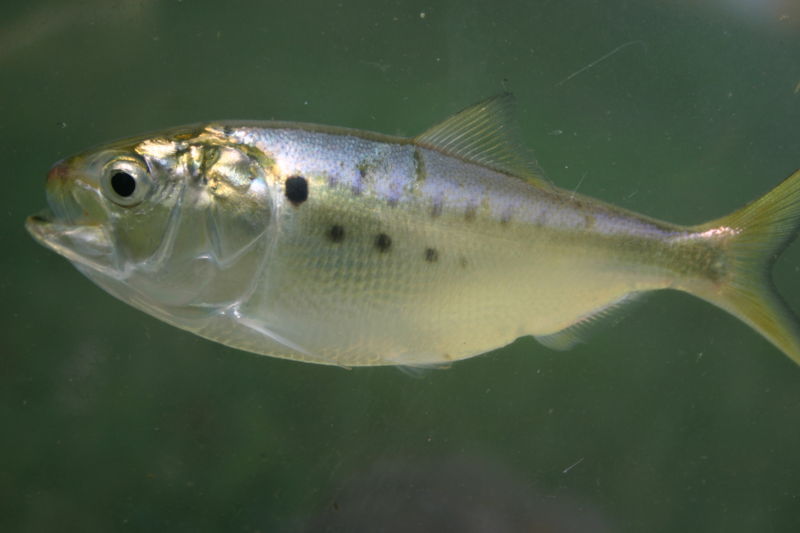
The analyses were submitted to the Atlantic States Marine Fisheries Commission's Atlantic Menhaden Management Board in a comment letter from Ocean Harvesters.
The ASMFC Atlantic Menhaden Management Board's Plan Development Team (PDT), the staff group tasked with drafting the proposed addendum, has already signaled that the addendum's core premise warrants deeper scientific review. In a memo to the Board, the PDT recommended referring the proposal to the menhaden Technical Committee (TC) as "a more appropriate avenue to conduct a detailed analysis" of the central claim driving the addendum: that a recent shift in timing of the Chesapeake Bay reduction fishery has reduced fish availability in the upper Bay and, in turn, reduced Maryland pound net harvests.
These two studies support that recommendation by challenging the "blocking" narrative and highlighting alternative explanations rooted in measurable environmental conditions.
1) What the numbers say: when Virginia sets are high, Maryland catch-per-trip tends to be high too
The first study was conducted by Georgetown Economic Services (GES) using commonly referenced data sources: Virginia purse-seine "net sets" and Maryland pound net landings and trips.
If the Virginia reduction fishery is preventing menhaden from reaching Maryland, then Maryland's catch-per-trip should fall when Virginia activity rises.
That's not what the data show.
GES calculated Maryland "harvest per trip" (a common way to express catch rate) and compared it month by month against the number of Virginia purse-seine sets, while accounting for normal seasonal patterns.
Result: the relationship was positive and statistically meaningful. The "net sets" coefficient was 2.4063 with a p-value of 0.0289, meaning the relationship is unlikely to be random noise.
Put plainly:
When Virginia set activity is higher, Maryland's menhaden catch per trip tends to be higher.
When Virginia set activity is lower, Maryland's menhaden catch per trip tends to be lower.
GES notes it's "highly unlikely" that one fishery is impacting the other; the more reasonable interpretation is that both fisheries are responding to the same underlying condition: how many fish are present and available in the Bay at a given time.
This is the opposite of what you'd expect if a lower-Bay "gauntlet" were systematically starving the upper Bay of fish.
2) What the Bay's physics say: water conditions can change where menhaden concentrate, without any "interception"
The second study was prepared by Dr. Arnoldo Valle-Levinson, a University of Florida professor who specializes in how water moves through estuaries and how that movement shapes conditions in places like the Chesapeake.
Rather than starting with fishing narratives, this analysis starts with a basic reality of the Chesapeake Bay: summer conditions can squeeze fish into smaller "livable" layers of water, and those shifts can make fish easier or harder to catch depending on location and gear.
A simple but critical point: catches fell, but effort fell too; catch rate did not steadily collapse
Dr. Valle-Levinson first looked at Maryland pound net time-series patterns:
Maryland menhaden catches show a decreasing trend over the last 12 years.
Maryland trips (effort) also show a decreasing trend.
The two "go hand in hand."
Importantly, catch per unit of effort (catch/trip) "has not changed over time," despite a marked dip in 2024.
That matters for public understanding: lower landings do not automatically mean fewer fish are available. Sometimes, it means fewer trips are being made.
The "hypoxia" effect: when oxygen drops, fish habitat compresses, and catches can rise
The report then evaluates how hypoxia (low oxygen levels in the water) relates to catch patterns. It tracks hypoxic depth, essentially, how far down you have to go before oxygen becomes too low for many fish.
Dr. Valle-Levinson finds that Maryland catches and catch rates show a consistent linkage with hypoxia depth over annual cycles. In practical terms, the analysis indicates that catches increase when the low-oxygen zone rises (when hypoxic depth becomes shallower), a pattern consistent with fish being pushed into a smaller oxygenated layer, making them more concentrated and more catchable.
Stratification and river flow: the upstream "push" that can set the stage
The report also finds that:
River discharge in the upper Bay relates to water-column stratification in the mid-Bay (how strongly the Bay separates into layers).
River discharge relates to hypoxic depth.
Stratification is linked to Maryland catches and catch rates, especially at deeper mid-Bay stations.
There is also evidence that increased discharge is linked to increased Maryland catch with a time lag (months).
The submission summarizes this chain in a way that's easy to visualize: more freshwater flow → stronger layering → stronger hypoxia/habitat compression → fish concentrate → catches can rise.
The report even includes a plain-language schematic ("The estuary cascade") illustrating how high-flow seasons can contribute to stratification, expand low-oxygen conditions, compress fish habitat, and increase pound net catches, again, without invoking any "interception" mechanism.
About Dr. Arnoldo Valle-Levinson
Dr. Valle-Levinson is a Professor in the University of Florida's Department of Civil and Coastal Engineering and currently serves as a Program Officer for Physical Oceanography at the National Science Foundation.
He is the author of the textbook, Introduction to Estuarine Hydrodynamics(Cambridge University Press, 2022); and the Editor of Contemporary Issues in Estuarine Physics (Cambridge University Press, 2010).
About the Menhaden Fisheries Coalition
The Menhaden Fisheries Coalition (MFC) is a collective of menhaden fishermen, related businesses, and supporting industries. Comprised of businesses along the Atlantic and Gulf coasts, the Menhaden Fisheries Coalition conducts media and public outreach on behalf of the menhaden industry to ensure that members of the public, media, and government are informed of important issues, events, and facts about the fishery.
Atlantic Menhaden Recertified for Another Five Years as a Marine Stewardship Council Sustainable Fishery
WASHINGTON, DC / May 4, 2026
The Atlantic menhaden fishery has been recertified as sustainable according to Marine Stewardship Council (MSC) standards. The recertification once again confirms that the fishery is environmentally sustainable and effectively managed.
WASHINGTON, DC / May 4, 2026 / The Atlantic menhaden fishery has been recertified as sustainable according to Marine Stewardship Council (MSC) standards. The recertification once again confirms that the fishery is environmentally sustainable and effectively managed.
The Marine Stewardship Council is the international gold standard for seafood sustainability and has one of the most rigorous certification programs in the world. All fisheries certified under the MSC benchmarks must undergo an independent third-party audit to confirm that they adhere to MSC standards.
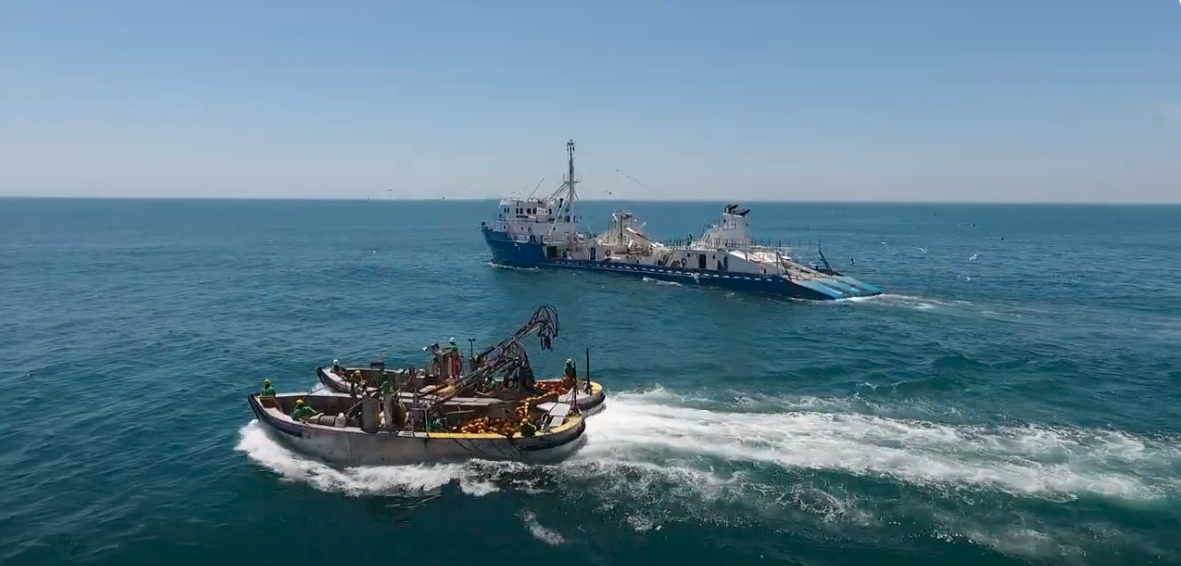
MSC evaluates fisheries according to 28 separate sustainability criteria. These criteria are divided among three principles: the sustainability of the fishery, whether the fishery has minimized its environmental impact, and the effectiveness of its management. In order to be certified, fisheries must achieve a score of at least 60 on all 28 criteria. The fishery averaged a score of more than 80 for all three of the principles measured, scoring an 86.7 on the health of the species, 82.0 on its ecosystem impacts, and 96.3 on its management system.
Three companies, Ocean Harvesters and Omega Protein in Virginia, and Lund's Fisheries in New Jersey, represent the 'client group' supporting this MSC assessment.
"Our operations are focused on ensuring that everything we do is sustainable and based on ecologically sound management practices, and this recertification reflects that," said Ben Landry, Vice President of Public Affairs for Ocean Fleet Services. "The Atlantic menhaden fishery is one of the most sustainable fisheries on the East Coast, and with this recertification, we will continue to be good stewards of the Chesapeake Bay and the resource."
The Atlantic menhaden fishery was first certified in 2019. MSC-certified fisheries are required to undergo the recertification process regularly to ensure that they still meet the organization's high standards.
"For nearly ten years, Lund's Fisheries has collaborated with the MSC to assure domestic and international markets, vitally important to our long-term success, that the seafood we produce is managed sustainably based on the rigorous, annual, scientific and monitoring reviews that are the core of the MSC program," said Wayne Reichle, President of Lund's Fisheries.
The menhaden fishery operates primarily in Virginia and in federal waters off the coast of New Jersey. In Virginia, where the fishery has operated out of Reedville since the 1870s, the menhaden purse seine fishery harvests menhaden for use in marine ingredients such as fish meal and fish oil. In New Jersey, the purse seine fishery operating out of Cape May is a key source for menhaden used as bait in the Atlantic lobster and crab fisheries and Gulf crab and crawfish fisheries. Both fisheries are integral to their local fishing economies and coastal communities.
This MSC recertification reflects the most recent science on the health of the Atlantic menhaden resource and confirms that the fishery is being managed sustainably, for the future. According to the Atlantic States Marine Fisheries Commission, the interstate body that manages menhaden, the species is not overfished, and overfishing is not occurring.
About the Menhaden Fisheries Coalition
The Menhaden Fisheries Coalition (MFC) is a collective of menhaden fishermen, related businesses, and supporting industries. Comprised of businesses along the Atlantic and Gulf coasts, the Menhaden Fisheries Coalition conducts media and public outreach on behalf of the menhaden industry to ensure that members of the public, media, and government are informed of important issues, events, and facts about the fishery.
Gulf Menhaden Fishery Earns Global Sustainability Recertification Following Rigorous Independent Audit from Marine Stewardship Council
NEW ORLEANS, LA / March 30, 2026
The following was released by Ocean Harvesters and Westbank Fishing:
The Gulf menhaden fishery has earned recertification from the Marine Stewardship Council (MSC), reaffirming its strong environmental performance and science-based management after rigorous, multi-year independent audit. The MSC is the world's leading certification body for sustainable fisheries, and the 2026 recertification provides third-party verification that the fishery continues to meet the highest standards for sustainability, ecosystem health, and effective management.
Independent Study Confirms Minimal Impact on Bycatch, Underscoring Fishery's Sustainable Practices
NEW ORLEANS, LA / March 30, 2026 / The following was released by Ocean Harvesters and Westbank Fishing:
The Gulf menhaden fishery has earned recertification from the Marine Stewardship Council (MSC), reaffirming its strong environmental performance and science-based management after rigorous, multi-year independent audit. The MSC is the world's leading certification body for sustainable fisheries, and the 2026 recertification provides third-party verification that the fishery continues to meet the highest standards for sustainability, ecosystem health, and effective management.
MSC certifications are valid for five years, with annual surveillance audits to ensure ongoing compliance. A full recertification - including public comment and the opportunity for objections - is required every five years. The Gulf menhaden fishery was first certified in 2019.
The Marine Stewardship Council is an independent, international nonprofit organization that sets the world's leading standard for sustainable fishing. Its certification program is science-based and relies on third-party auditors, transparent public input, and continuous monitoring to ensure fisheries meet the highest benchmarks for environmental performance and accountability.
The MSC assessment examines every dimension of a fishery's performance - from stock health and bycatch rates to environmental impacts and regulatory oversight. Fisheries must meet strict scoring thresholds across all categories, with any deficiencies requiring time-bound corrective action. The Gulf menhaden fishery successfully addressed all prior conditions from its initial certification, demonstrating continuous, measurable improvement.
"Achieving recertification against the MSC Fisheries Standard reflects strong, ongoing stewardship of the resource, including careful monitoring and a clear focus on simultaneously maintaining healthy menhaden populations and protecting the marine ecosystem," said Marin Hawk, Senior Manager Fishery Partnerships, U.S. at the Marine Stewardship Council. "MSC certification is a long-term commitment requiring continuous improvement and accountability, and the Gulf menhaden fishery's performance underscores its dedication to sustainable practices. We commend the fishery and all those involved for helping to safeguard the long-term sustainability of this important fishery."
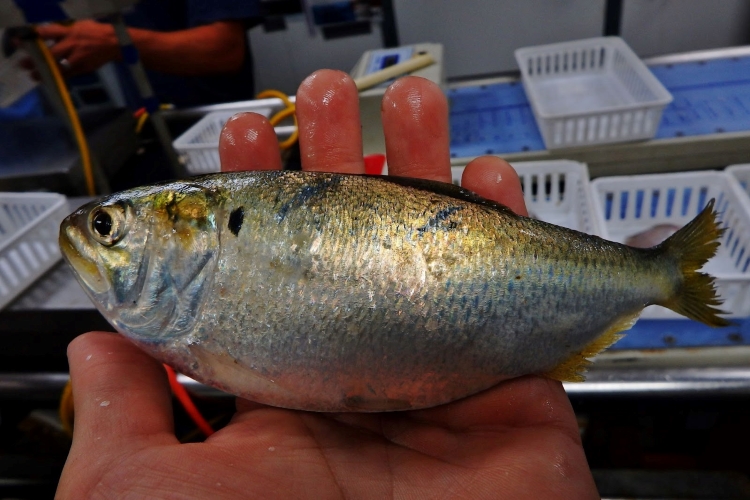
Gulf menhaden
Menhaden are small, nutrient-rich fish found in abundance along the Gulf Coast and play a critical role in both the marine ecosystem and Louisiana's economy. Harvested using purse seine nets, menhaden are processed into fishmeal and fish oil - essential inputs for aquaculture, U.S. pet food, livestock feed, and human nutrition - valued for their high omega-3 content.
"This recertification is independent, rigorous, and grounded in science - it confirms that our fishery operates responsibly and sustainably," said Francois Kuttel, President and Principal Owner of Westbank Fishing. "Every step we take, from modernized nets to management and reporting practices, is independently verified and publicly accountable, leaving no room for doubt about the fishery's sustainability or its benefit to Louisiana communities and markets."
Economic Impact Across Louisiana
Louisiana's menhaden industry supports more than 2,000 jobs and generates approximately $419 million in annual economic impact, along with $25 million in state and local tax revenue. The industry also purchases more than $62 million in goods and services from businesses across 32 parishes.
The fishery is powered by two Louisiana-based, U.S.-owned-and-operated companies - Westbank Fishing, headquartered in Empire, and Ocean Harvesters, based in Abbeville. Each works with a processing partner - Daybrook Fisheries for Westbank and Omega Protein for Ocean Harvesters - that received the official MSC recertification certificates on behalf of the Gulf menhaden fishery.
MSC recertification enhances global market access for sustainably sourced products, helping protect Louisiana jobs while ensuring the industry remains competitive in international markets increasingly driven by sustainability standards.
Science, Management, and Accountability
"This certification is not just about environmental performance - it's about the people and communities that depend on this fishery," said Ben Landry, Vice President of Ocean Harvesters. "Independent verification confirms the Gulf menhaden stock is abundant, also the fishery is well-managed, and operates environmentally sustainably, reflecting both the health of the menhaden population and the stewardship of our industry."
The MSC standard is built on three core principles: maintaining healthy fish stocks, minimizing environmental impact, and ensuring effective, adaptive management systems. Certification requires third-party review, stakeholder engagement, and ongoing annual audits to ensure continued compliance.
Recent stock assessments and ongoing monitoring consistently show that Gulf menhaden populations remain healthy and are not overfished. The fishery is also recognized for low bycatch rates and efficient harvesting practices.
The Gulf menhaden fishery is among the most tightly regulated in the state, operating under multiple layers of federal and state oversight that hold the fishery accountable on a continuous basis. According to the most recent stock assessment, Gulf menhaden populations are stronger than at any point in the past four decades, with spawning stock biomass more than tripling since the 1990s and fishing mortality declining significantly.
Bycatch Study Reinforces Findings
Recertification follows the release of a landmark, state-funded bycatch study, which found the menhaden industry accounts for just 3.4 percent of red drum removals, compared to 96.6 percent attributed to recreational fishing. The findings underscore the Gulf menhaden fishery's limited ecological impact and adherence to regulatory limits and reinforce that the industry's impact is already monitored, measured, and publicly accountable.
Looking Ahead
The recertification comes as global demand for sustainable seafood inputs continues to grow, particularly in aquaculture and animal nutrition markets.
"Our ability to maintain this certification depends on a consistent commitment to data, transparency, and responsible management," said Kuttel. "We've shown that when a fishery follows strict science-based standards, we can deliver both environmental and economic outcomes - a level of accountability that not all user groups are held to."
With MSC recertification secured, the Gulf menhaden fishery continues to serve as a global model for sustainability - supporting healthy ecosystems, strong coastal communities, and critical U.S. supply chains - with accountability that is proven, measured, and independently verified.
Attached are the official MSC certificates awarded to Daybrook Fisheries (processing partner for Westbank Fishing) and Omega Protein (processing partner for Ocean Harvesters).

About Ocean Harvesters
Ocean Harvesters owns and operates a fleet of more than 30 fishing vessels in the Atlantic Ocean and Gulf of Mexico. The company's purse-seine fishing operation is exclusively engaged in the harvest of menhaden, a small, nutrient-dense fish used to produce fish meal, fish oil, and fish solubles. Both its Atlantic and Gulf Menhaden fisheries are certified sustainable by the Marine Stewardship Council. Committed to responsible fishing operations, Ocean Harvesters is proud to be heir to a fishing legacy that extends nearly 150 years.
About Westbank Fishing
Westbank Fishing is a U.S.-owned-and-operated leader in the Gulf menhaden fishery, headquartered in Empire, Louisiana. The company's 12-vessel fleet operates under a global sustainability certification from the Marine Stewardship Council (MSC), ensuring the long-term health of the marine ecosystem. By delivering 100% of its catch to Daybrook Fisheries, Westbank helps support 400 jobs, make the partnership the largest employer in southern Plaquemines Parish.
Advocacy Disguised as Journalism: Sierra's One-Sided Attack on Virginia's Menhaden Fishery
WASHINGTON, DC / March 12, 2026
The Sierra magazine March 8 article "Will Osprey Chick Deaths Inspire Conservation Action on Menhaden?" by Amy Brecount White is not a work of balanced journalism, but an advocacy piece masquerading as reporting.
WASHINGTON, DC / March 12, 2026 / The Sierra magazine March 8 article "Will Osprey Chick Deaths Inspire Conservation Action on Menhaden?" by Amy Brecount White is not a work of balanced journalism, but an advocacy piece masquerading as reporting.
At the most basic level, the story fails the simplest test of fairness. It quotes five individuals aligned with the narrative that menhaden fishing is responsible for osprey reproductive problems, yet it does not quote a single scientist or expert with a dissenting view, nor a single fisherman, union fishermen, or member of the menhaden industry whose livelihood is at stake. That is not balance. It is message amplification.
A more truthful story would have told readers that there is no scientific consensus that menhaden fishing is even related to osprey nesting failure in the lower Chesapeake. External reporting and official USGS material show that scientists have identified multiple environmental stressors affecting osprey reproduction and that even researchers involved in the work have cautioned against claiming conclusive proof from the existing evidence.
The article's central premise is that industrial menhaden fishing is starving ospreys. But that claim is presented as if it were settled fact when it is anything but. Publicly available rebuttal material quoting VIMS scientist Dr. Robert Latour states that localized depletion has not been demonstrated and that claims to that effect are speculative based on existing data. A peer-reviewed Frontiers commentary by Dr. Latour and coauthors also challenged the statistical basis for drawing such strong conclusions from the osprey-menhaden linkage.
The article also leans heavily on the familiar activist refrain that the fishery is overharvesting a foundational forage species. But the Atlantic menhaden fishery has repeatedly been found by the Atlantic States Marine Fisheries Commission to be neither overfished nor experiencing overfishing, and the fishery is managed with ecological reference points specifically designed to account for predator needs. It is also certified as sustainable by the Marine Stewardship Council, the global gold standard for fisheries sustainability.
The piece further suggests that current science is so deficient that sweeping new restrictions or even an end to the fishery are justified until more is known. That framing is misleading. The Atlantic menhaden fishery is perhaps the most studied on the East Coast. There is active scientific work underway to develop a more Bay-specific management foundation, including ongoing ASMFC and related scientific work on ecological reference points and the Chesapeake Bay cap.
The article recycles the idea that Virginia's fishery is uniquely out of step with the rest of the coast. But the fishery is already constrained by an unscientific and precautionary Chesapeake Bay cap and coastwide quota management, and recent ASMFC action cut the 2026 coastwide TAC by 20 percent while also initiating a process to review the Bay cap.
The story also indulges the familiar insinuation that Omega Protein is somehow a foreign operator exploiting Bay resources. That too is misleading. Even reporting sympathetic to the fishery's critics acknowledges that Omega Protein is based in Reedville, Virginia, and that harvesting is performed by Ocean Harvesters, an American company based in Reedville.
Just as important, the article ignores the people who would bear the cost of the policies it encourages. Rural Virginia cannot easily replace these jobs. A Virginia Marine Resources Commission economic assessment found that the direct effects of the menhaden reduction operation are heavily concentrated in Northumberland County: 217 of 299 employees resided there, including 55 in Reedville. The report also described the operation as providing health care, paid holidays, retirement programs, paid life insurance, vacation days, and union representation, and it noted that most direct impacts occur in Northumberland County.
We urge readers to visit the UFCW Local 400 website and watch this video featuring the union fishermen describing their jobs in their own words.
That point matters. This is not an abstract policy debate to the people who live in the Northern Neck. The same VMRC/VIMS assessment found that employees interviewed said they would have difficulty finding other work at or near the same pay level and with similar benefits if the fishery were closed.
A properly reported story following legitimate journalistic principles would have told readers all of this. It would have noted that there are credible scientific disputes over causation. It would have acknowledged that the fishery is already heavily regulated and managed under ecosystem-based reference points. It would have included the voices of watermen, union workers, and local communities whose futures are tied to Reedville and Northumberland County. Instead, Sierra delivered a one-sided narrative built to advance a policy outcome.
Sierra is the national magazine of the Sierra Club. It describes itself as "an independent journalistic enterprise."
This article is advocacy. It is not journalism.
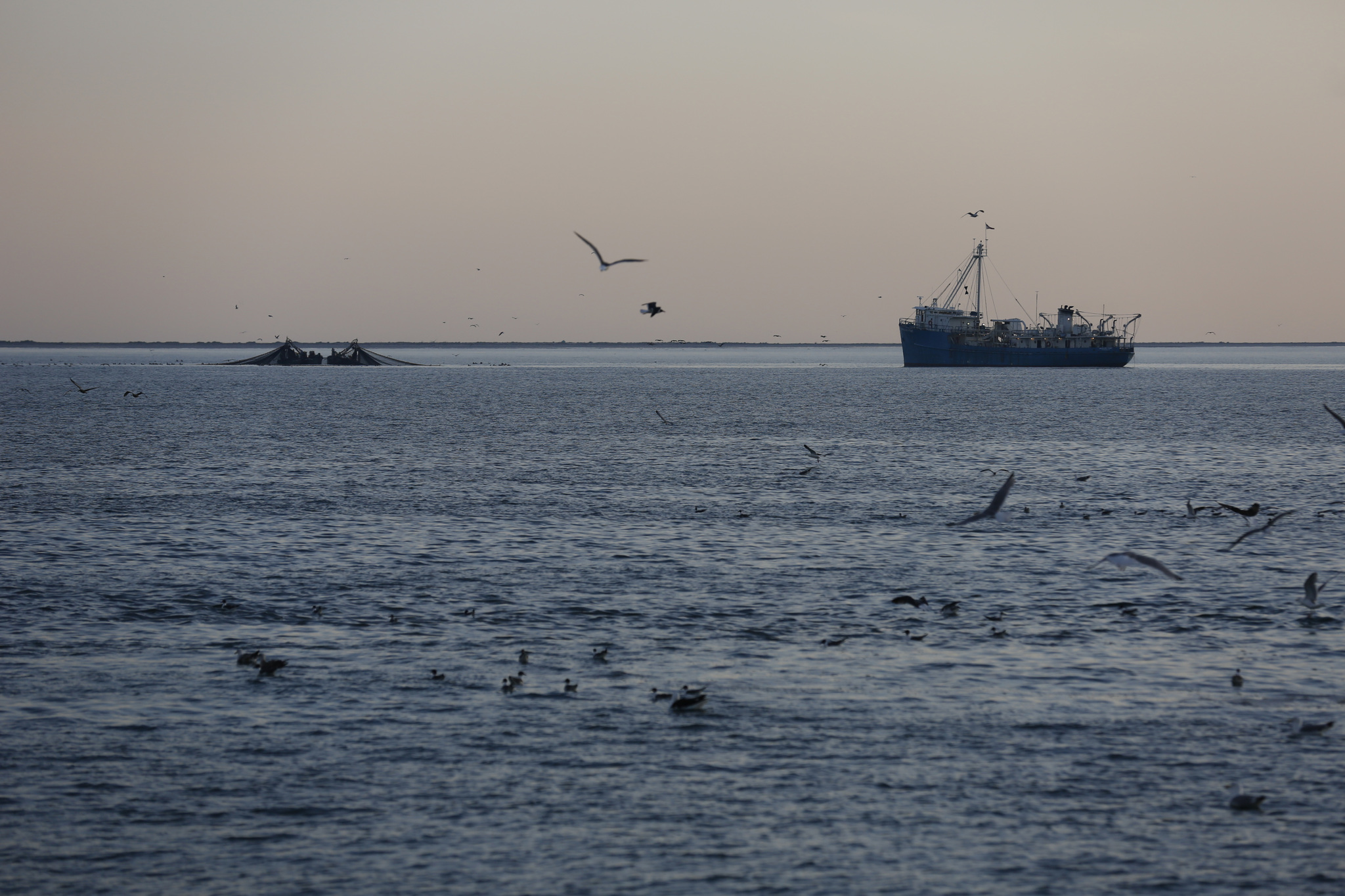
About the Menhaden Fisheries Coalition
The Menhaden Fisheries Coalition (MFC) is a collective of menhaden fishermen, related businesses, and supporting industries. Comprised of businesses along the Atlantic and Gulf coasts, the Menhaden Fisheries Coalition conducts media and public outreach on behalf of the menhaden industry to ensure that members of the public, media, and government are informed of important issues, events, and facts about the fishery.
Menhaden Fisheries Coalition Condemns Chesapeake Bay Foundation for Misusing Natural Fish Wash-Up to Push False Anti-Fishing Narrative
WASHINGTON, D.C. / March 6, 2026
The Menhaden Fisheries Coalition strongly criticizes the Chesapeake Bay Foundation's Will Poston for exploiting the recent fish wash-up from Cape Henry, Virginia to Nags Head, North Carolina to promote yet another misleading attack on Virginia's menhaden fishery.
WASHINGTON, D.C. / March 6, 2026 / The Menhaden Fisheries Coalition strongly criticizes the Chesapeake Bay Foundation's Will Poston for exploiting the recent fish wash-up from Cape Henry, Virginia to Nags Head, North Carolina to promote yet another misleading attack on Virginia's menhaden fishery.
The Chesapeake Bay Foundation (CBF) is using this natural event to make false accusations and continue the campaign of anti-menhaden misinformation it has employed in numerous fundraising appeals, both online and in direct mail. It is another shameless attempt by CBF to make villains of the menhaden fishery, while failing to put the same focus on current environmental disasters, such as the vast amounts of raw sewage flowing into the Bay from the Potomac River. CBF's effort to use this beach wash-up to smear the menhaden fishery fits a broader pattern: blame menhaden harvest first, oversimplify the science second, and ignore every other environmental stressor that is harder to politicize.
Mr. Poston falsely stated that efforts to fund research to better understand the Chesapeake Bay menhaden population have "been needlessly delayed by Omega Protein and their McGuireWoods lobbyists in Richmond." There is no truth to that statement. Neither Omega Protein, nor Ocean Harvesters, nor McGuireWoods are standing in the way of any funding of a Bay survey.
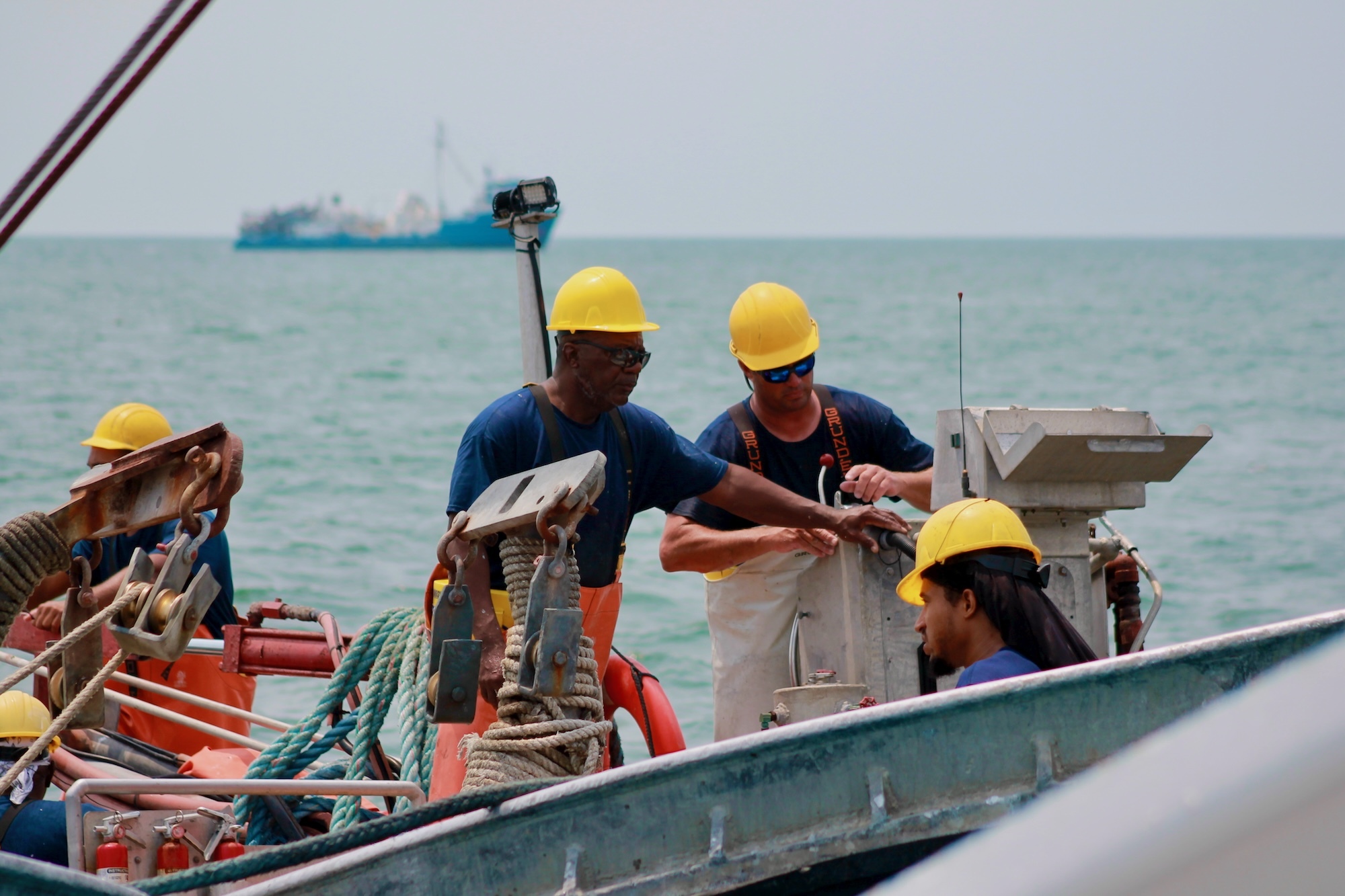
The industry supports science. Over the past two decades, Ocean Harvesters and Omega Protein have supported at least 15 scientific studies and have regularly provided detailed landings and operational data to NOAA and ASMFC scientists. The industry is currently working collaboratively with researchers day in and day out on menhaden tagging and other studies.
Through the Science Center for Marine Fisheries (SCEMFIS), a National Science Foundation (NSF) Industry-University Cooperative Research Center (IUCRC) that includes the Virginia Institute of Marine Science, the Marine Stewardship Council, and researchers from NASA, the industry has funded a project designed to identify the research needed to finally develop a scientifically defensible and ecologically meaningful Chesapeake Bay harvest cap for Atlantic menhaden. Led by scientists from the Chesapeake Biological Laboratory, the Virginia Institute of Marine Science, and NOAA, it will review existing menhaden science, identify key data gaps, and recommend specific study designs, analytical methods, timelines, and costs for future Bay-focused research, including tools such as tagging, hydroacoustics, spatial modeling, and analysis of existing datasets like landings and spotter pilot reports.
When CBF says research has been "needlessly delayed" by the industry, it is distorting the record. The real issue has been making sure research is done with credible methods and defensible study design, not blocking research.
The fish die-offs are unfortunate. But as reported by WTKR News 3, Virginia Marine Resources Commission public information officer Zach Widgeon stated this was "not a result of a fishing spill or a net bust." It was a natural cold-weather occurrence tied to a sudden temperature drop offshore.
The current die-off is not evidence of a collapsing forage base. It is evidence that menhaden remain abundant in Bay waters. As Mr. Widgeon noted, "There are so many menhaden out on the East Coast that you're going to see them affected and washing up more than any other species." CBF's statements continually ignore this most basic scientific reality: Atlantic menhaden are not overfished and overfishing is not occurring, according to the Atlantic States Marine Fisheries Commission's current benchmark assessment. ASMFC's management framework explicitly uses ecological reference points designed to account for menhaden's role as forage for predator species.
CBF also ignores recent state survey data. In October 2025, the Maryland Department of Natural Resources reported that Atlantic menhaden were widespread in the Chesapeake Bay for the third consecutive year.
These attacks are aimed at real people in a real working community. The Reedville-centered menhaden industry provides the kinds of jobs that rural Virginia cannot easily replace. A Virginia Marine Resources Commission economic assessment found that the direct effects of the operation are heavily concentrated in Northumberland County, with 217 of 299 employees residing there, including 55 in Reedville. The report also describes the jobs as stable employment with benefits and union representation, and notes that most direct impacts occur in Northumberland County.
CBF is not just criticizing a fishery. It is attacking one of the most economically important sources of unionized working-class employment in Virginia's Northern Neck, while presenting itself as the sole voice of the public interest. It is easy to issue inflammatory press releases, it's much harder to create well-paying jobs with full benefits.
Anyone who wants to understand what is really at stake should hear directly from the union fishermen themselves. Readers should visit the UFCW Local 400 website and watch this video featuring the union fishermen describing their jobs in their own words.
About the Menhaden Fisheries Coalition
The Menhaden Fisheries Coalition (MFC) is a collective of menhaden fishermen, related businesses, and supporting industries. Comprised of businesses along the Atlantic and Gulf coasts, the Menhaden Fisheries Coalition conducts media and public outreach on behalf of the menhaden industry to ensure that members of the public, media, and government are informed of important issues, events, and facts about the fishery.
Ocean Harvesters Urges ASMFC to Test 'Gauntlet' Claim Before Advancing New Chesapeake Bay Restrictions
REEDVILLE, VA / January 29, 2026
In a letter to the Atlantic States Marine Fisheries Commission's (ASMFC) Atlantic Menhaden Management Board released this week, Ocean Harvesters explained that the ASMFC should examine the premise of a proposed addendum to the Atlantic Menhaden Fishery Management Plan. The addendum is based on the premise that a recent decline in Maryland menhaden pound net catches can be attributed to Ocean Harvesters' purse seine fishery in the lower Chesapeake Bay, creating a "gauntlet" that has prevented fish from reaching pound nets in the mid and upper Bay. Ocean Harvesters maintains that neither the Board nor its Plan Development Team (PDT) have thoroughly examined this premise, and that available data suggests that other factors may be the cause.
REEDVILLE, VA / January 29, 2026 / In a letter to the Atlantic States Marine Fisheries Commission's (ASMFC) Atlantic Menhaden Management Board released this week, Ocean Harvesters explained that the ASMFC should examine the premise of a proposed addendum to the Atlantic Menhaden Fishery Management Plan. The addendum is based on the premise that a recent decline in Maryland menhaden pound net catches can be attributed to Ocean Harvesters' purse seine fishery in the lower Chesapeake Bay, creating a "gauntlet" that has prevented fish from reaching pound nets in the mid and upper Bay. Ocean Harvesters maintains that neither the Board nor its Plan Development Team (PDT) have thoroughly examined this premise, and that available data suggests that other factors may be the cause.
"Before the Commission advances restrictions premised on a single, untested narrative, the PDT should be tasked with a rigorous examination of what is actually happening in the Bay - including other plausible environmental and economic drivers," said Ben Landry, Vice President of Public Affairs for Ocean Fleet Services.
Statistical Review Questions Inverse Relationship Between Purse Seine Effort and Maryland Pound Net Harvest
Ocean Harvesters cites a preliminary statistical memorandum prepared by economic consulting firm Georgetown Economic Services indicating that, in the months during 2022-2024 when the number of reduction purse seine net sets was above average, the Maryland pound net harvest size also tended to be above average. The opposite was also true, and the direct relationship was found to be statistically significant. If the "gauntlet" theory were true, the relationship between purse seine effort and pound net landings would be expected to be negative (inverse), not positive.
The letter also identifies a graph of weekly pound net and reduction catch rates presented in PDT discussions last week. If the gauntlet theory were correct, Maryland pound net catch rates should show a steep drop during the weeks in which the purse seine fleet was purportedly intercepting fish. Instead, weekly catch-rate curves show pound net catch rates remained stable through the season, further contradicting the "blockage" theory.
Data Show Maryland Pound Net Capacity Has Collapsed - Independent of the "Gauntlet" Narrative
The letter also highlights a fundamental trend that can directly explain reduced landings: Maryland's pound net fishery has sharply contracted in both effort and capacity over the past decade. Data from the Atlantic Coastal Cooperative Statistics Program (ACCSP) Data Warehouse shows that Maryland pound net trips fell from 1,835 (2013) to 284 (2024), with the maximum number of vessels operating in any month declining from 25 to 6, alongside comparable declines in the number of pound net fishermen. Pound net landings over these years did not proportionally increase in response to substantial reductions made to the purse seine Bay quota during the same period.
Call for Further Examination and Analysis by the PDT
Ocean Harvesters urged the PDT to conduct its own examination using the purse seine data from the April Work Group Report and the ACCSP data on Maryland pound net landings. The letter calls on the Board to direct the PDT to examine a range of considerations, including environmental and economic conditions, that may be a more direct cause of declining pound net catches than the "gauntlet" theory.
This is especially important because the Board's push for an addendum originated with the narrow "gauntlet" narrative presented to the Board by Maryland ASMFC delegate Lynn Fegley. This claim has been accepted as fact without examination, and the PDT has not meaningfully evaluated alternative explanations for weak pound net landings in 2023 and 2024.
Similarly, the January 28, 2026 Menhaden PDT memo, "Progress Report on Draft Addendum II to Amendment 3," does not define the problem it is trying to solve, and instead quickly pivots to structuring "options" for three, four, or five time intervals of allowable Ocean Harvesters landings without a clear rationale rooted in tested causation.
Additionally, the memo's characterization of a 50% reduction in the Bay cap as providing "the most conservative buffer ... for ecological and socioeconomic benefit" is an unsupported conclusion presented as analysis, rather than a finding tied to defined objectives, quantified tradeoffs, or tested assumptions.